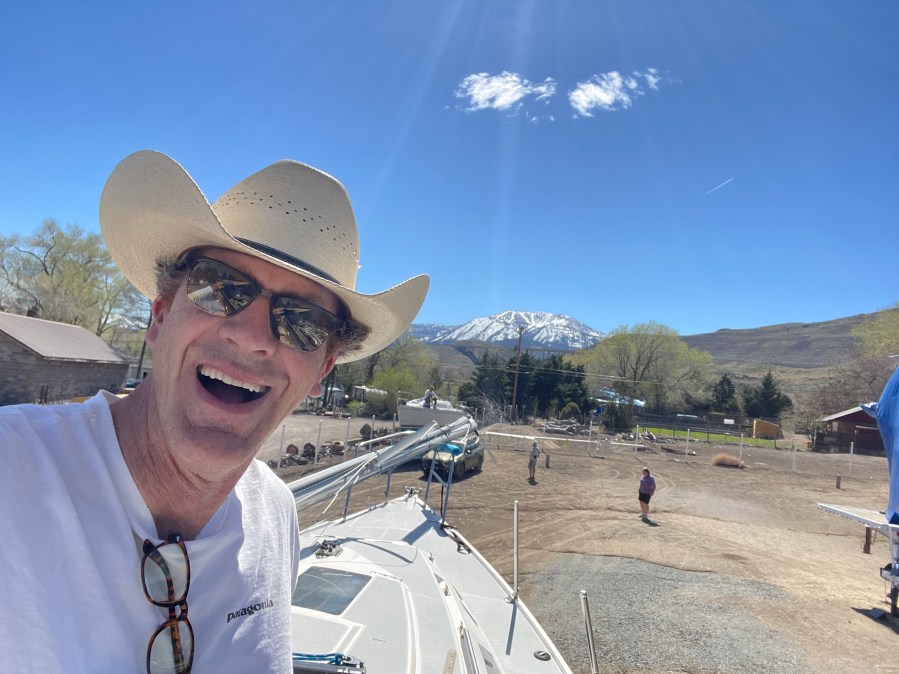
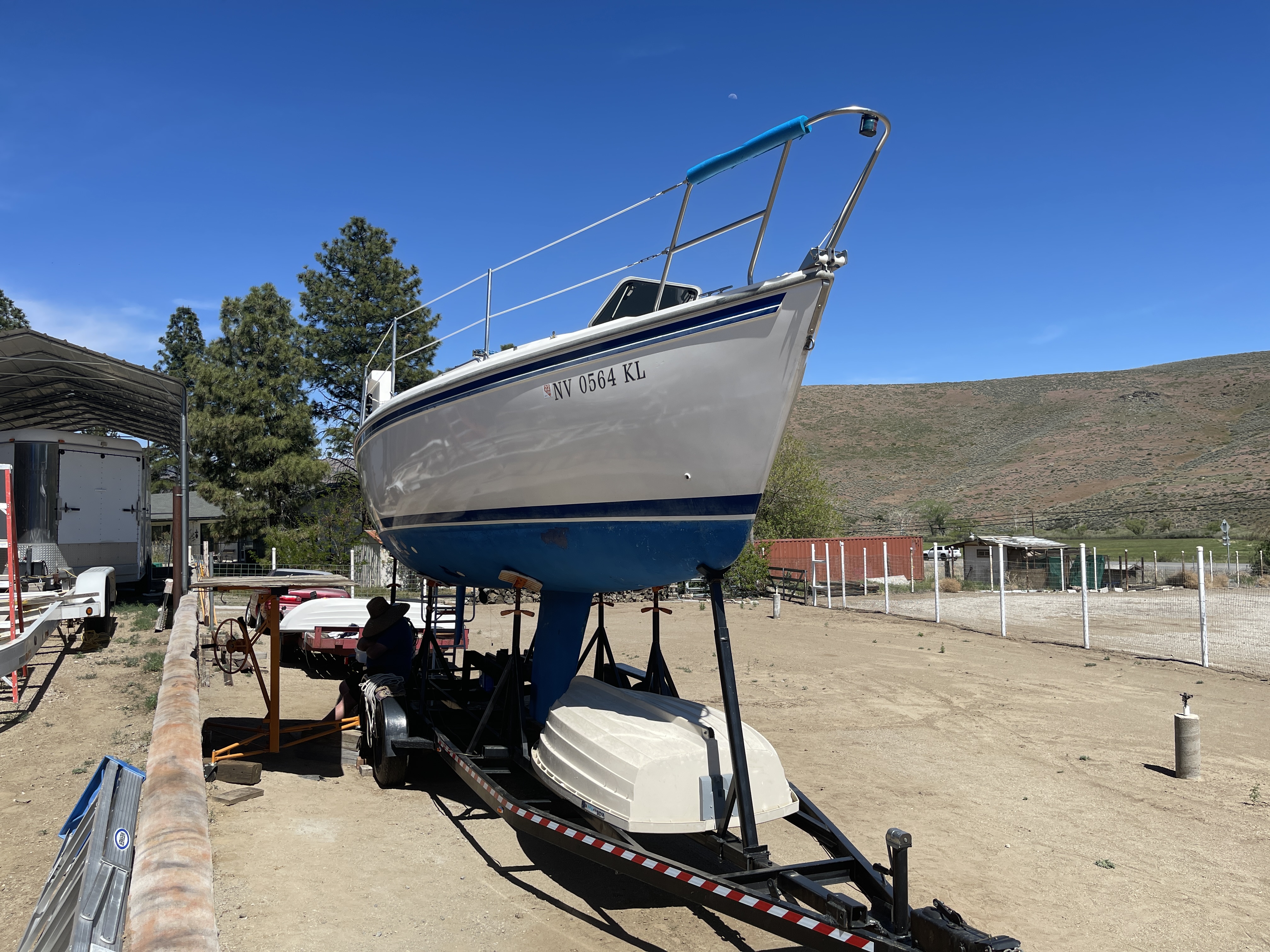
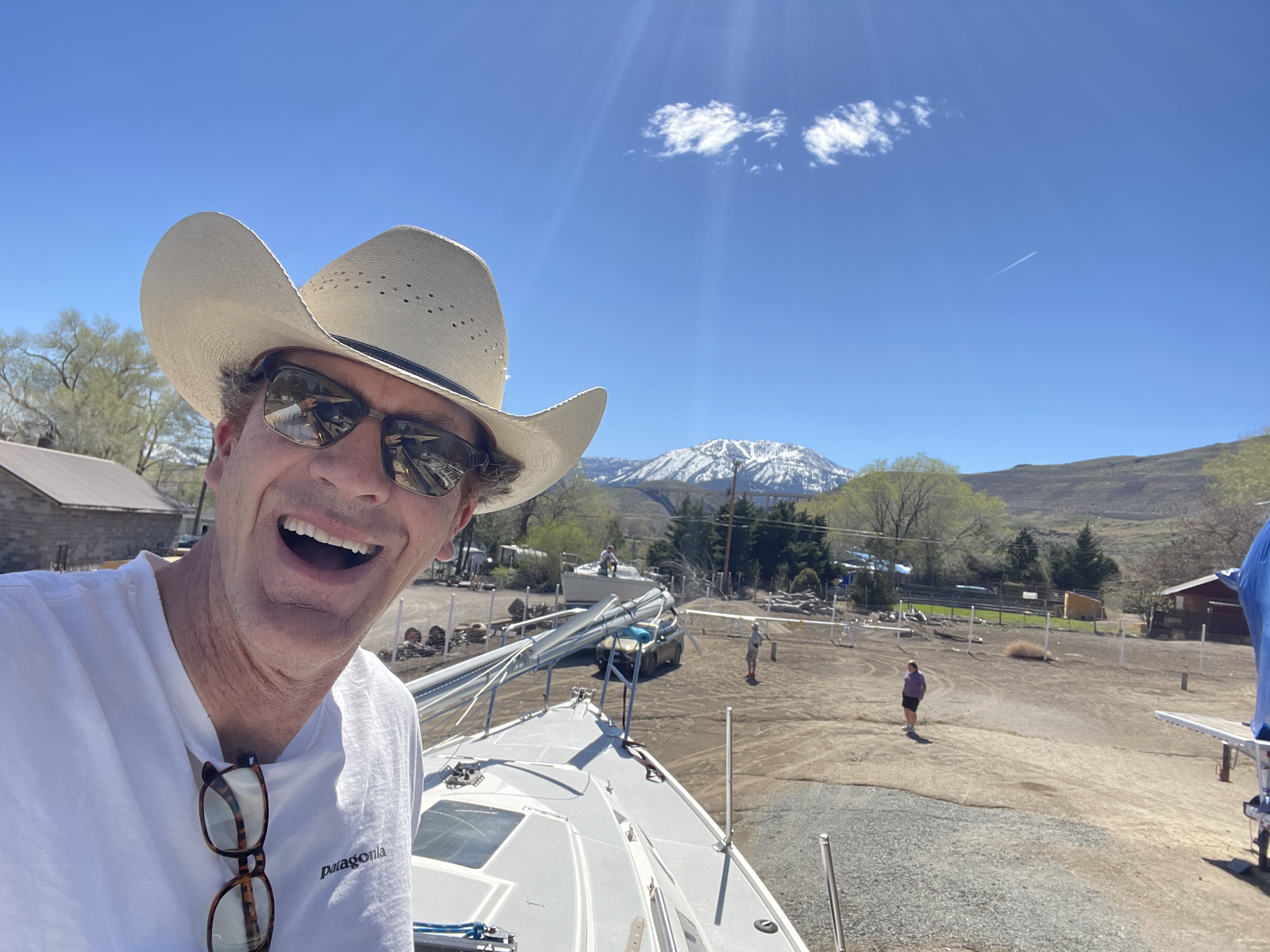
We launch Splendido in three days, and the past six weeks have been a whirlwind of activity getting her prepped for the Tahoe sailing season. The theme this spring was, “OK, what really needs to be addressed on a well-loved 31-year old sailboat that has seen lots of use? Fortunately, my mechanical-genius pal Ancil Sigman had plenty of suggestions, as you’ll see below.
The things I intended to fix in the off-season:
Make a better rope with knots in it to pull up the swim ladder.
The things Ancil heartily encouraged me (and tirelessly helped me) to fix in the off-season:
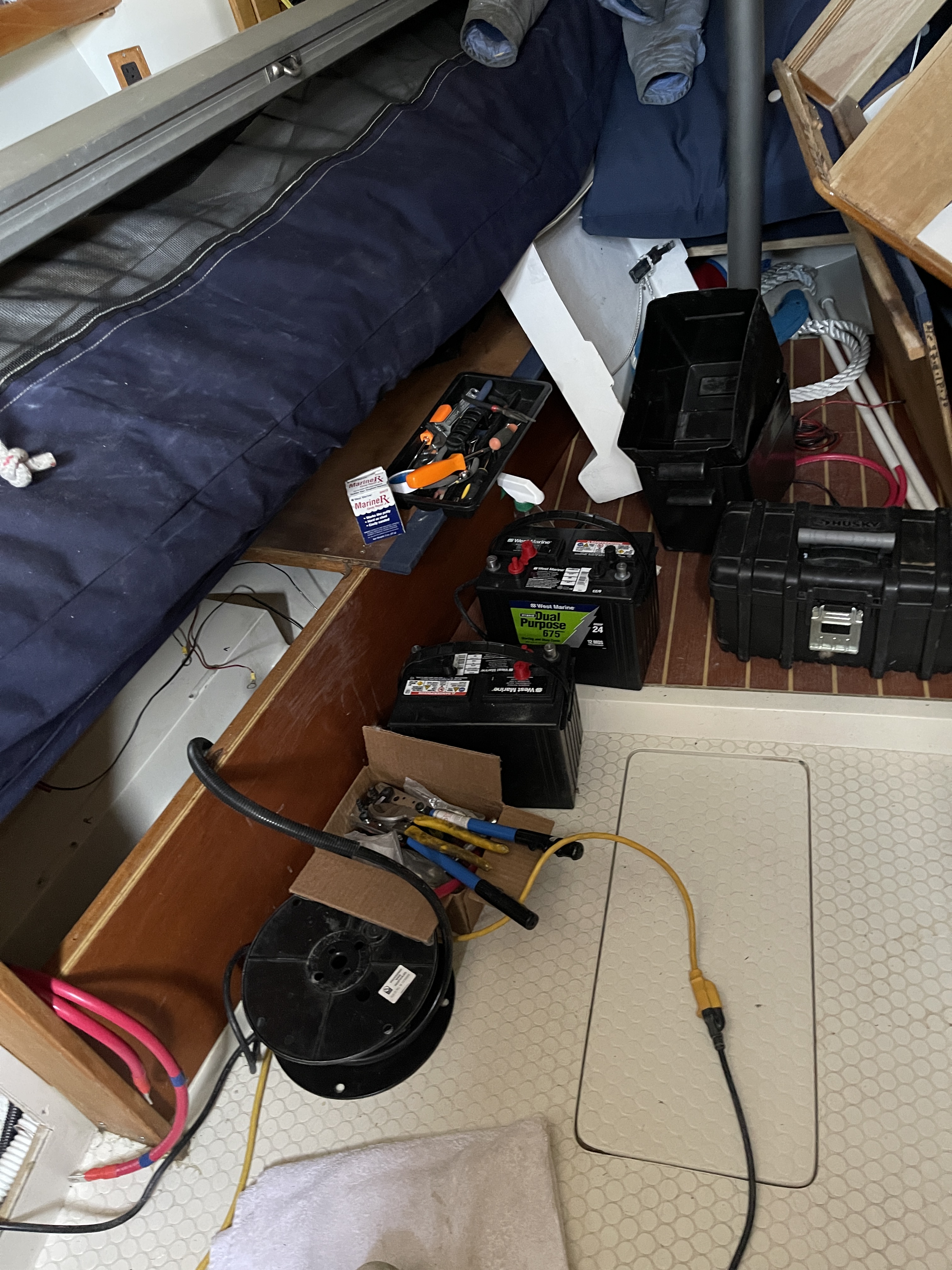
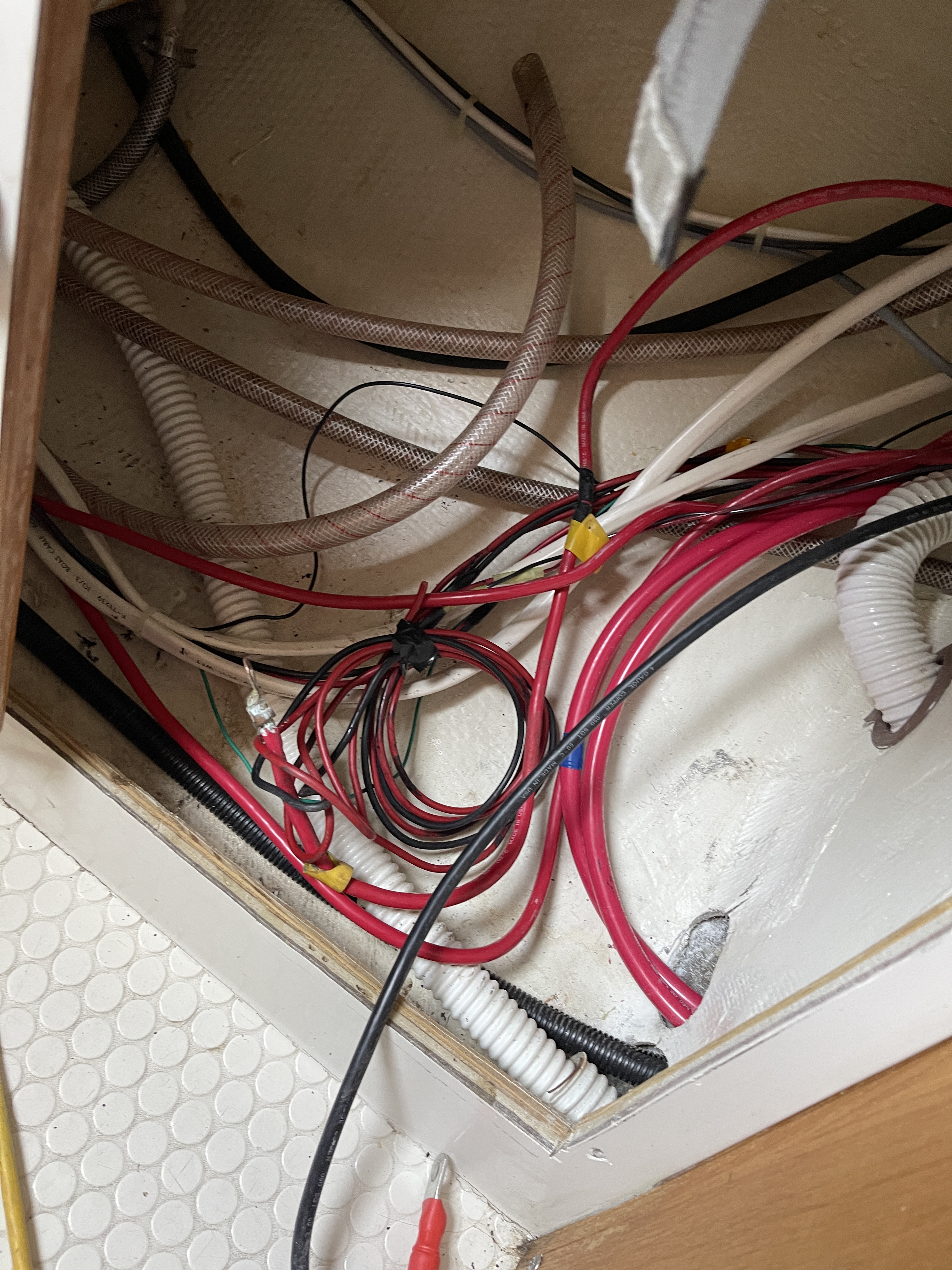
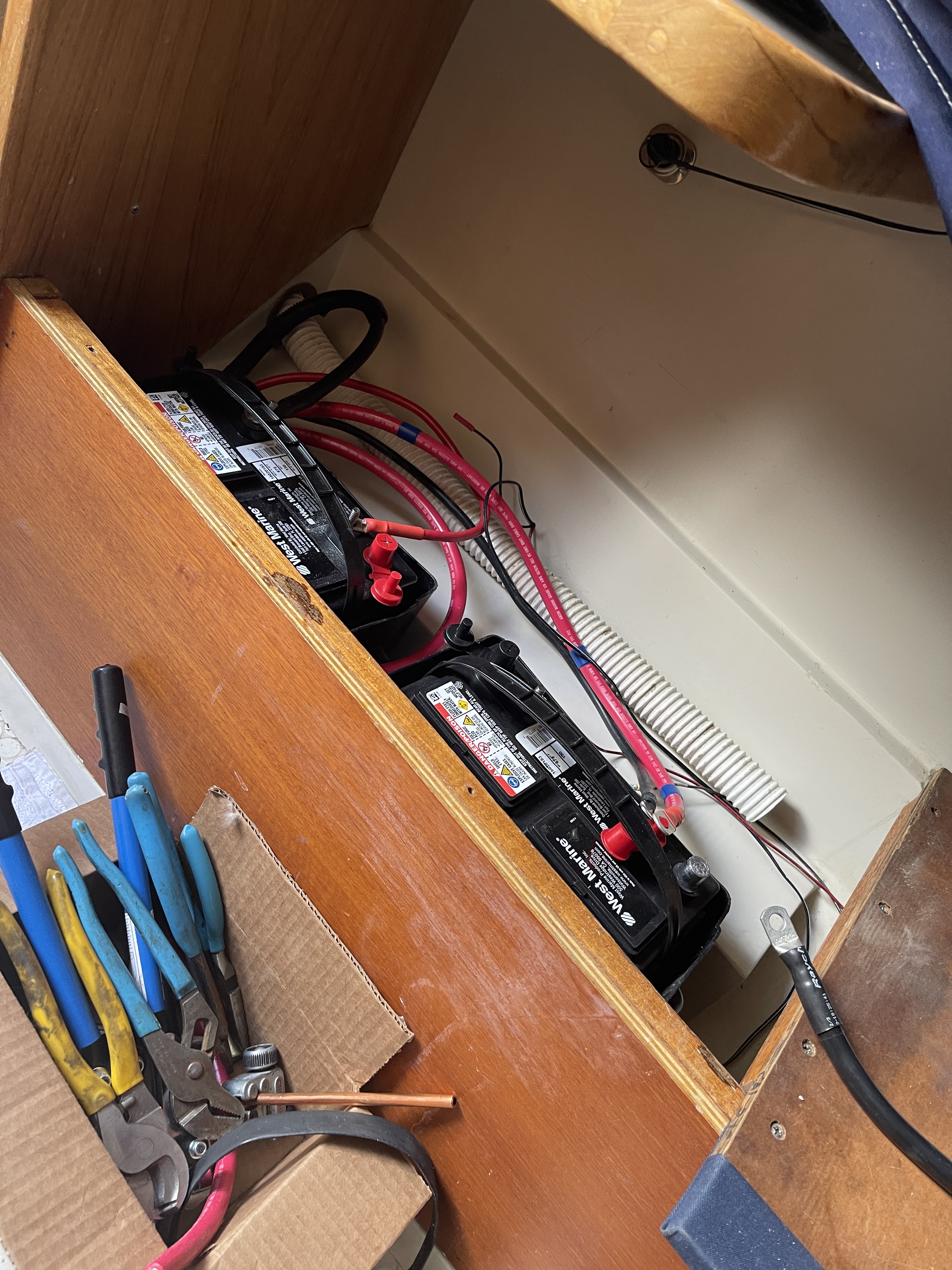
We pulled out every inch of the original (but significantly corroded) battery cables and replaced them with beefier, brand-spankin’ new cabling, all nicely heat-shrinked, from the battery bank to the panel to the engine, inverter, etc.
Upgraded the boat trailer with new running lights, from hitch to taillights.
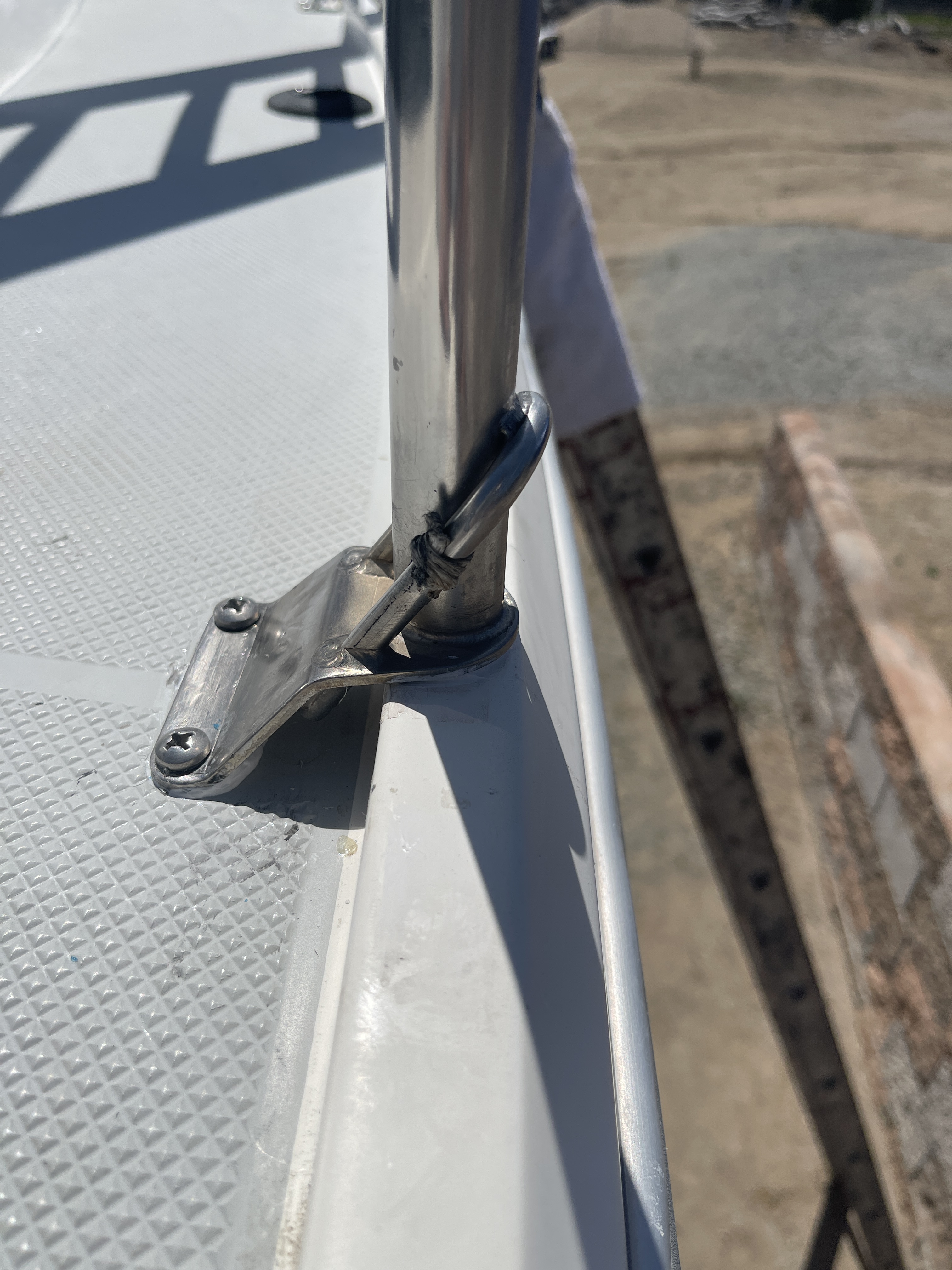
Pulled out two bent lifelinestanchions, straightened them, then properly re-bedded and reinstalled them.
Replaced all the lifelines on the boat.
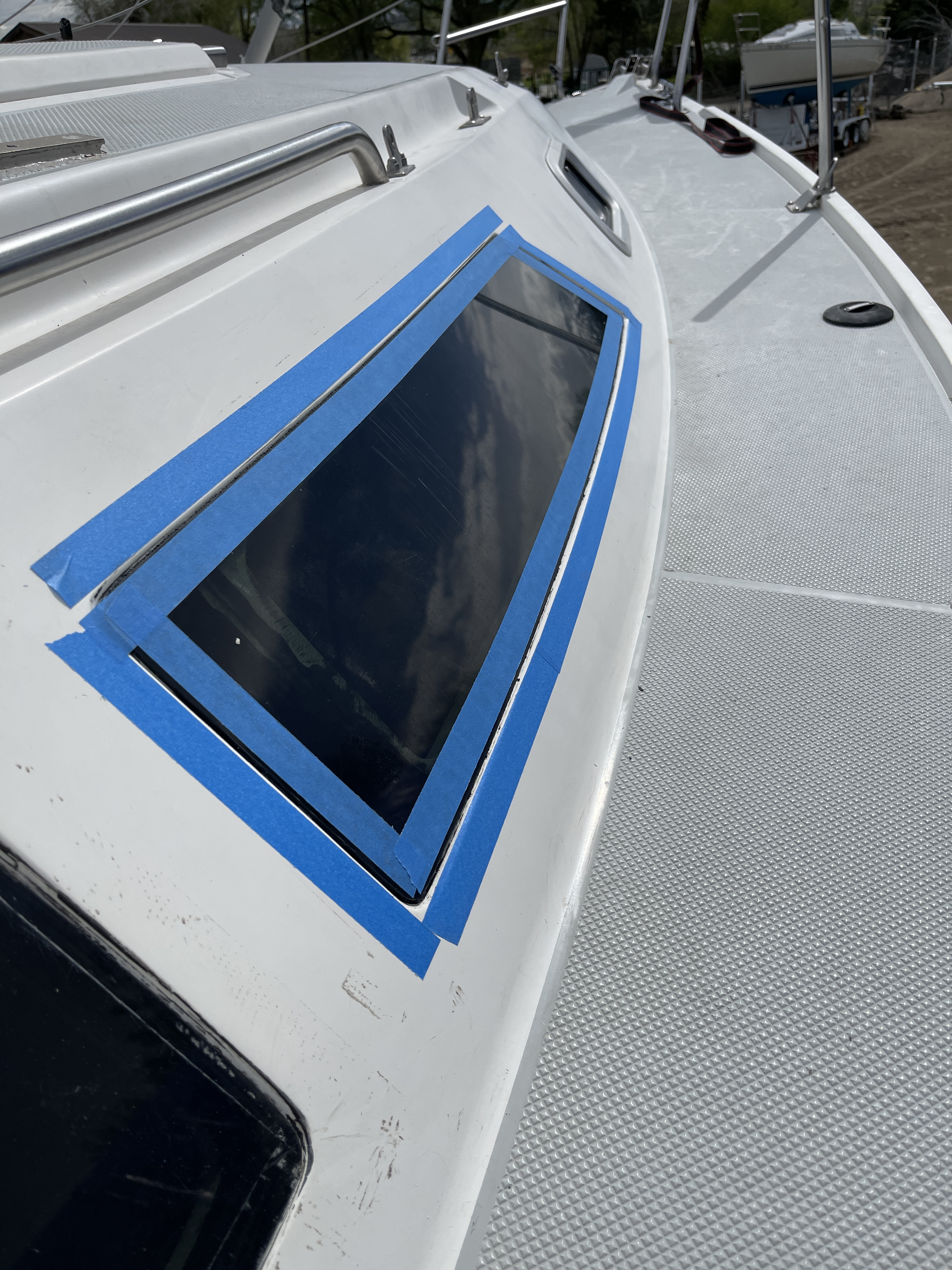
Removed the cabin windows that were popping up (hey, 31 years is a pretty good run), re-glued them with 3M VHB tape, and scraped/re-caulked all the windows on the boat.
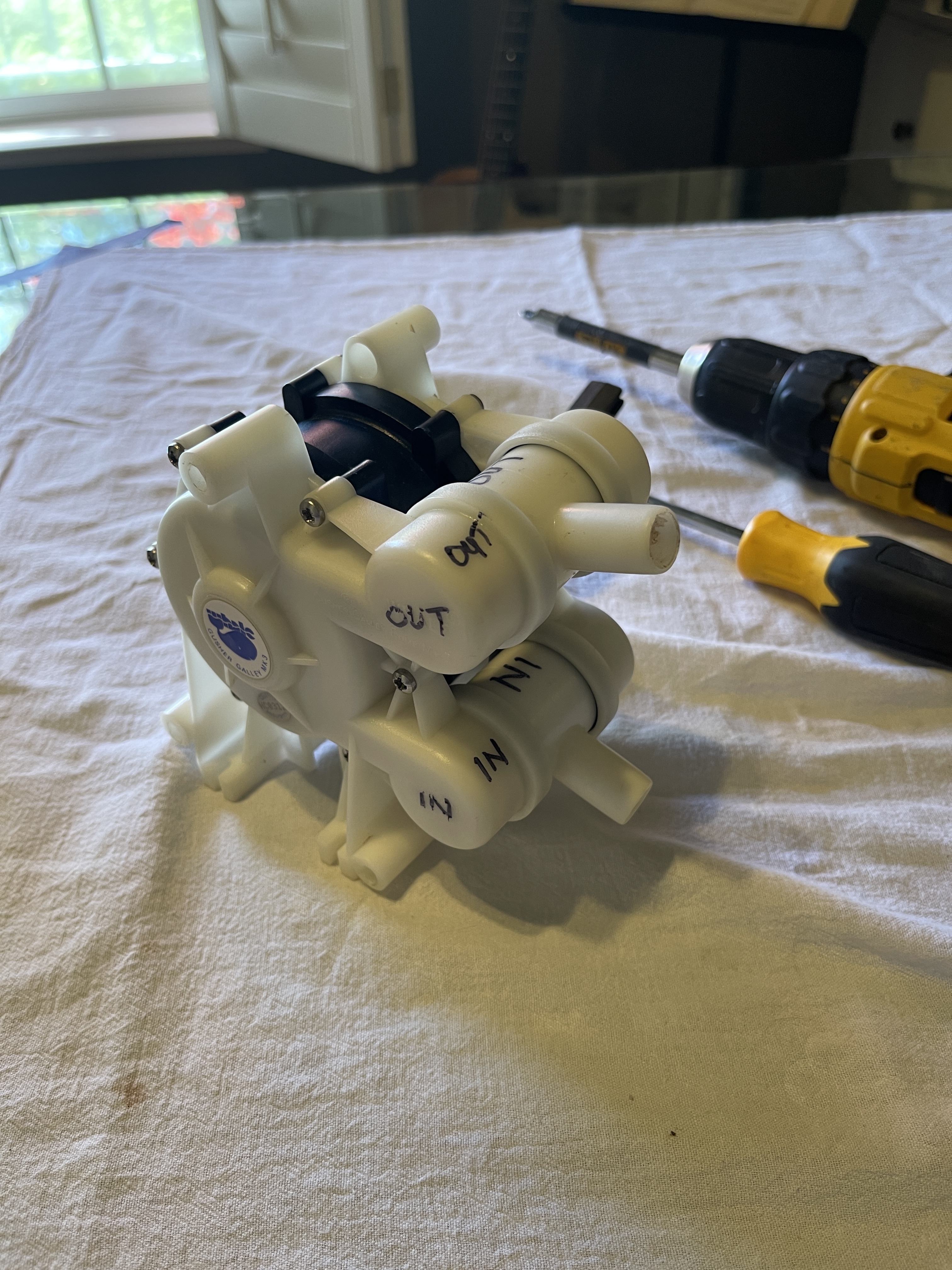
Completely rebuilt the Whale Galley Gusher pump with a new service kit (way, way harder and less intuitive than it sounds). First clue: The schematic they provide was way too low-rez to be helpful, and nothing on YouTube™ showed how to do it properly. Even the factory’s customer service lady gave us the wrong instructions. In the end, I had to call on Perplexity.ai to finally spit out the right way to do it.
While the icebox pump was out, I sanded, cleaned and re-fiberglassed the area under the stove with a couple layers of cloth. Turned out great.
Also laid in some fiberglass cloth and epoxy on the stern shower fixture door, which had cracked with age. It looks pretty good now with a little gel coat added.
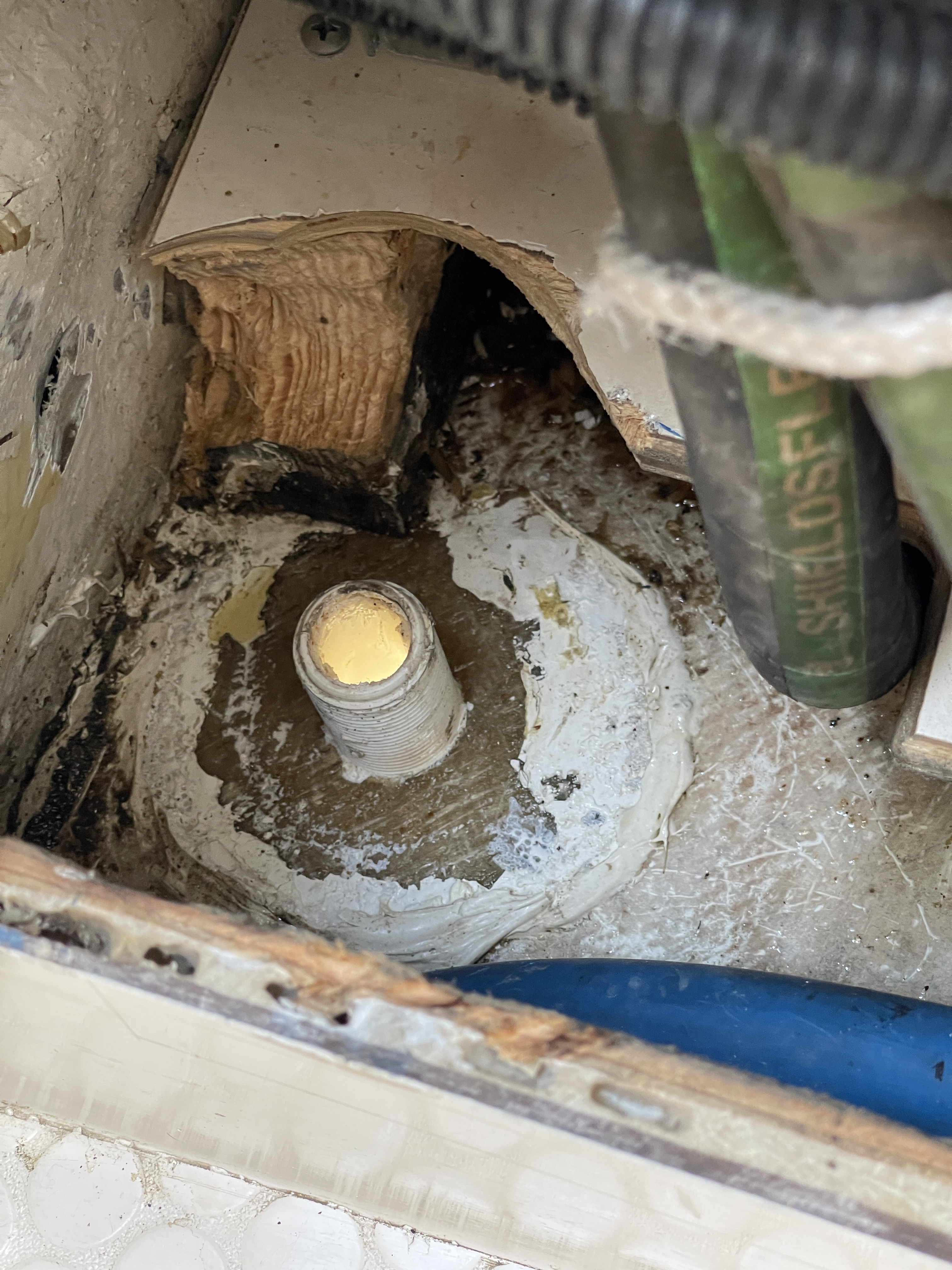
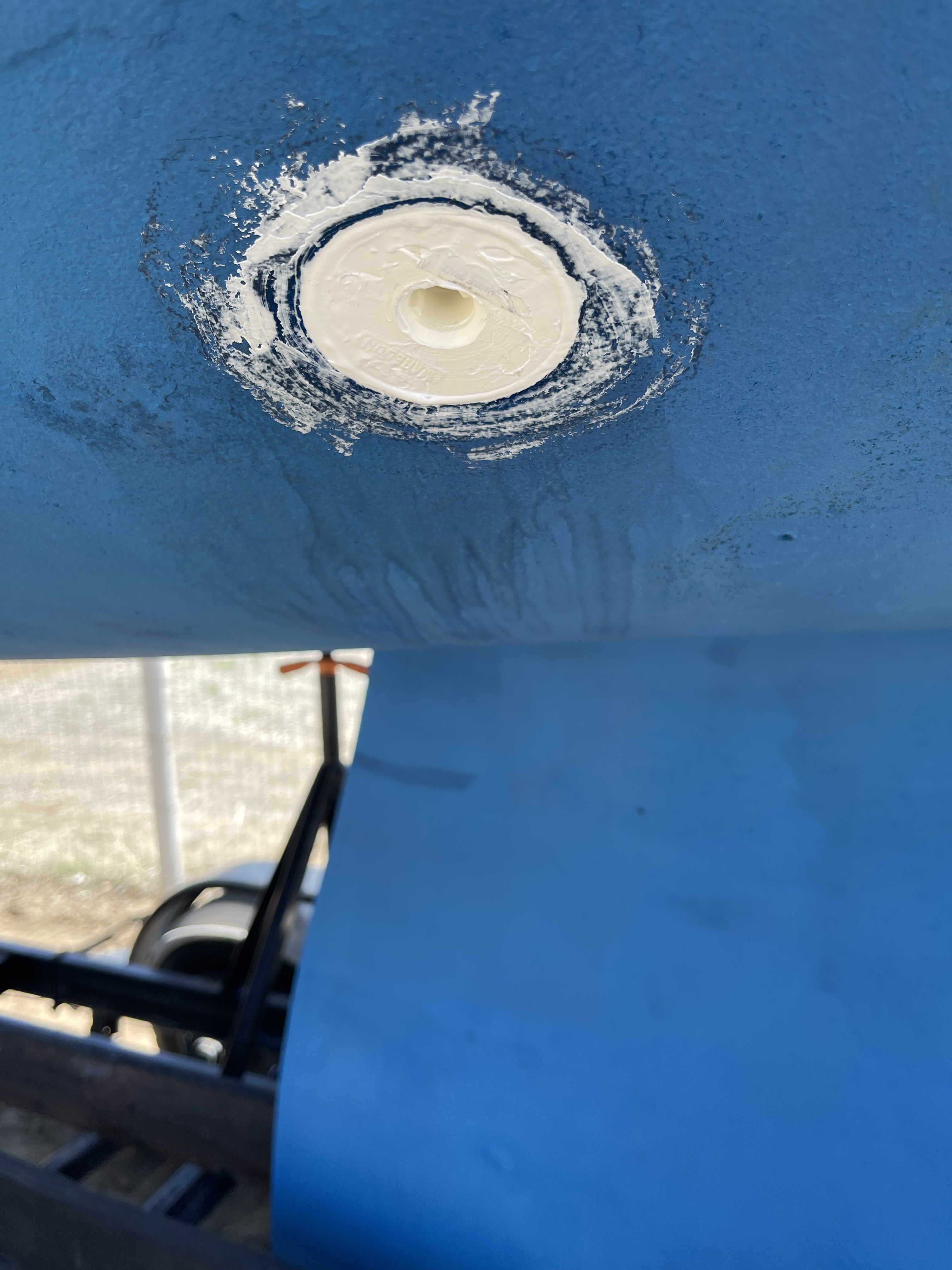
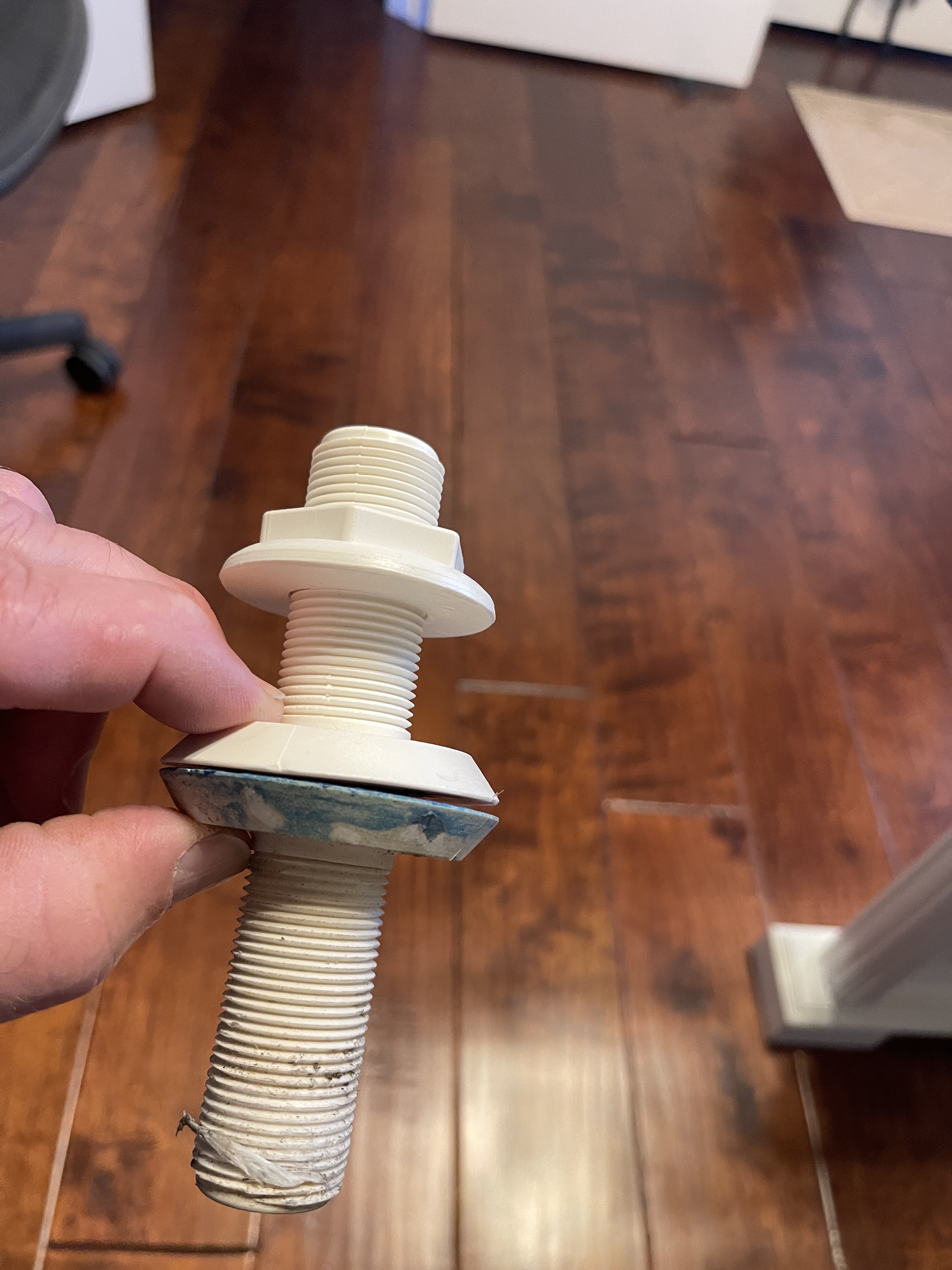
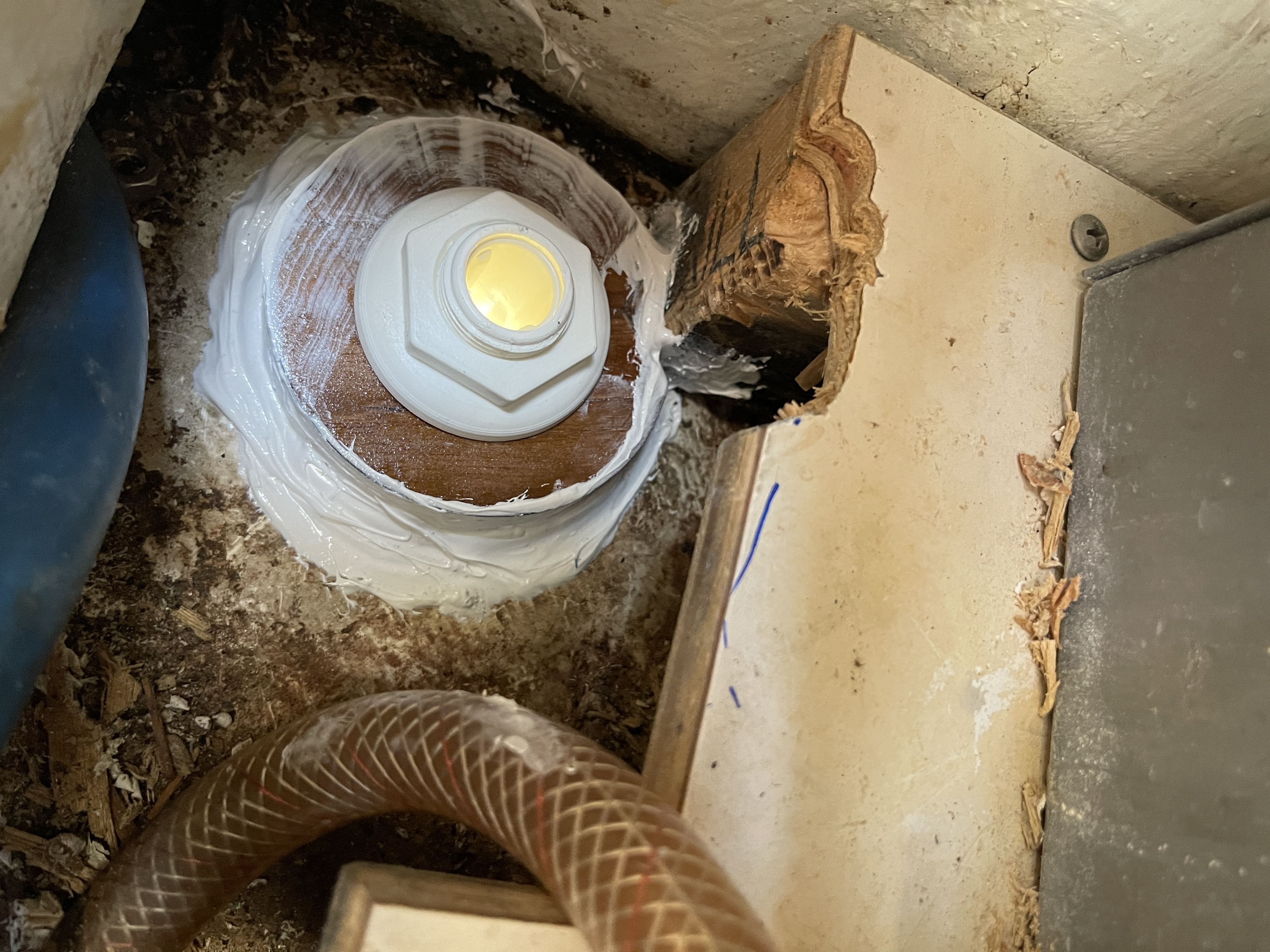
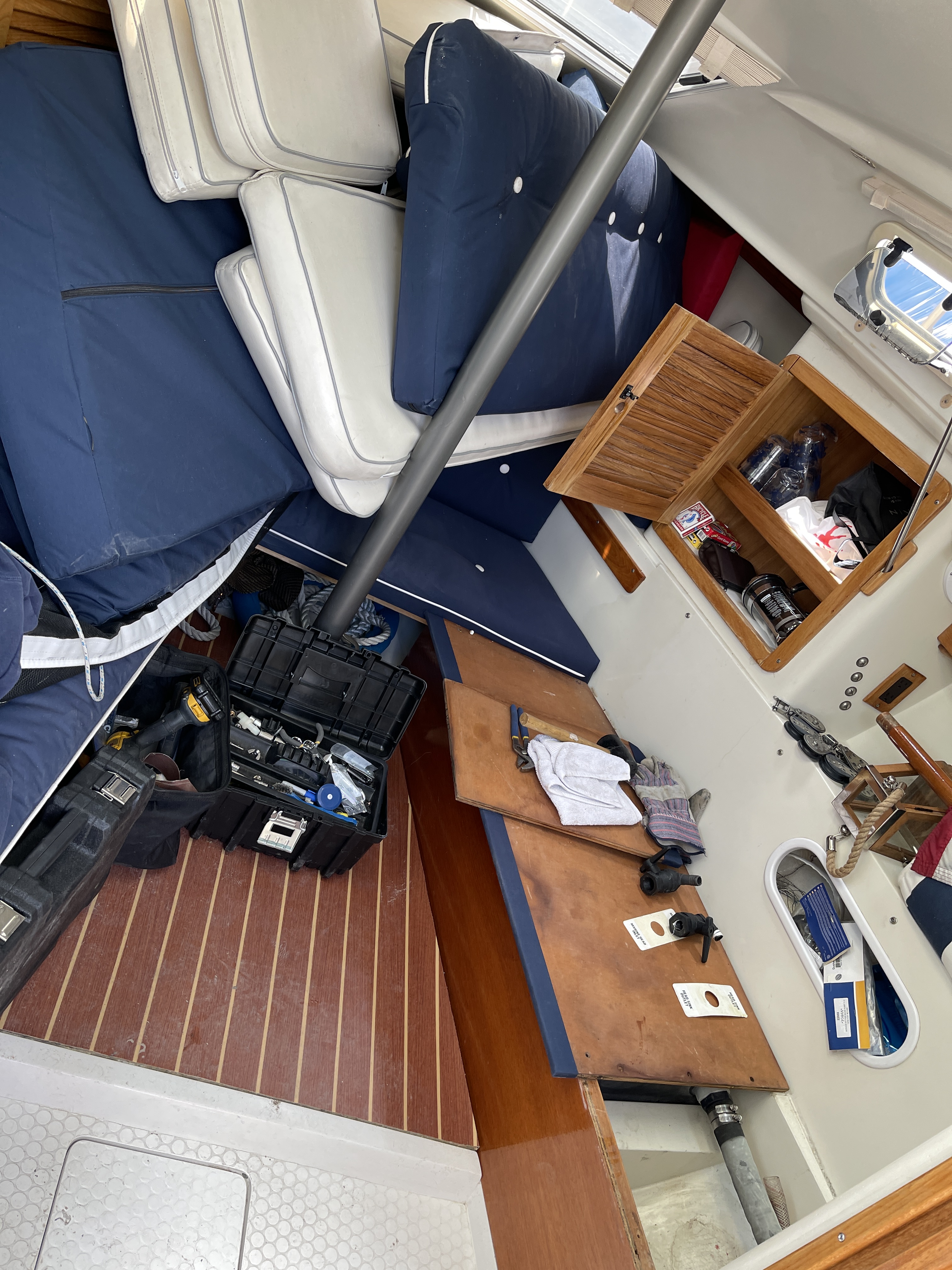
Replaced every seacock on the boat with new Forespar® Marelon™ seacocks. This took a ton of work because the handles don’t come off of the new ones, so you have to grind out the cabinetry in the tight spaces so you can screw the new seacocks onto the thru-hulls.
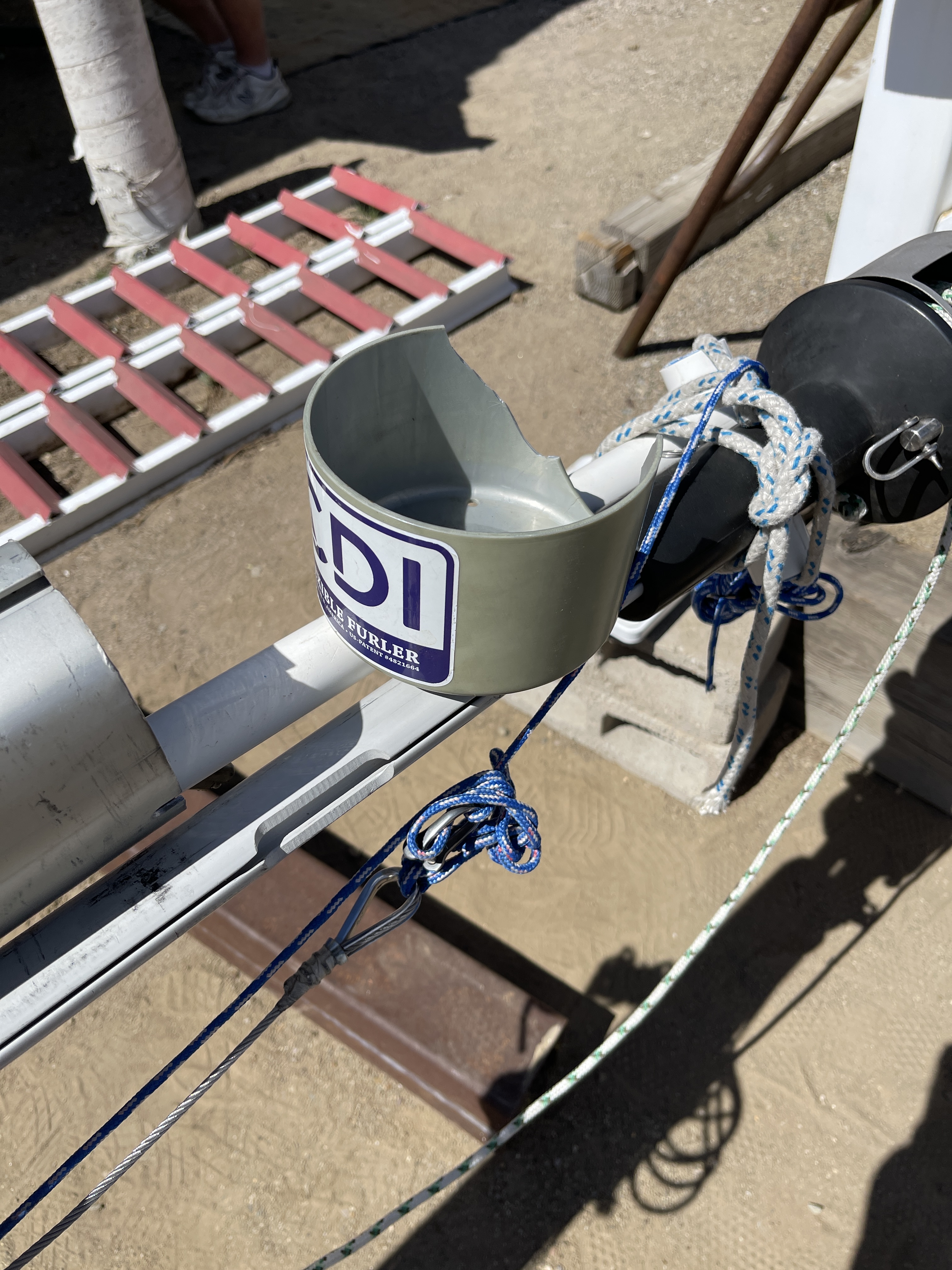
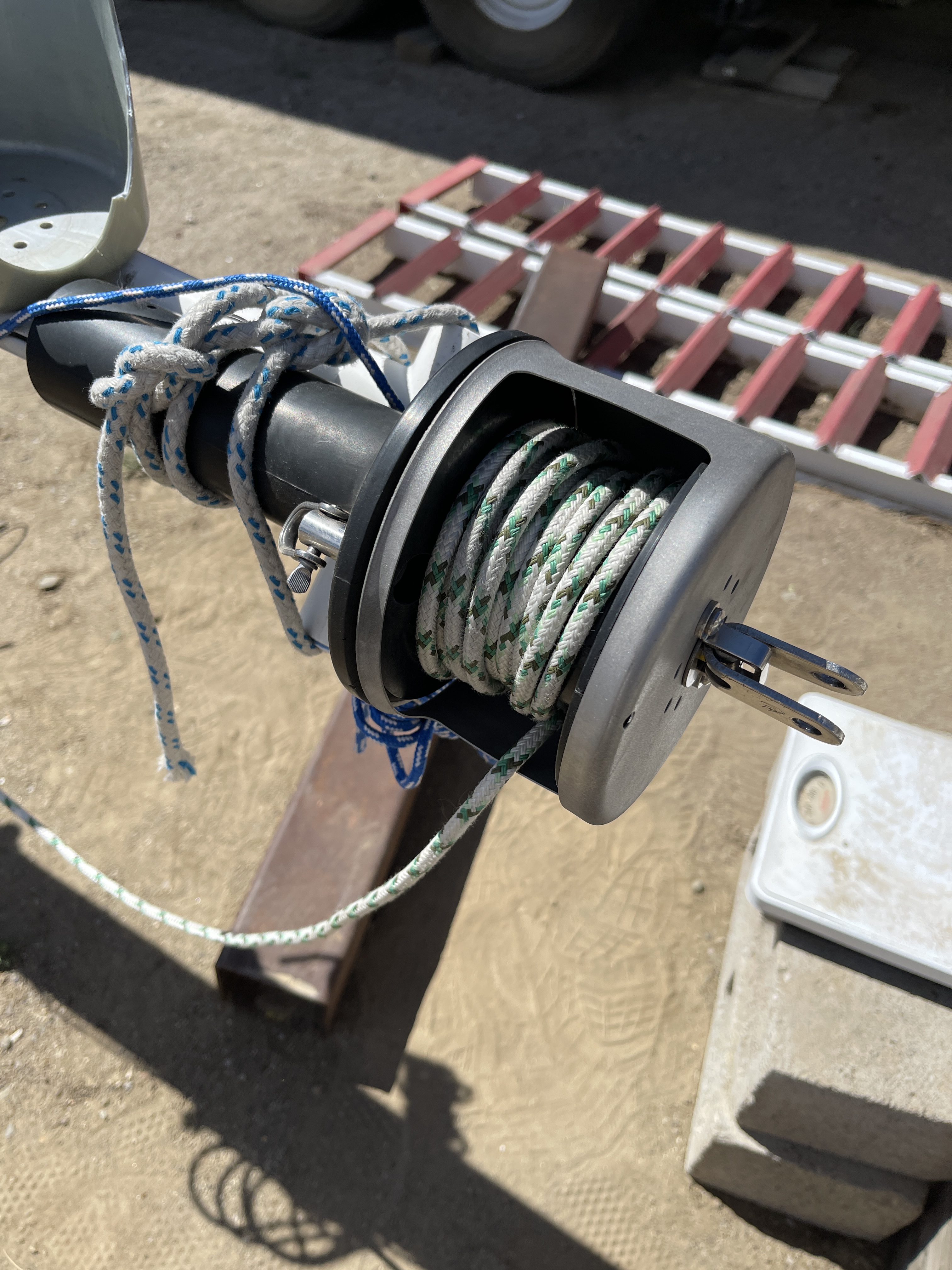
Replaced the cheap CDI plastic furling drum cover that broke after only two seasons (are you listenin’, CDI?) with a proper metal replacement drum cover which should have been standard issue to begin with. (Replacing this was a major pain).
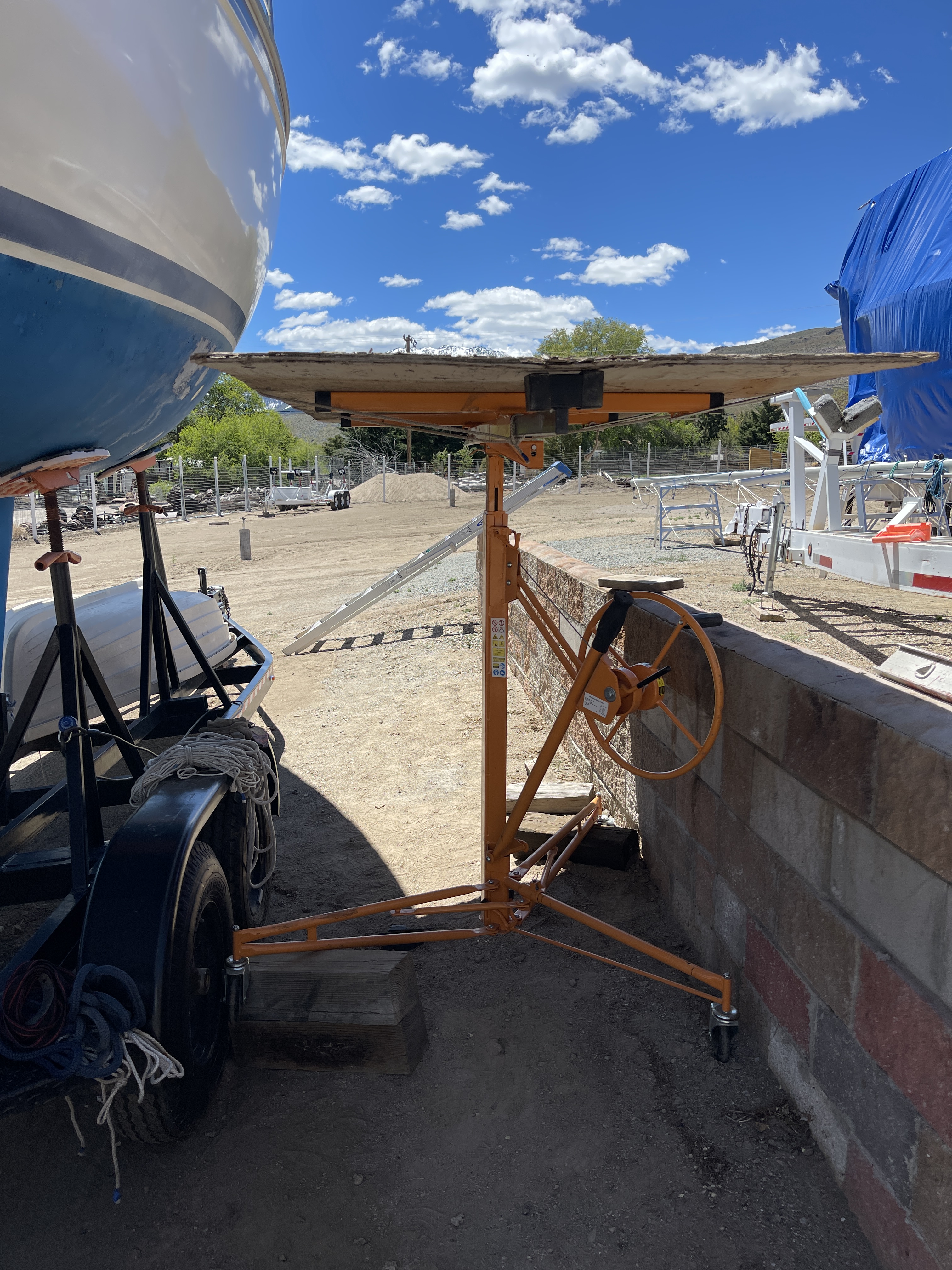
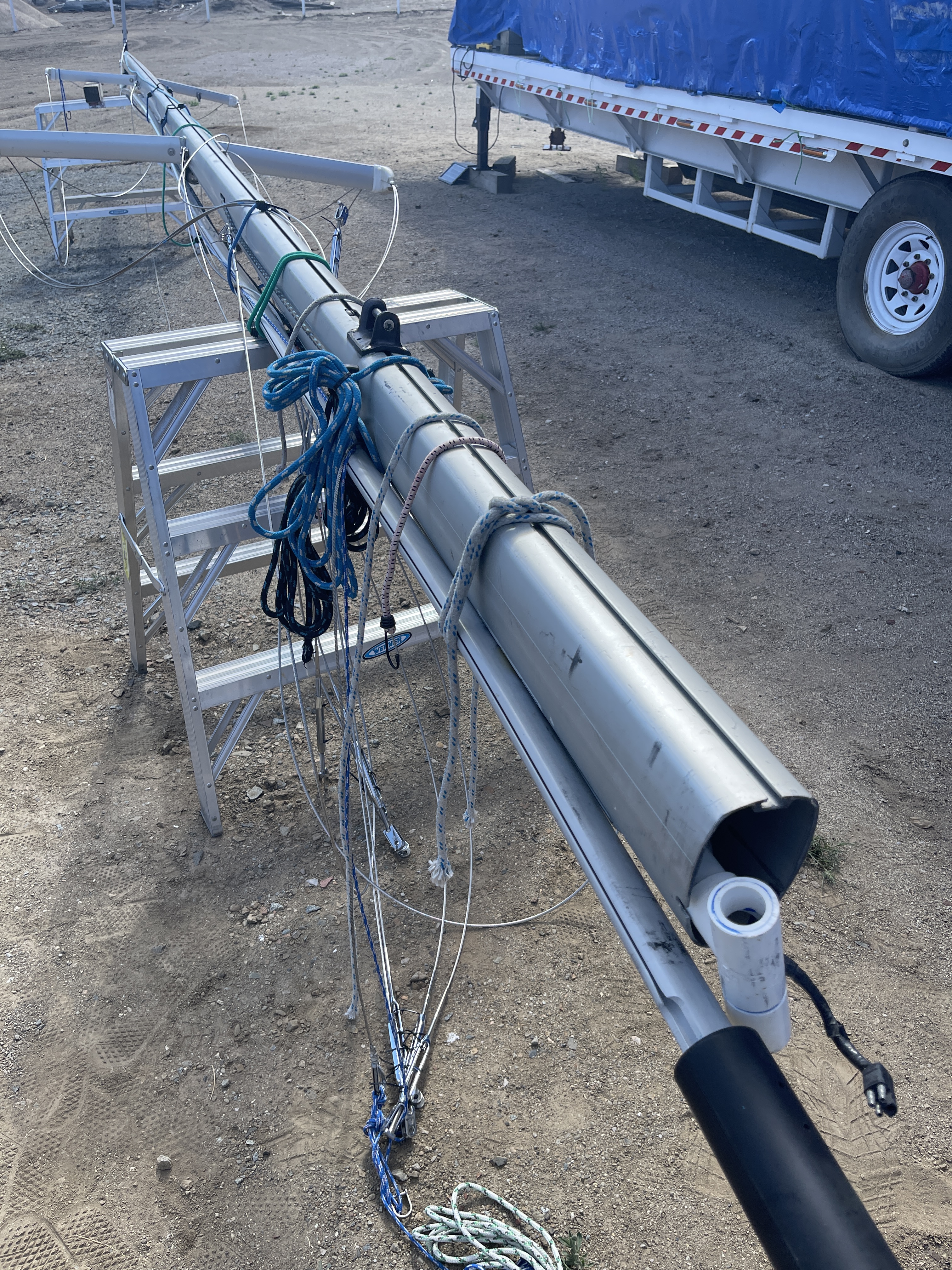
Since the mast was down on sawhorses, we took the opportunity to service it from tip to base, checking the sheaves, fasteners, spreaders, boots, wiring, lights, etc. Ancil rigged a gypsum-board lifter to help get the 200-lb. mast back up on the boat. Thank you, Ancil!
Checked the steering cables looking for fishhooks (there weren’t any — whew!).
Tried to remove the pinkish stain around the port-side Splendido logo that happened the winter we kept the boat on the hard up at Obexer’s. Tried four or five coats of oxalic acid, several fiberglass cleaning products, Soft Scrub … nothing worked. At best, I got it to lighten maybe 15% or so. Dang.
Applied gel coat to nicks on the transom and elsewhere in the cabin, then wet-sanded it and polished it up.
Removed all the original curtains in the boat, soaked them in OxyClean and mild washing soap, re-sewed the hook-and-loop parts that had come undone, and re-attached them. They look great.
Removed old epoxy spills in the cabin and on deck.
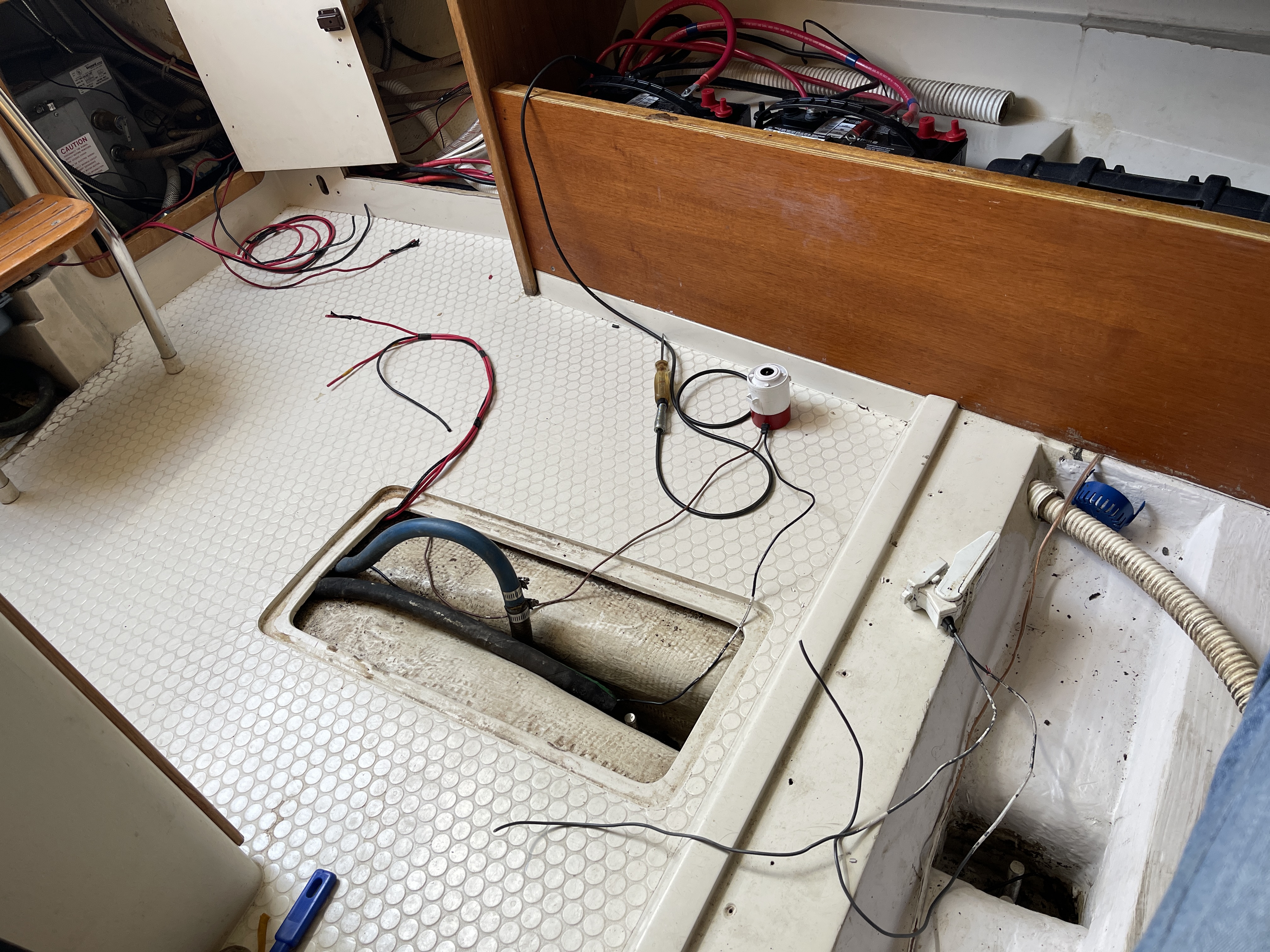
Used 3M 4200 to glue down the bilge pump and float switch in bilge. Also, finally wired the bilge pump properly to the panel so it operates automatically and manually as well.
Touched up the bottom paint with blue Total Boat Krypton.
Put 4-5 coats of PolyGlo (amazing stuff!) on the hull, and now she looks great.
I never did get around to making a better swim ladder rope.
After some rest, I’m looking forward to a relaxing summer of fair winds and smooth sailing! DB
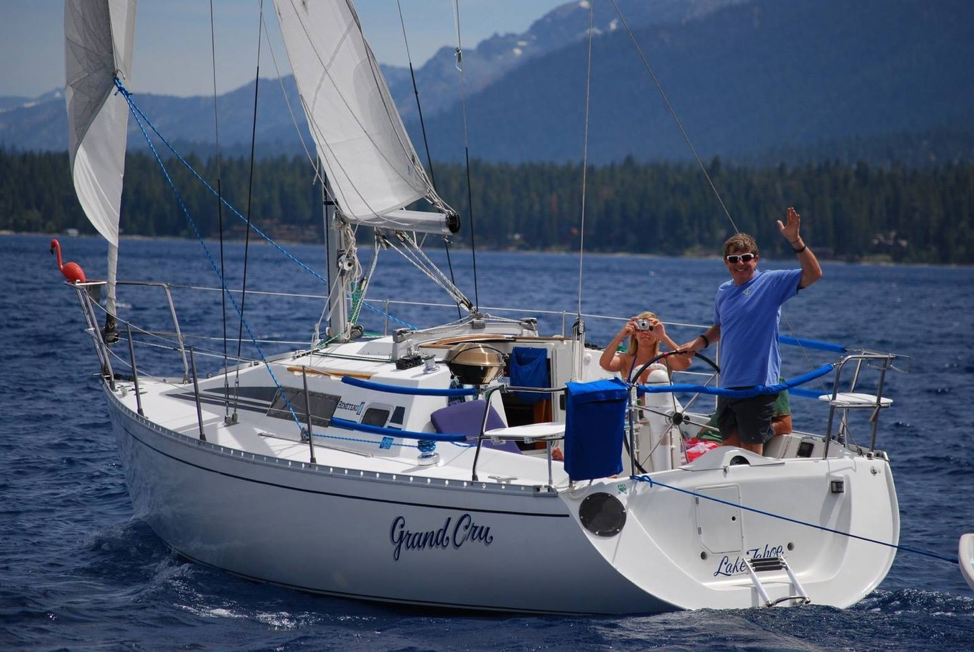
Back around 2007, I was starting to shift from a single-minded obsession with short-board windsurfing at Washoe Lake, Rio Vista and Maui to something that I could share with my lovely bride, Debbie, and so my thoughts turned toward monohull sailing. As luck would have it, around that time I received an invite from Fred McElroy, a longtime Renoite and Tahoe sailor, to go for a cruise aboard his storied Catalina 270, Grand Cru. I stocked up on a few bottles of Rombauer Chardonnay, which I’d heard was one of Fred’s favorites, and before long, I found myself as “cru” sailing from Tahoe City Marina to points south while engaged in great conversations with this affable skipper, a natural raconteur whose many years of plying Tahoe’s waters provided a solid education for a novice like myself. At some point in our adventures (and likely fueled by a glass or two of yummy Rombauer), I blurted out, “Hey, Fred, if you ever think of selling this boat, I want first right of refusal!” Serendipitously, in the fall of 2010, I got the call I’d been hoping for. Before long, the original Grand Cru became Splendido, but only after the complete name-retiring-and-changing ceremony where a goodly quantity of Veuve Cliquot washed the decks and offerings were made to Neptune to bless the boat and its future crew. So, with deep and enduring gratitude to that skipper who gave me my shot at sailing a good old boat on Lake Tahoe, it is my pleasure to share the following interview with you.
Q&A with Fred McElroy, Skipper, Grand Cru
Q: How did you come to own your lovely Beneteau First 285, Grand Cru? What year was she built? What is her Lake Tahoe history?
A: Our boat, Grand Cru, is a Beneteau First 285 that was built in 1988. The original owners were Harvey Fennel and Mark Combs, the owners of Reno’s Dickson Realty, who had purchased her in the Bay Area and brought her up to Lake Tahoe. The boat was first named Bucephalus, after Alexander the Great’s famous horse. Mark sold his ownership in the boat and his interest in Dickson Realty and he and his wife Fianna took the next few years and sailed around the world. When the boat was later purchased by John Turner and Heidi Olson, they changed her name to No Rules.
Q: How did you start sailing? How long ago?
A: Being born and growing up in Carmel on the California coast, literally the “son of a son of a sailor,” it was inevitable that I would spend a lot of my time on the water. My namesake, Lt. Cmdr. Frederick Kenneth McElroy (an admiral-to be, though that’s a story for another time) graduated from the United States Naval Academy in 1922. He was a highly decorated officer in the U.S. Navy until his death in 1942 in the South Pacific.
I did a lot of windsurfing in my early days and eventually started taking U.S. Sailing Association sailing classes in the Bay Area in 1991 with my boat partner at the time, Rich Cook. We had the same interests in windsurfing, offshore blue water sailing and cruising. We eventually bought a 1978 Catalina 27, Chablis, from Dr. Steve Schiff, who had her moored in Lake Tahoe. Dr. Schiff then bought a beautiful Catalina 309 and named her Premier Cru. Rich and I sold Chablis and in 1997, I bought a 1993 Catalina 270 called Ego Inflation from Peter Krueger (owner of Double Trouble, a J 124 and five-time Rolex® Big Boat Series Champion out of San Francisco) and then we (properly) changed the C270’s name to Grand Cru. From that point on, Steve Schiff and I were known as the “Cru Brothers.”
I eventually sold Grand Cru in 2010 to wonderful couple that has given her the love and attention she deserves. These days, the Catalina 270 Splendido can be seen skimming the beautiful clear blue waters of Lake Tahoe in all her glory along the West Shore and points beyond.
Q: What kind of improvements or upgrades to your boat or trailer have you made since you’ve owned her?
A: We purchased a trailer shortly after acquiring the Beneteau. It was the best move ever. It allows us to bring her down to the valley during the winter months to perform routine maintenance and other projects during the off season. We replaced the mast, spreaders and rigging in 2020 after the mast snapped on the buoy in a severe storm. We purchased new North Sail NPL Touring sails (main and foresail) in 2021, installed new LED lights and new cushions throughout. We rebuilt the binnacle in 2023, and installed new hatch covers in early 2024. There’s no two ways about it: sailboats are a labor of love. I enjoy “messing about in boats,” as Kenneth Grahame put it in The Wind in the Willows. I also expect things to work properly and I like to avoid mishaps.
Q:I gather you have had some spectacular mast and hull challenges over the years. Can you tell us about them?
A: The mast snapped during a summer storm in 2020, which was unfortunate, but we pulled it all together and found a great new mast to replace it with. In the spring of 2023, I decided to tackle a good-sized project, which was re-fiberglassing the area around the keel to take are of a minor “smile” that had developed over the years. I spent days on the trailer, glassing and sanding and glassing and sanding to get it just right. One of the best things about Lake Tahoe is that it’s not a humid environment, the lake is 99.99% pure fresh water from melted snow, so it’s very clean, which helps preserve the integrity of the equipment on the boat. We are also fortunate to be able to bring the boat down to the valley during the harsh winter months at Tahoe to be sure she is properly looked after.
Q: What do you love most about Grand Cru and sailing Lake Tahoe?
A: Probably my Cru. I have had some of the most wonderful folks on the boat that appreciate the beauty of Lake Tahoe, the joy of sailing and a good glass of Rombauer Chardonnay. Sailing Lake Tahoe is beautiful and generally peaceful, although it can be challenging at times. Nothing is better than sailing along in 15 knots of wind looking at snow-capped mountains, crystal-clear water and an occasional sailboat while enjoying a nice glass of wine. Early morning coffees on the hook off Sugar Pine State Park, spectacular sunsets and BBQ on the boat at anchor, anchoring offshore to listen to the Commons Beach Concerts at Tahoe City in the summer and sailing back home in the dark or by the light of the moon.
Q: What would you change about your boat now? What upgrades do you have planned?
A: Probably an autopilot. Although Lake Tahe is not too big it would be a nice luxury to have aboard. Our friend Ancil has one on his 36-ft. Le Crapaud, and I must admit, it is nice.
Q:What is your most fun or interesting time on Lake Tahoe?
A: We belong to a group called Full Moon Maniacs that does events on full moons. We have had a few kayak trips during full moons on Lake Tahoe where Grand Cru is the support boat/wine barge! We have had 20-30 kayaks rafted up or gathered for a BBQ on a beach. I think nowadays we tend to enjoy more intimate evenings and overnight stays at Sugar Pine Point with friends.
Q: What was your worst experience sailing on Lake Tahoe?
A: Two years ago, on an evening sail with a fairly experienced crew, a summer thunderstorm popped up over South Lake Tahoe. Typically, those storms stay south and dissipate as they move north over cool water, but this one did not not. We normally take a southern route to Sugar Pine Point for dinner and a swim, but this time, I decided to head north because it “didn’t look right.” We were sailing north in a nice breeze. One of my guests looked at me a little funny as I sat at the helm. “What’s up?” I asked. She said a bolt of lightning had just flashed across the sky behind us. No bueno. I headed to Sunnyside and dropped the sails. I said we needed to get to calm waters and closer to shore, so we started motoring towards Tahoe City, which was not far away. There was only one other boat on the lake: another experienced crew aboard Tahoe Cruz, a 50-ft Santa Cruz charter boat. Their sails were down, and they were headed back to Tahoe City Marina, too. As we were about round the point toward Tahoe City, a gust of wind hit us broadside under bare poles (no sails) and put the port rail in the water. I had never experienced a boat rounding up under bare poles before. We made it to Tahoe City Marina, tied up at the dock and had dinner, a glass of wine and watched the most beautiful sunset I have ever seen on Lake Tahoe. When the storm passed, we set sail and sailed back to Obexer’s Marina in the dark. Beautiful evening.
Q: What would you tell people about sailing Lake Tahoe they might be surprised to know?
A: If you can sail at Lake Tahoe and on the San Francisco Bay, you can sail anywhere in the world.
• Tahoe Yacht Club is older than the St. Francis Yacht Club. Members of Tahoe Yacht Club (est. 1925) founded the St. Francis Yacht Club in 1927.
• Many members at Tahoe Yacht Club are world-class sailboat racers. I have had America’s Cup racers on my boat. Boats like the Antrim 27, J 124, Farr 40s, Melges 24 and J 24 have all competed at high levels on Lake Tahoe. It’s also been home to the Catalina 27 Championship races Gold Cup, the U.S. Laser National Championships and the U.S. Singlehanded Championships.
• World-famous SV Delos (the #2 sailing channel on YouTube, with 700,000 subscribers worldwide) crew Brady Trautman and his partner Alex Blue have established a wonderful sailing school called Cruisers Academy in Tahoe City.
• A group of mostly West Shore sailors have formed a very informal club called Big Blue Tahoe Yacht Club (BBTYC). The mission of the Big Blue Tahoe Yacht Club is to celebrate the joy of sailing at Lake Tahoe and the community of sailors who integrate sailing into their busy lives, whether through boat ownership, partnership or sailing companionship, volunteering, and supporting those who sail with technical skills, a helping hand, a loaf of bread, a bottle of wine/soda and an unwavering spirit of adventure.
Look for the BBTYC (Big Blue Tahoe Yacht Club) on Facebook! Sea ya! — Fred McElroy, Skipper, Grand Cru
Thank you, Fred, for sharing your stories, and we’ll see you and Alice out on the water. Until those balmy breezes blow again, fair winds and smooth sailing! DB
Our good old boat turns 30 this year, so it was no big surprise that spring commissioning would entail a few more tasks than usual to keep her ship-shape. It helped a lot to have fellow sailor Ancil — an incredibly talented, mechanically inclined guy — poke around Splendido when she was on the hard and notice things I hadn’t noticed. One day, he grabbed hold of the prop drive shaft and said, “You need a new cutlass bearing.” Before I knew it, we were working together to remove the old bushing that supports the drive shaft and tapping in a new one, as shown in this video. The untold part of the video above is that we got a little excited and ended up crimping one edge of the new cutlass bearing as we were tapping it in, so I had to buy a new $75 part from Catalina Direct and re-do it. C’est la guerre.
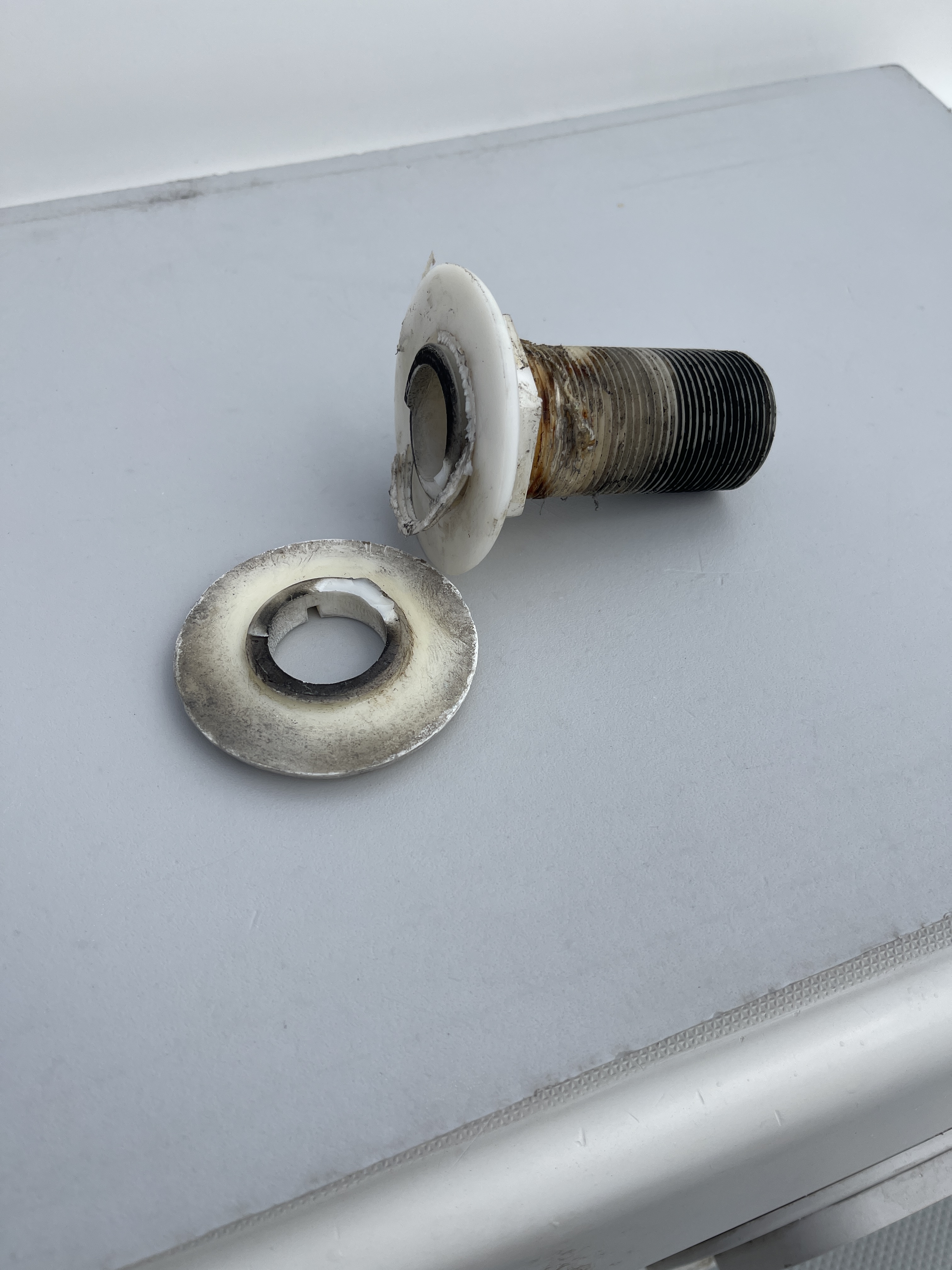
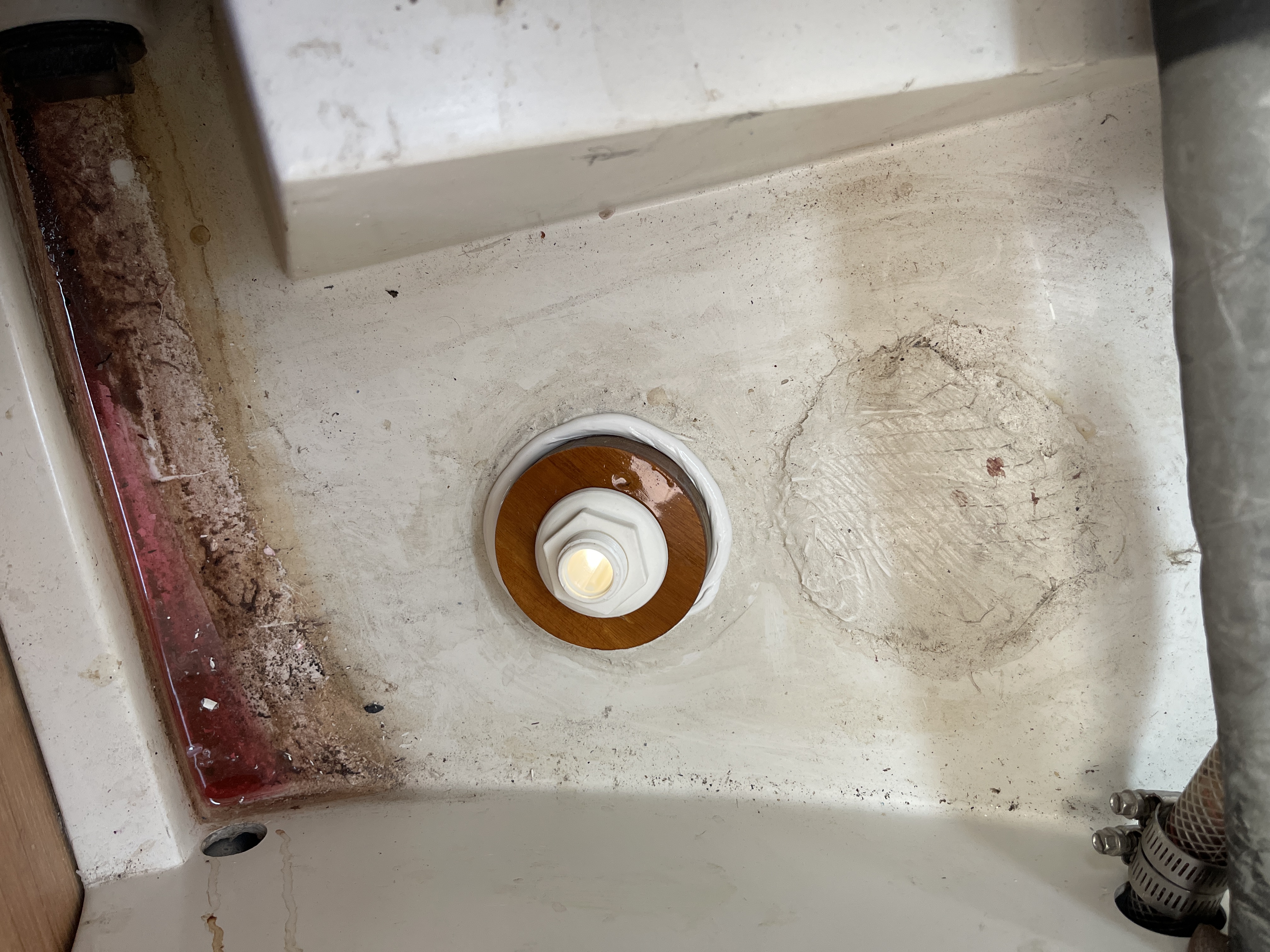
Ancil struck again by noticing that Splendido’s exhaust thru-hull was cracked. That was a bit of a shocker, as I started playing with it and it broke and literally fell out of the boat. Yikes! Many online searches and phone calls later, and I was able to get Catalina Direct to source a serviceable replacement that is now posted on their website. Having that one fail inspired me to replace four more of the thru-hulls in the boat, and I think they turned out pretty well — plus, it gave me an easy opportunity to use Marelube on all of the seacocks, and to improve access to the annoying one under the kitchen sink.
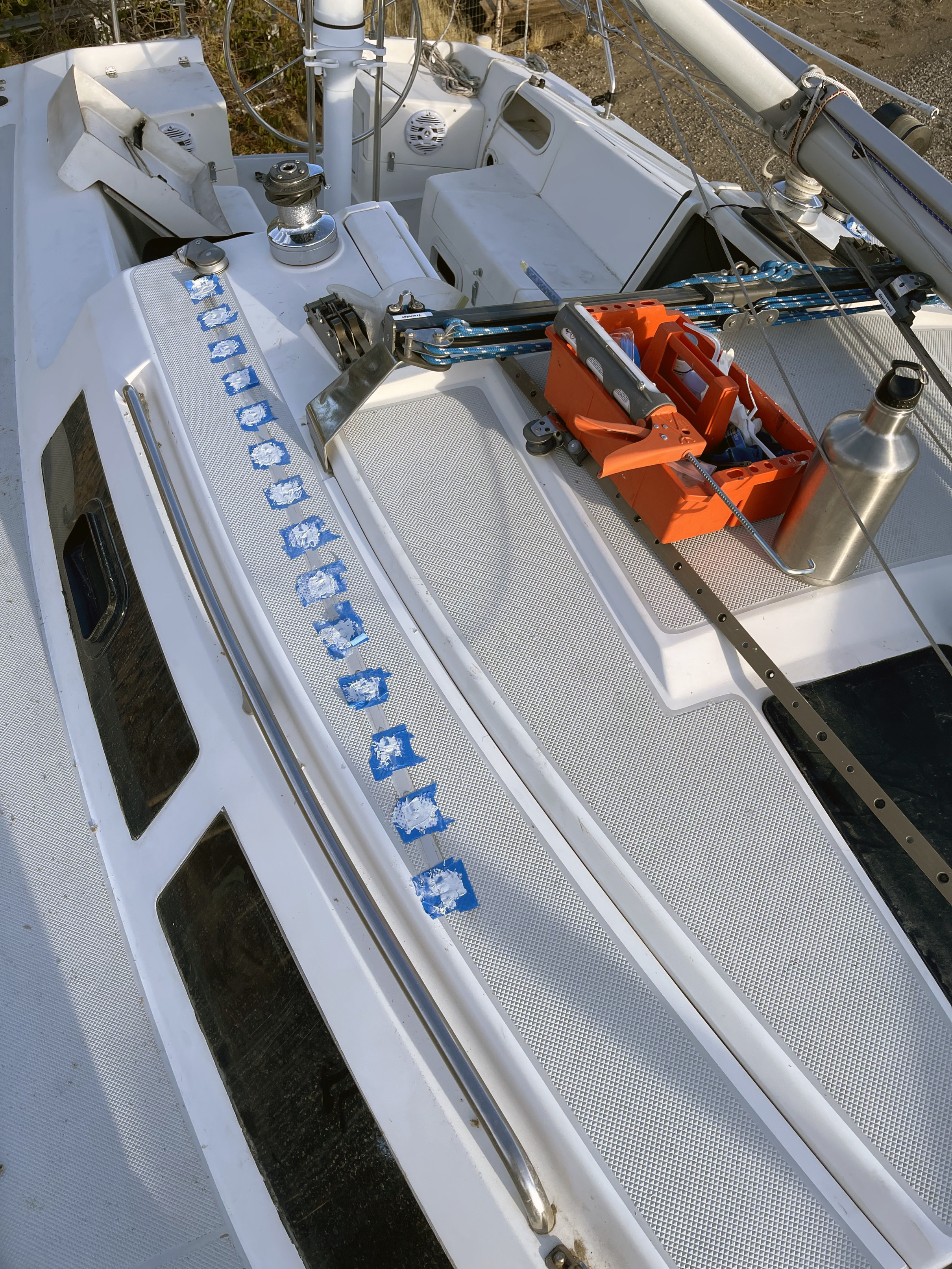
The fairlead tracks were leaking and allowing water into the balsa of the deck, so Debbie and I drilled and filled them with epoxy and installed new stainless fasteners all down the line. I’m still cleaning up the epoxy drips, but the good thing about an older boat with an oxidized fiberglass deck is that they’re a little easier to deal with — a sharp razor-blade and a bit of heat gun action seems to be doing the trick.
We launch next Tuesday, so I’m excited to finally get her back out on Lake Tahoe. Other honey-dos this winter included riveting on a new gooseneck to boom and mast, and doing a quick re-varnish of the cabin lockers, drink holder, and oars. Ah, the aroma of varnish stinking up the garage in the morning. It smells like … sailing season!
This morning, it’s back to the boat yard to caulk the fairlead tracks, clean up epoxy drips, Thixo some aged, cracked plastic pieces, and maybe touch up some paint on boat and trailer. I promise, my next post will be about actually sailing on Lake Tahoe — that is, if Zephyrus grants us the privilege.
I just read in the San Francisco Chronicle that we’ve experienced 12 atmospheric rivers this winter, so I was surprised to discover that Splendido was not knee-deep in mud when I went to check on her last week at her winter home. She was only ankle-deep, as the trailer tires had sunk a bit into the pasture. I don’t think it will be a problem.
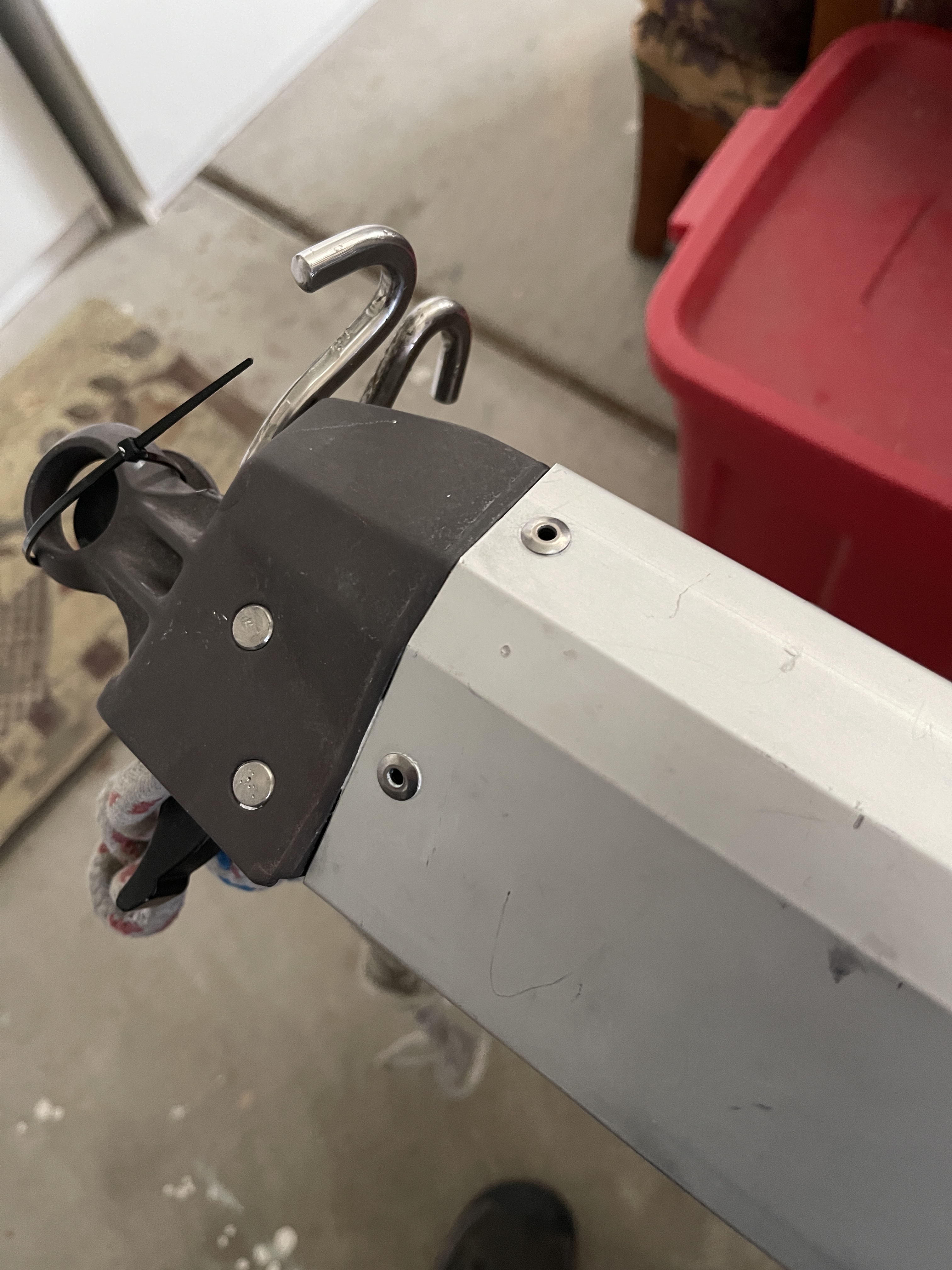
I’m excited — as always, at this time of year — to get after the spring commissioning and get back out on the water. We were lucky to re-up our buoy by Hurricane Bay, so that’s one thing checked off the list. The big project at the moment is riveting a new gooseneck assembly onto the boom and mast. After that, it’s re-drilling the fairlead track holes, filling them with epoxy again, and drilling once again so they’re sealed and I can re-install the tracks.
Last week, I stripped the boom of the lazy bag and mainsail and brought it home to rivet on the new parts. I have never riveted anything in my life, so I quicky became a YouTube™ Certified Riveter by watching four or five videos, and now I’m ready for the challenge. The only quirk about mast and boom work is, you’ve got to use stainless-steel rivets and a goop called Ultra Tef-Gel to ward off corrosion. That Ultra Tef-Gel crap is spendy — $30 for a little tube. Debbie just shook her head and said, “What are you complaining about? Have you seen the price of lipstick lately?”
I did want to note that I had a bonafide brush with greatness at the end of last season. As regular readers may recall, I went through a real mental health challenge during the pandemic, and one thing that helped me through that period was watching countless episodes of a YouTube™ program called Sailing SV Delos, which chronicles the adventures of Brian and Kazza and, for many of the episodes, Brian’s brother Señor Brady and Brady’s partner, Alex Blue. When I heard that Brady and Blue had moved up to the Tahoe area and started a sailing school, I sent a note of welcome to their website and mentioned we shared the same mooring field. One evening, when I was working belowdecks, I spied a familiar face on an approaching sailboat. It was Señor Brady stopping by to say hello! We had a nice chat, and I told him how his adventures aboard SV Delos inspired me during the real low patch I was going through, and he was so gracious and humble —just a genuinely great human being. It was really a highlight to the 2022 sailing season.
Splendido turns 30 this year, and so my goal is to turn this sleeping beauty into the best version of herself in the next 60 days. Sailing her is the absolute best, but messing about in the boat is a close second for me. Thanks for sailing along, hit that “Like” button if the spirit moves you, and let me know in the “Leave A Comment” section if you have any questions about the care, feeding and sailing of the lovely Catalina 270 sailboat.
Until next time, fair winds and following seas! DB
Just for fun, I — like millions worldwide — decided to try the artificial intelligence tool called ChatGPT to answer a question that’s been bouncing around in my head for years. I had to edit it a bit to make it make sense, but this is the answer it came up with.
Mooring buoys at Lake Tahoe can be expensive due to a variety of factors. Some of the reasons may include:
High demand Lake Tahoe is a popular destination for boating and water sports, which can drive up the demand for mooring buoys.
Limited supply The number of mooring buoys at Lake Tahoe is limited, which can also contribute to the high cost.
Maintenance costs Mooring buoys require regular maintenance to ensure they are safe and functional, which can add to the overall cost.
Government regulations There may be government regulations and permits that need to be obtained in order to install a mooring buoy, which can add to the cost.
Environmental impact Lake Tahoe is a sensitive ecosystem and measures need to be taken to minimize the environmental impact of the mooring buoys, which can also add to the cost.
High land values The Lake Tahoe basin is a high land-value area with high property prices that might reflect on the cost of the buoys.
It’s important to note that prices can vary depending on the location of the buoy, dinghy access and public parking available nearby, so it’s always a good idea to shop around and compare prices before making a decision.
It doesn’t take artificial intelligence to understand what’s on my mind, sitting here with a hot cup of coffee on a very wintery and cold (27º F.) day here in Reno, with my boat under a foot of snow at 5,886 ft. elevation. I’d better get on the horn and get something going to secure a mooring for the coming sailing season. Until next time,
We pulled Splendido out of the lake a little early this season as Debbie and I were celebrating our 30th wedding anniversary by taking a 10-day road trip down the gorgeous California coast. When we returned, I went to work on some projects that were adding up, including replacing the fasteners for the fairlead tracks, which had been letting condensation through the deck into the cabin, and staining the curtains and ceiling with a “tea” comprised of dirt and maybe rust or corrosion from the so-called stainless steel barrel nuts, some of which had just decomposed and fell out of the ceiling after all these years. Splendido is, after all, now 30 years old, so the working of the boat must’ve done its thing to the hardware.
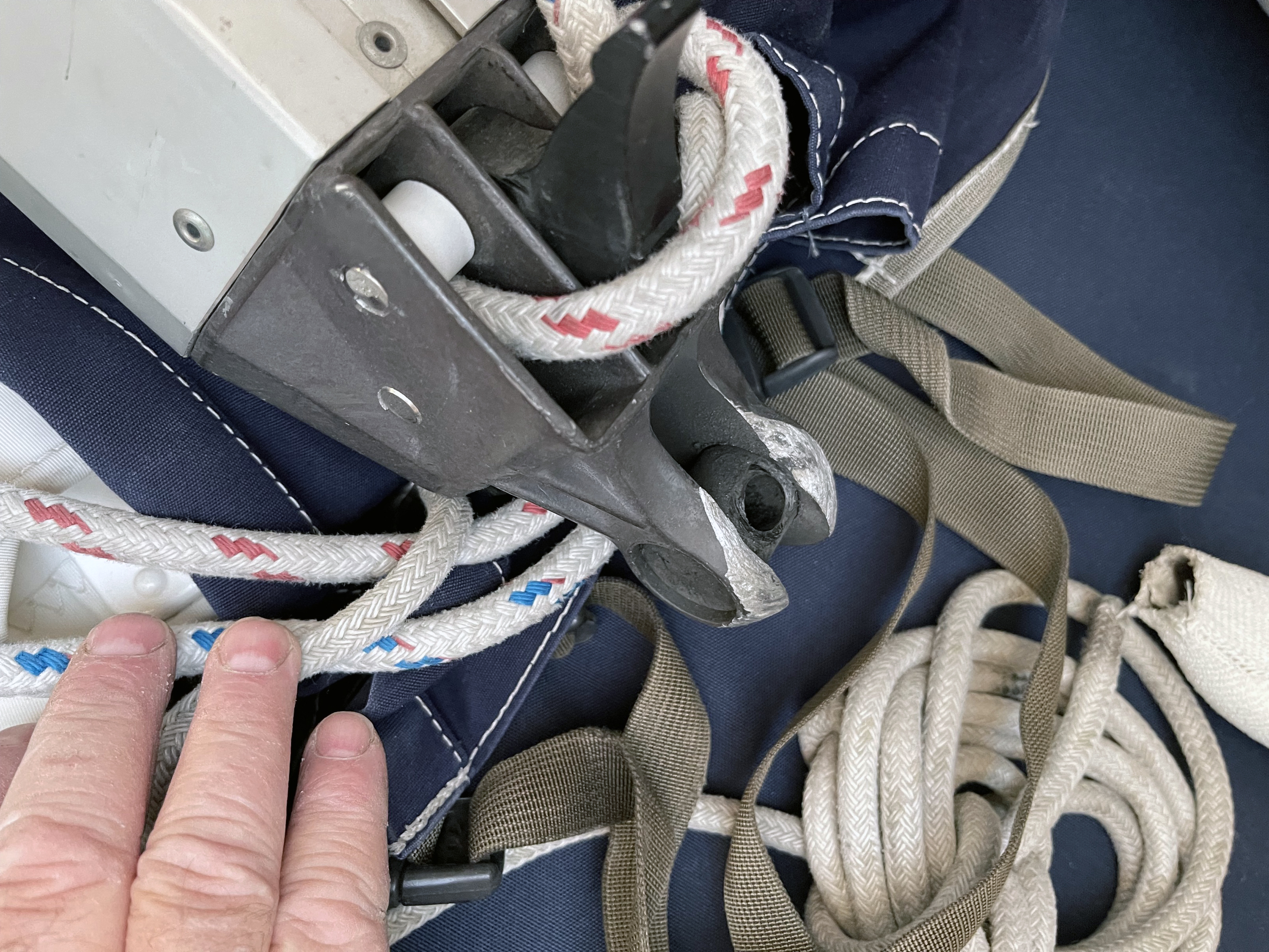
While winterizing the boat, I noticed (not for the first time, mind you) that the boom gooseneck assembly had really worn down over the years, to the point where my sailing buddy Ancil remarked, “I’m surprised it hasn’t broken off yet.” So, the process of finding a replacement began for venerable Isomat boom parts. At length, I did find a source (and this, after contacting Catalina Yachts’ factory in Florida and another party who evidently purchased all the back stock of parts from Catalina’s factory, both non-responsive to my inquiries) and that was at Rig-Rite, Inc. I found what I was looking for on their website, but as luck would have it, their shopping cart wasn’t working today, so I’ll have to wait until Monday to call and complete the transaction.
I do want to express my thanks to Ancil, who is graciously renting me some space in his pasture once again to store Splendido this winter. I didn’t write about it before, but my experiment of keeping her up at the lake last winter was an unmitigated waste of resources. She got far more beaten up by the storms at elevation — even though she was (expensively) shrink-wrapped — than she ever has wintering on the hard down here in Reno. I was stunned at how the storms up there blew debris up and under the tight “skirt” of the shrink-wrap and so she was just filthy when I went to uncover her last spring. And, the areas that were covered by this “skirt” had a weird pink mold growing, which was a delight to clean off, let me tell you. So, I learned my lesson and she’s staying close to home this winter so I can get some work done. The list, as always, is long, but so is the dark season here, so I’ll just chip away and see that I can do. For now, it’s sealing the fairlead track holes with epoxy and re-drilling them so they’re watertight.
Additional thanks goes to Ancil, who is one of the most mechanically inclined people I’ve ever met. He’s helped me out of half a dozen mechanical fixes already, and for that, I am grateful. It’s a small community of sailors here where I live, but not a bad one in the bunch so far. I’m looking forward to getting back on the water as soon as I can. Until then …
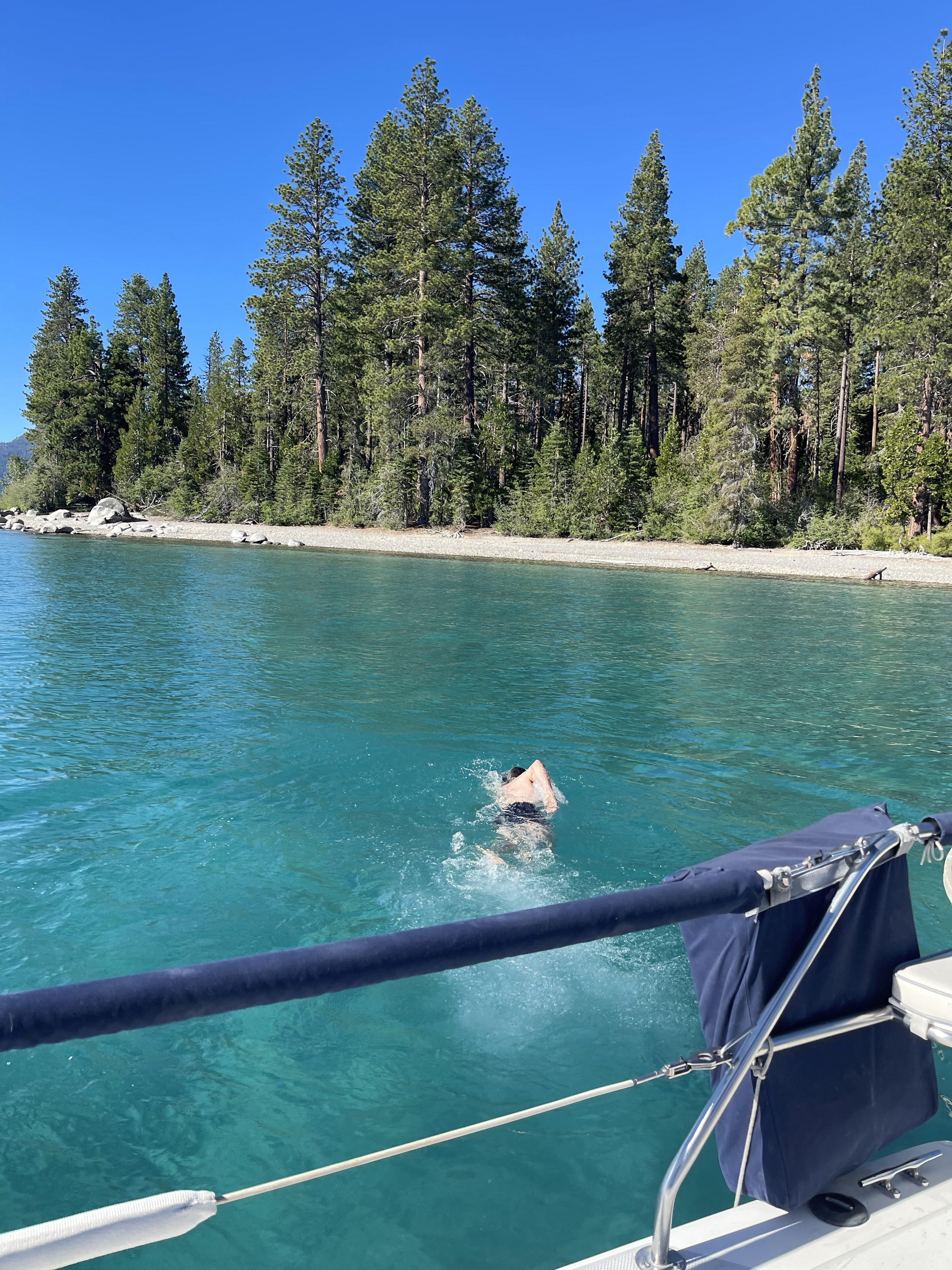
It’s been well over 100º F. at home this week, so we have been taking every opportunity to get out on the water to cool down. Tahoe has been hot as well, recording temps in the high 80s — something I’ve never seen before in our 12 years of sailing here. I brought our old hot tub thermometer with us and recorded a water surface temperature of 72º F. at Sugar Pine State Park. I swam around for hours, snorkeling a bit in the area where we dropped the hook and checking out Splendido’s hull. Even Debbie jumped in and swam around for about 20 minutes without getting chilled, which I believe is a new record for her.
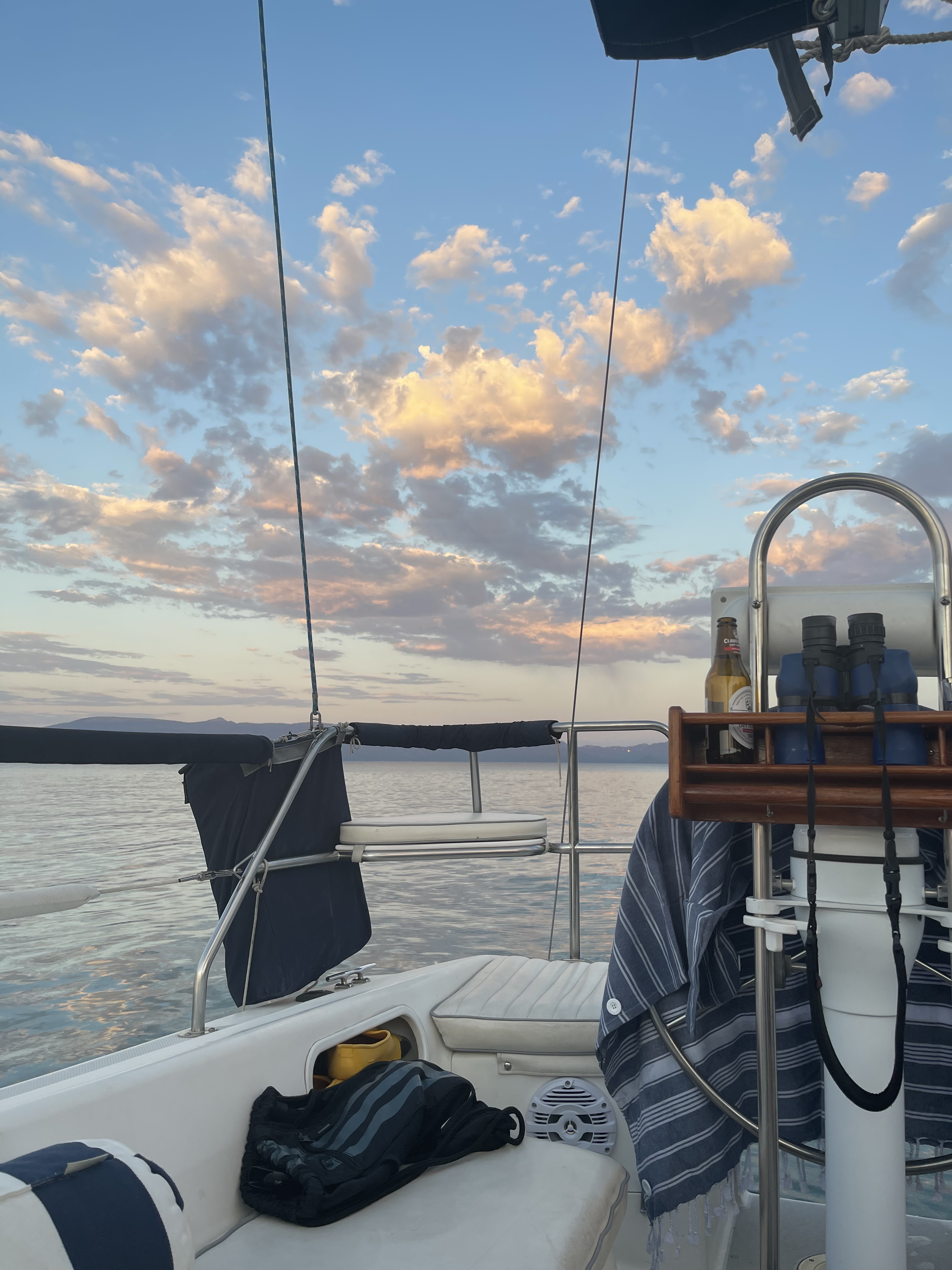
I love it when I have uninterrupted time on the boat, like when we do an overnight stay. Tahoe was like a mill pond all night, so I woke up fresh around 5 a.m. and got the coffee going so we could enjoy the sunrise. Debbie took up her favorite spot on the foredeck and I joined her as we soaked in the silence and serenity of the early hour. I noticed the nylon pins on the hinges to the foreward hatch had worked their way out about an inch and a half on both sides, so I went down and got a screwdriver and an adjustable wrench to gently tap them back into place. Splendido seems pretty dialed in this summer, but I’m always thinking about the next project. Right now, I’m thinking about a fall project to refurbish the sea hood, and another project to repaint and upgrade the trailer before we pull Splendido in October. I saw a funny line on the Catalina 270 forum that said “the only thing guaranteed to work on an older sailboat is the owner,” and I enjoyed a real belly laugh over that. But, as someone who has worked at a desk as a writer for 35 years, I actually relish the chance to do hands-on work and learn a few things. I think that’s what I appreciate most about owning a sailboat: I’ve learned a bit about diesel maintenance, plumbing, electrical, woodworking, gel coat repair, plastic fabrication, and lots more — mostly in a clumsy, oh-ffs-what-have-I-done-now? way. But I digress. For now, I’m just grateful that the fire season hasn’t been too bad, and that our exposure to smoke has been minimal. You can see the start of the smoke that came in from the Oak Fire near Yosemite July 22, and I am happy to say the fire crews really jumped on that one and knocked it down within a week. It looks like there’s a break in the heat dome today, and before we know it, the sky will change mid-August and that first hint of fall will hang in the air.
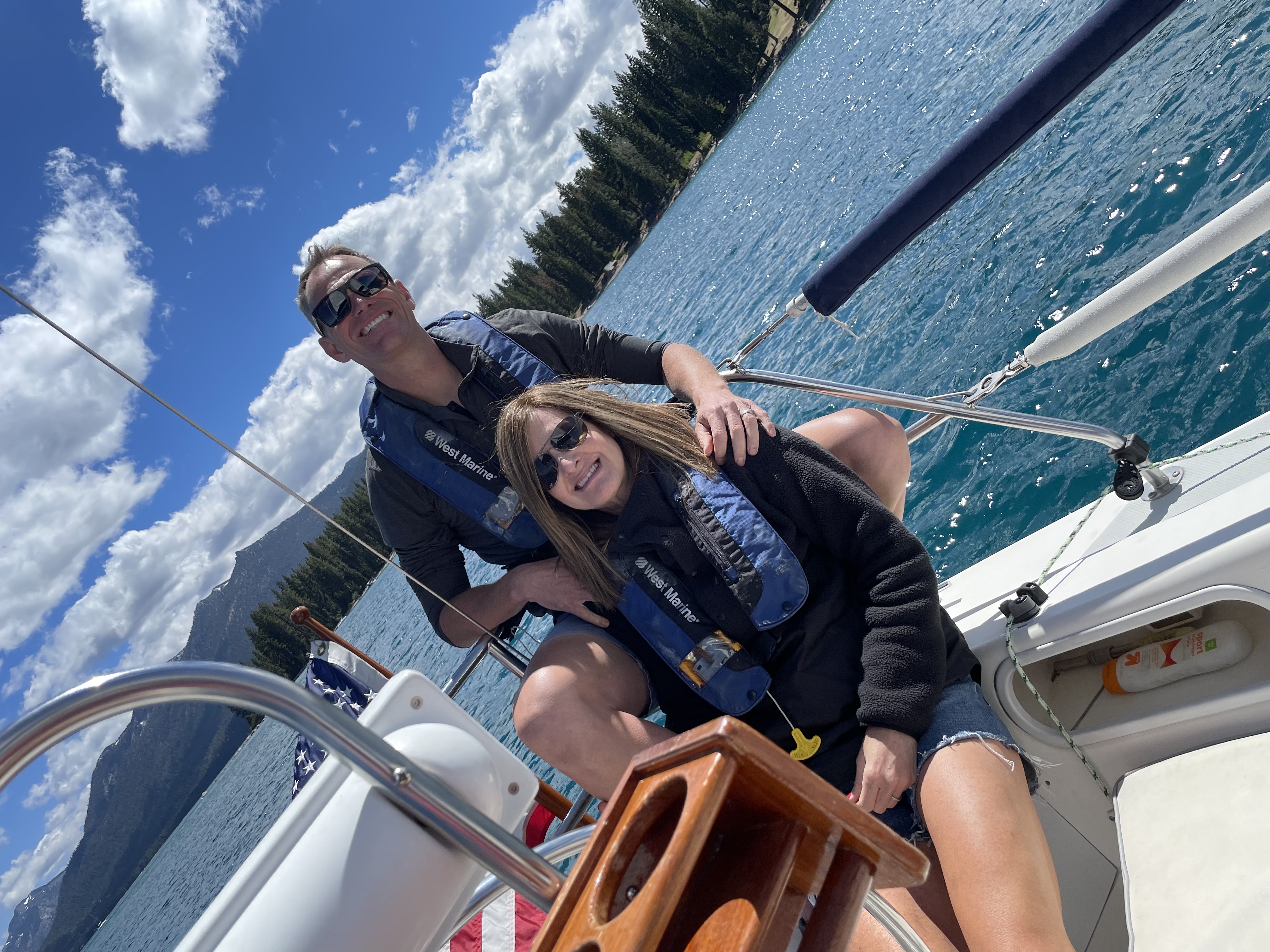
Debbie and I have been getting out on the water this season at every opportunity — almost to the point of exhaustion. (Yes, it’s a tough job, but somebody’s gotta do it.) 🙂 Seriously, though, at our age, you really do notice the physical effort involved with sailing at 6,224 ft. above sea level, so you’ve got to keep your strength up.
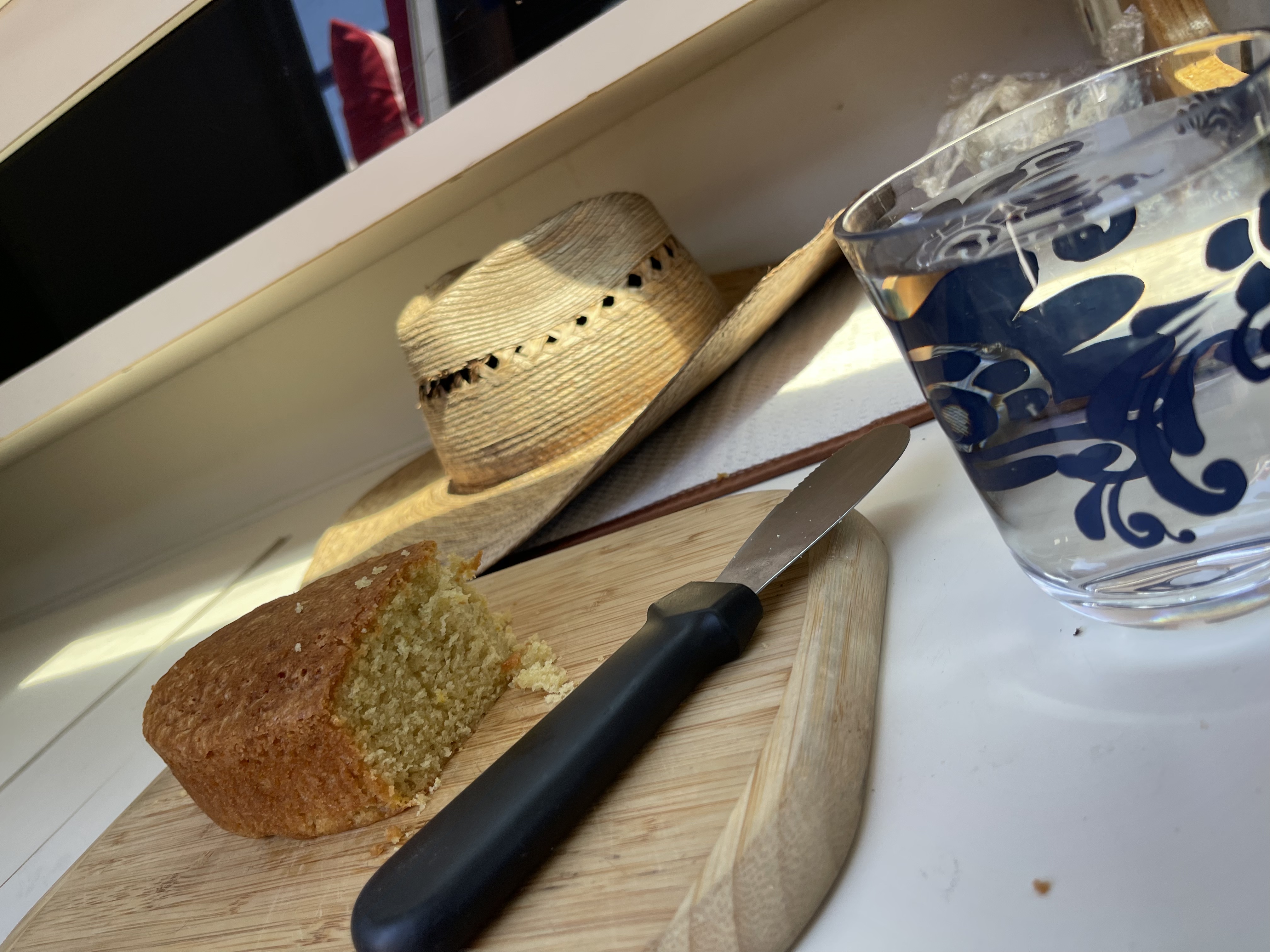
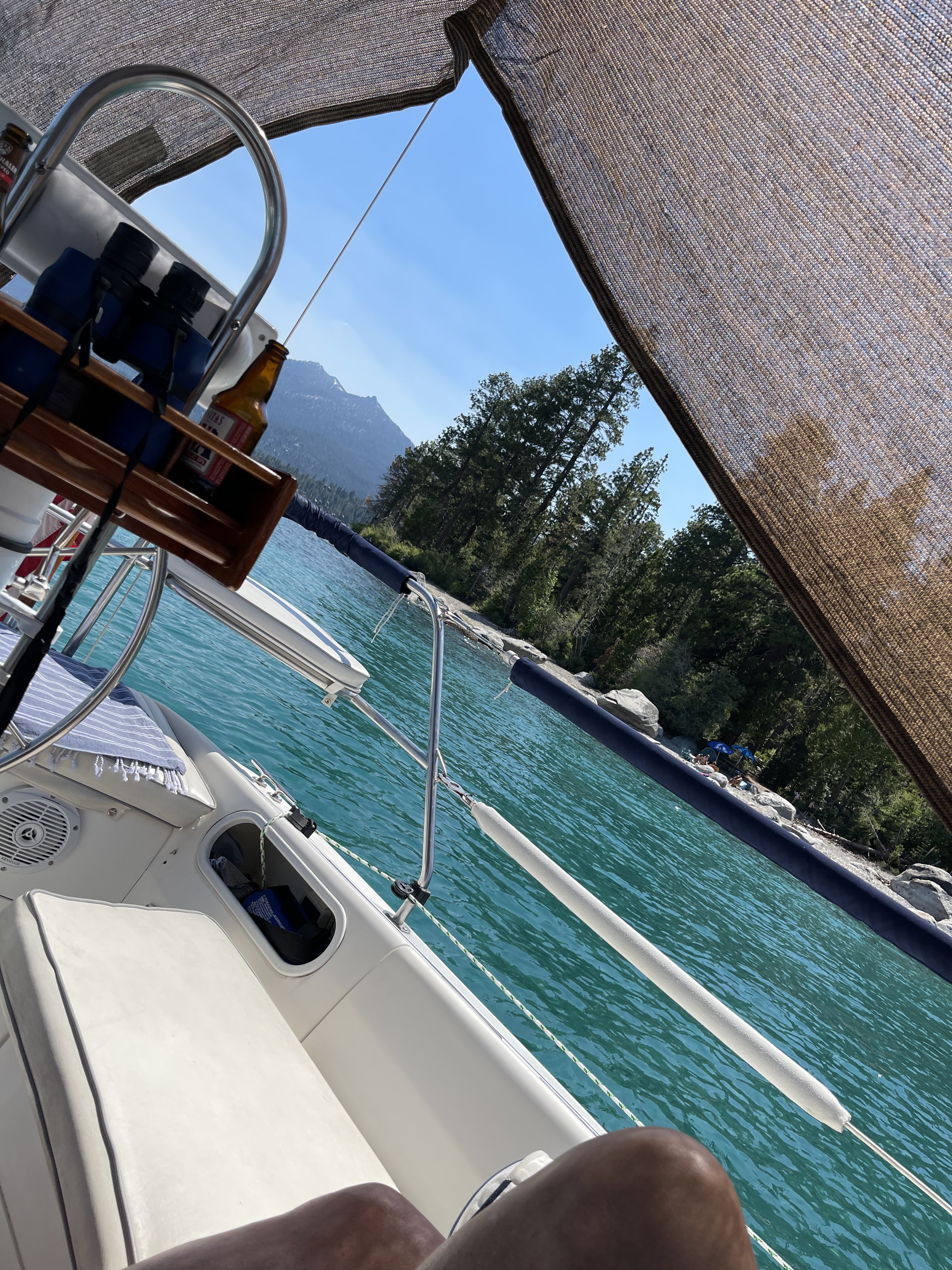
To that point, I want to share an amazing recipe for olive oil cake that Debbie makes (with all credit to legendary pastry chef Jennifer Shelbo), which is a perfect snack for munching on when you’ve thrown down the hook and have a chance to rest your hands and eyes in the cool shade of your boom tent to beat the dazzling sunshine and heat that’s now a part of summer sailing at Lake Tahoe.
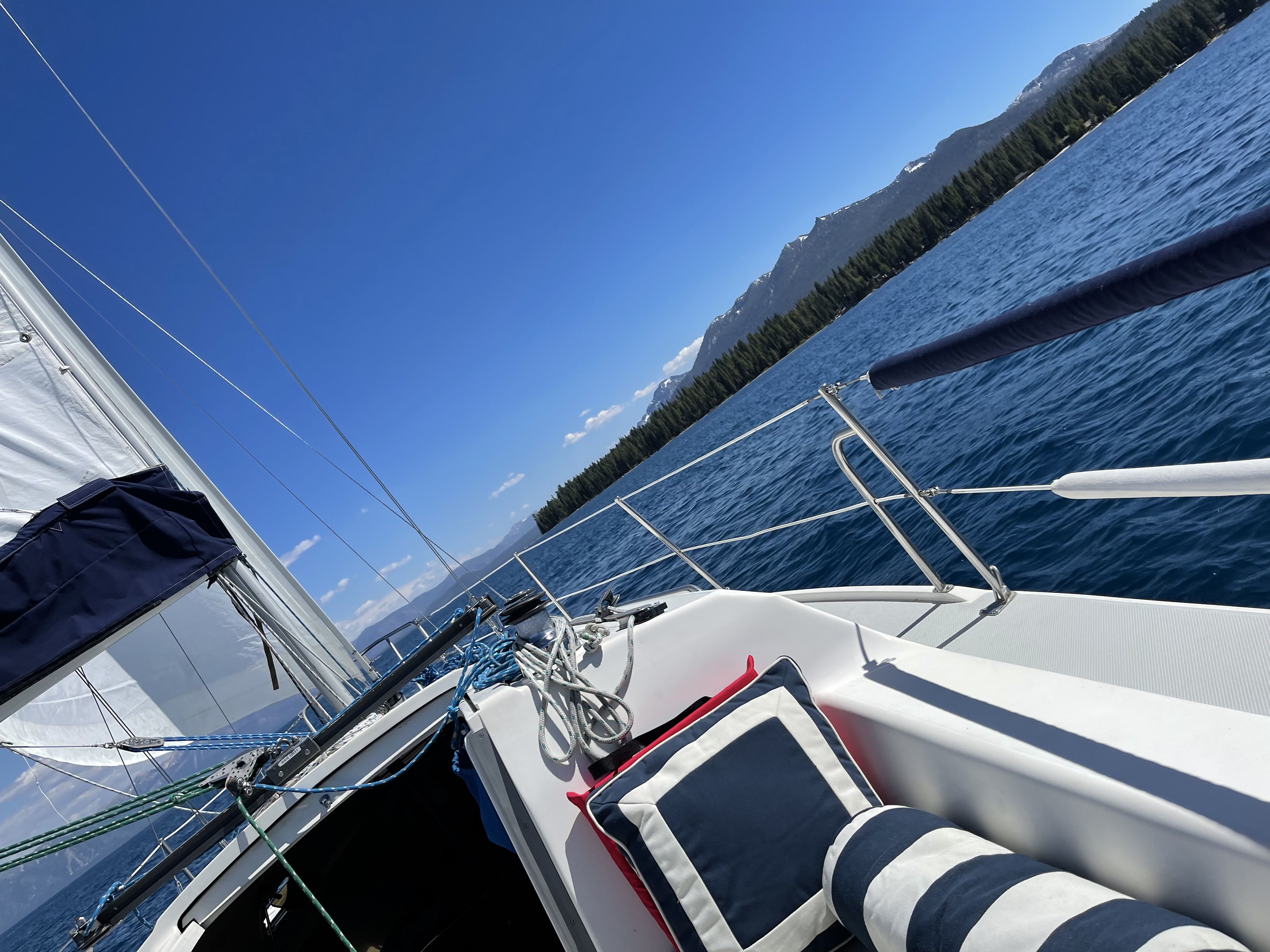
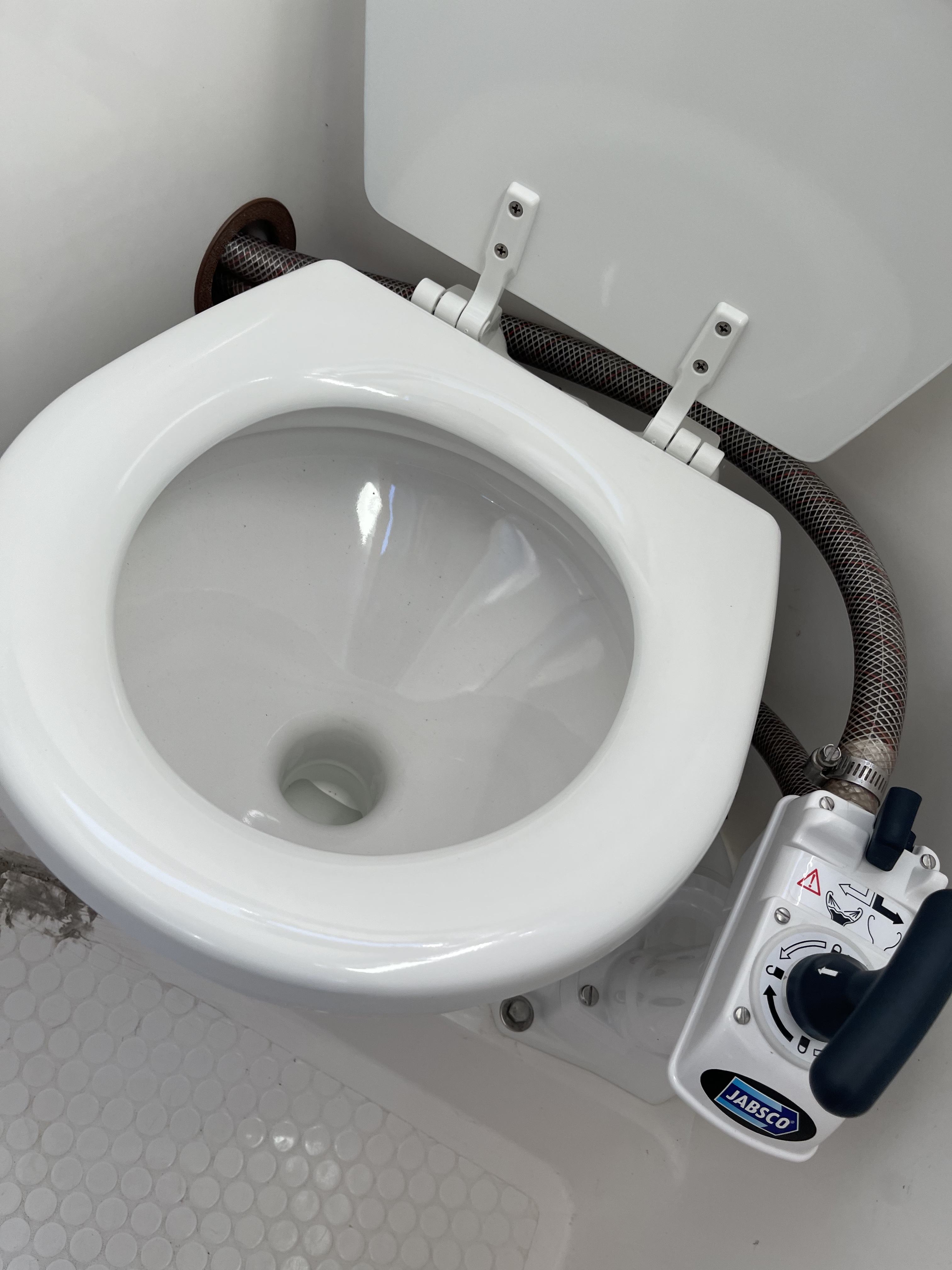
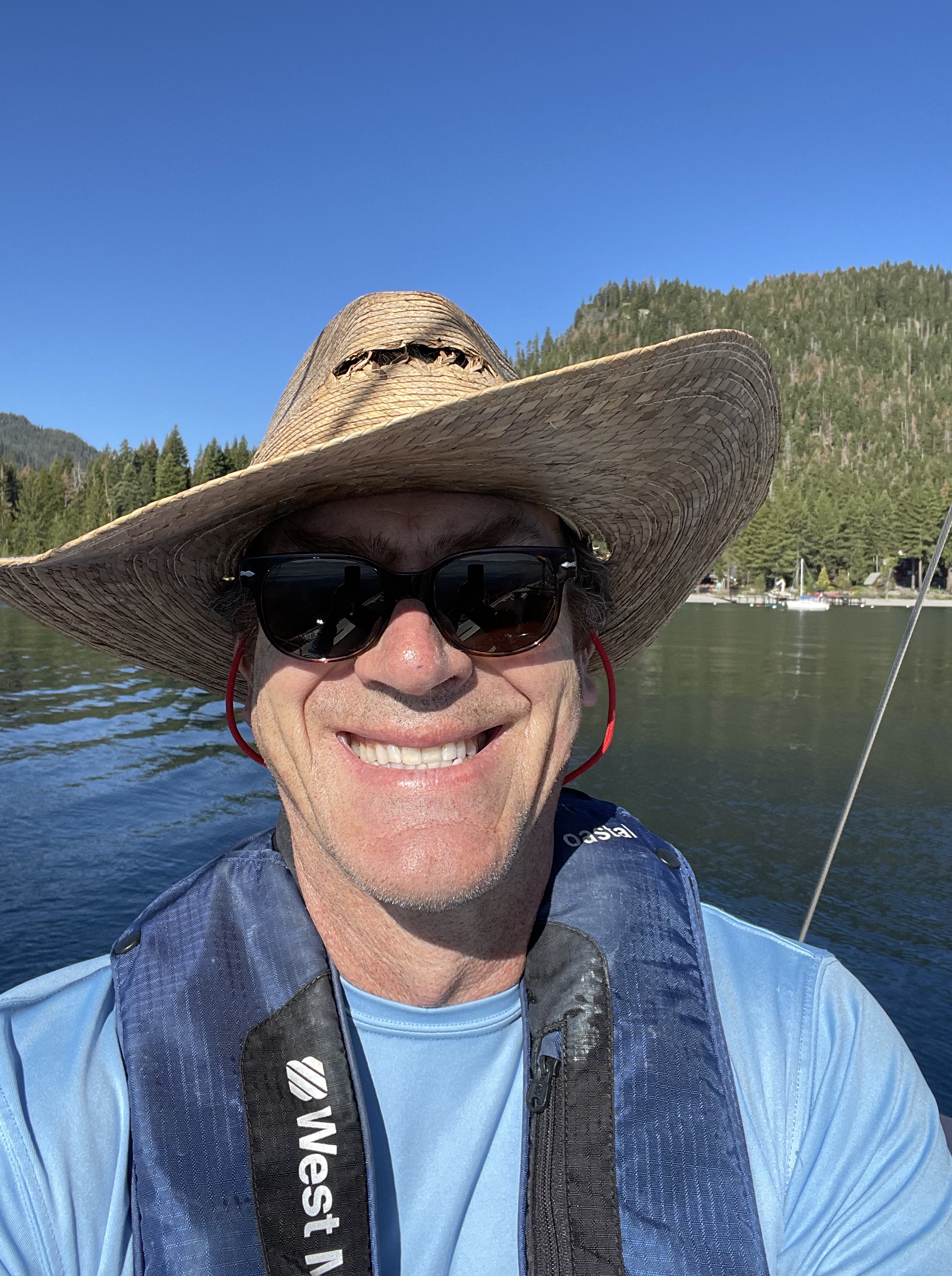
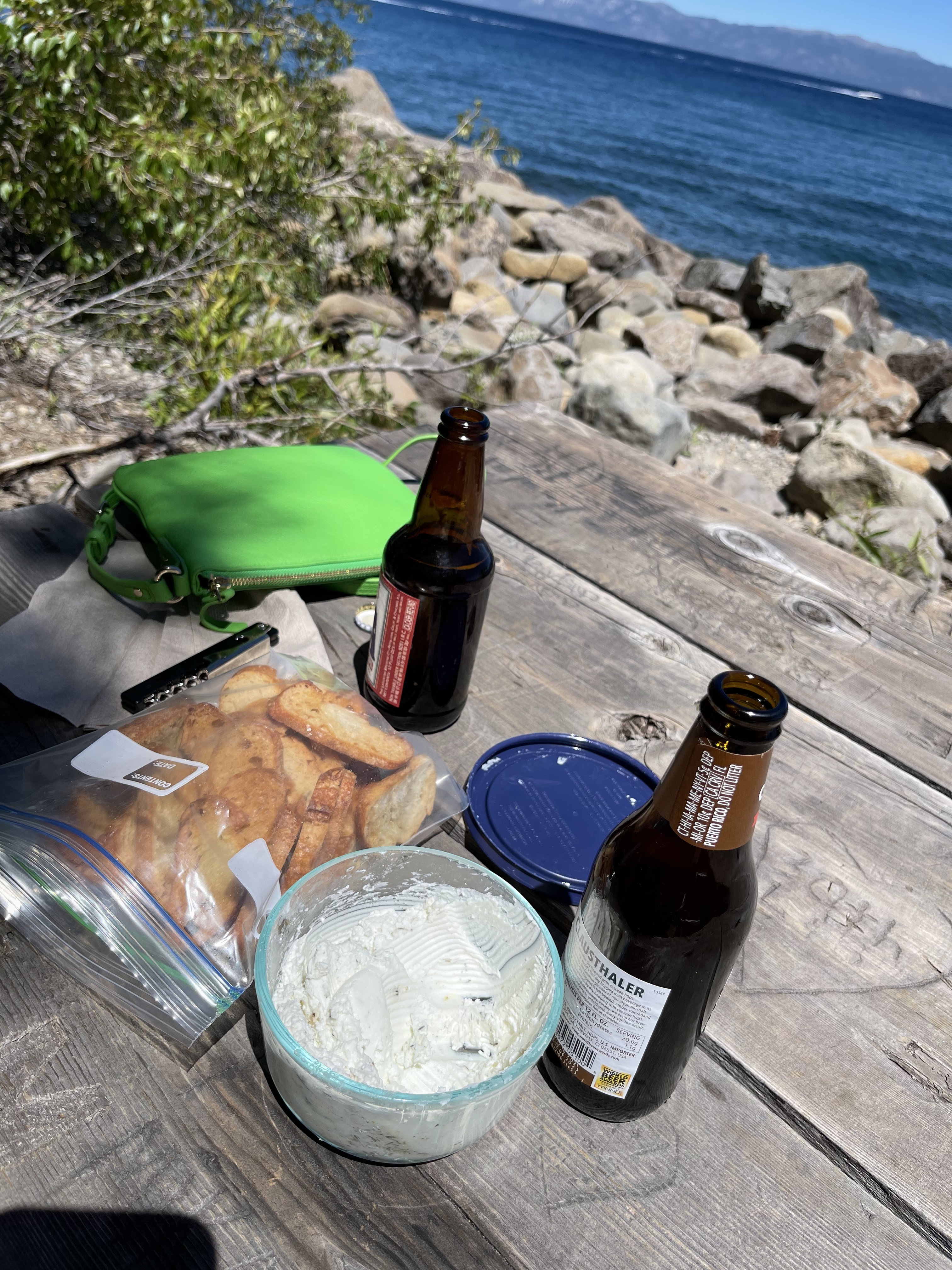
Olive oil cake — yum!Debbie’s ready to sail.First sail of 2022.Sandy and Ryan, first-time sailors.Ryan Green hoisting the flag, July 4, 2022.A toast to Tahoe.Southbound again.Shaking the reef.A singlehander’s snack.Motoring.Happy faces after a long winter.Cruising at 5.5 knots.We’re flushed with excitement over the new marine head.Yes, this is my happy place.Shady characters.Blackwood Canyon, near our home buoy.One day we forgot the boat key, so opted for a picnic instead.That’s our girl.Chasing faster boats to the north.
Two things come to mind about sailing so far this summer:
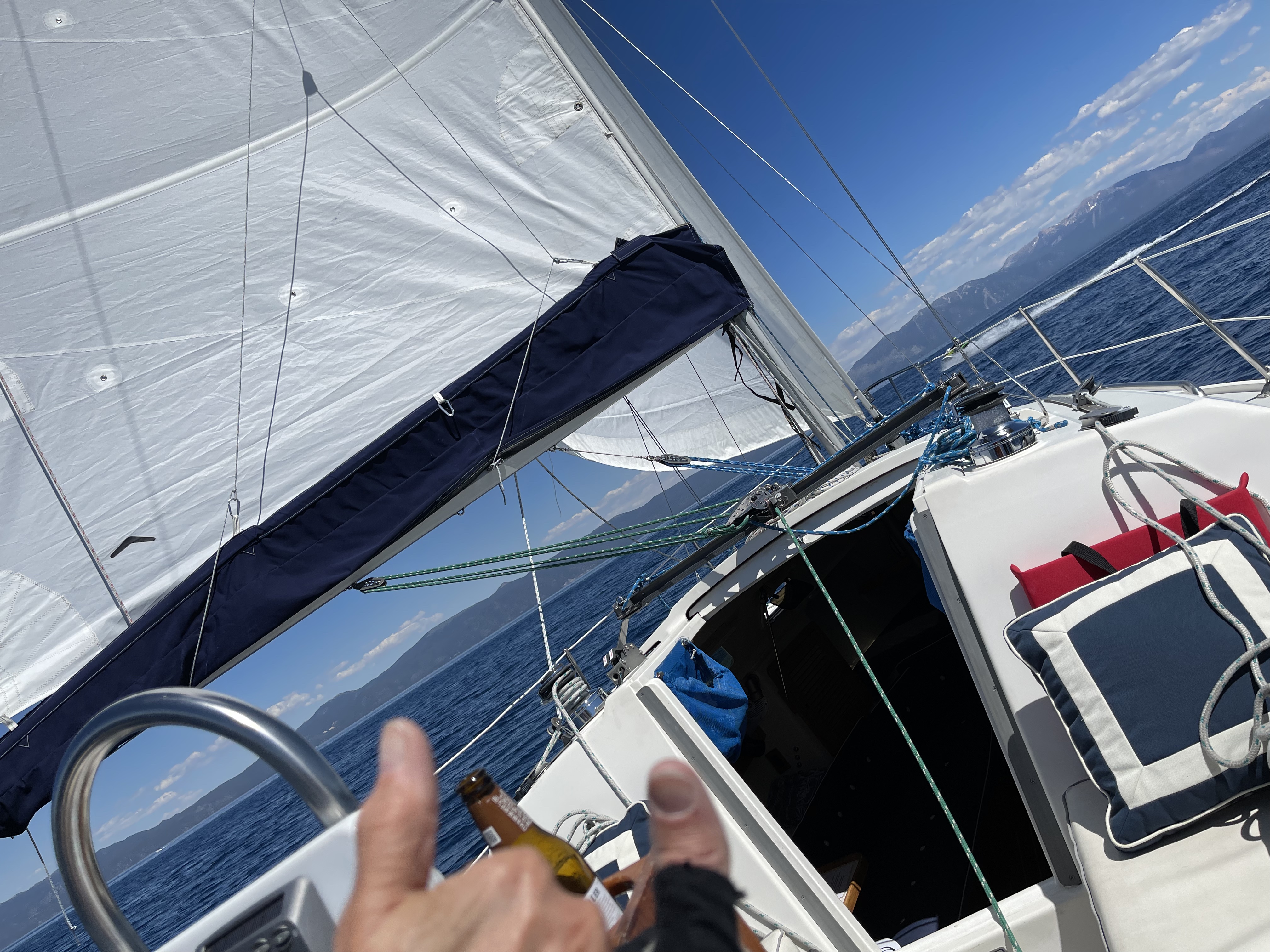
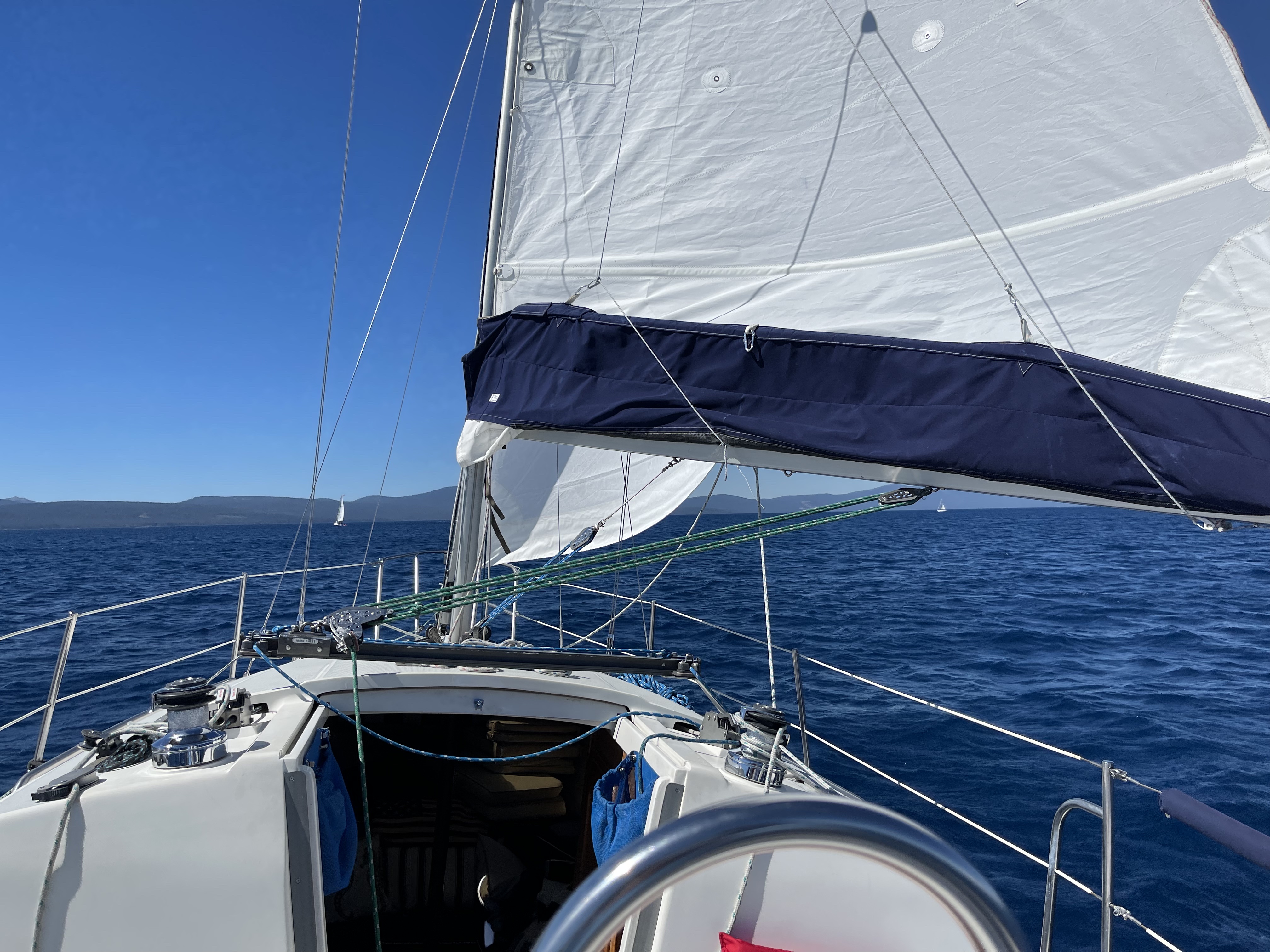
The performance of the new standing rigging and CDI furler installed and tuned by Pete Lewis of Tahoe Sailboat Service is amazing. Our previous boatspeed record was 6.4 knots. Yesterday (7/16/22), I hit 6.7 knots while singlehanding in 19-21 knots of breeze. While expensive to do, the upgrade was worth it. Thanks, Pete!
I have yet to meet my sailing heroes Brady Trautman and Alex Blue of SV Delos/Cruisers Academy fame, although their Catalina 22 teaching boats are moored only 100 yards away from Splendido’s buoy. As a total dork fanboy, I wear my SV Delos rash guard shirt on a lot of sunny days.
Pumping out is generally free, too, although a tip of $5-$20 is much appreciated by the dock hands.
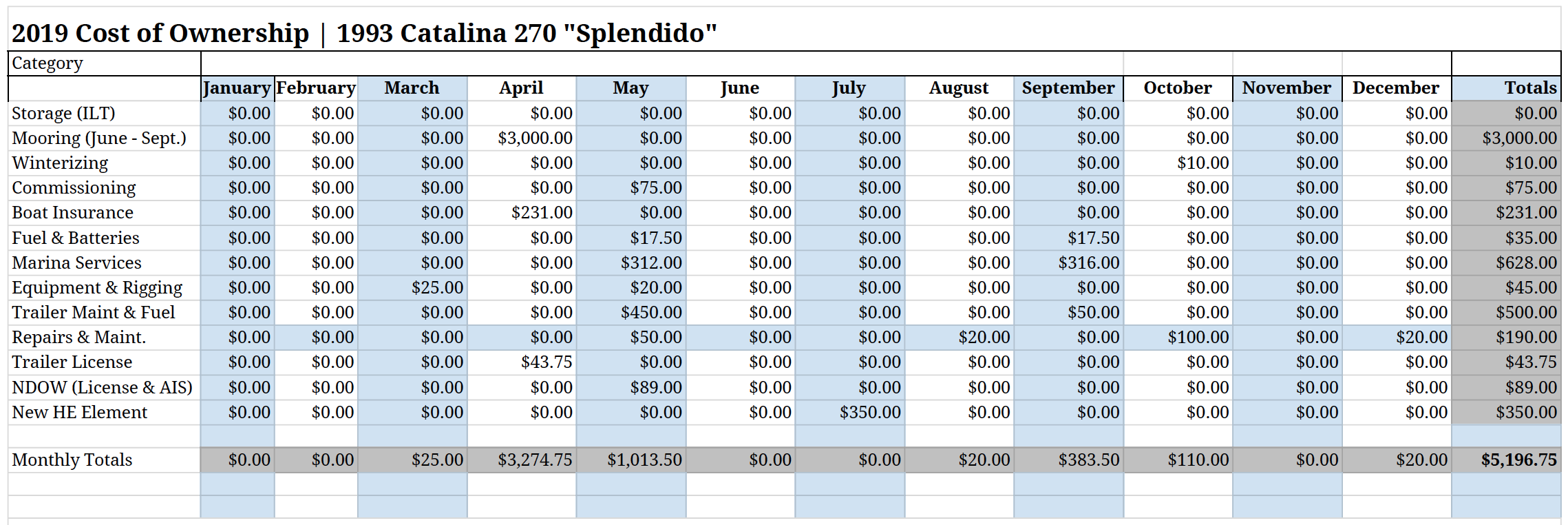
As I begin planning our spring commissioning, I am thinking a bit about the costs associated with sailing here at Lake Tahoe. Our 1993 Catalina 270 is a relatively small sailing vessel, but nevertheless, I have kept spreadsheets over our nearly 12 years of ownership to track what it costs to keep her up and sail her during our 4-5 month season here. I’m interested in learning how our experience stacks up to other small sailboat owners out there, so feel free to comment or post your own records if you’re comfortable doing so.
Every hobby comes with its price tag, and I think there is the impression out there among the general public that sailing is either a rich person’s sport, or that it’s “free” because the wind is free. This year, it’s likely to be a bit more spendy because we’re having the standing rigging replaced and we’ve kept her on the hard over the winter at Obexer’s on the west shore of Lake Tahoe while that work is being done. Oh, and I did decide to splurge and get a new furling headstay, so there’s that. But for now, I’m going to share my 2019 spreadsheet, as that’s pretty typical for what it costs us to prep, moor and sail at Tahoe each summer.
Let me know how your sailing season runs — and if there’s something wonky-looking about my expenses, let me know.
Here’s to fair winds, following seas, and (hopefully) a smoke-free sailing season! DB





















 Sailing Lake Tahoe on a good old boat