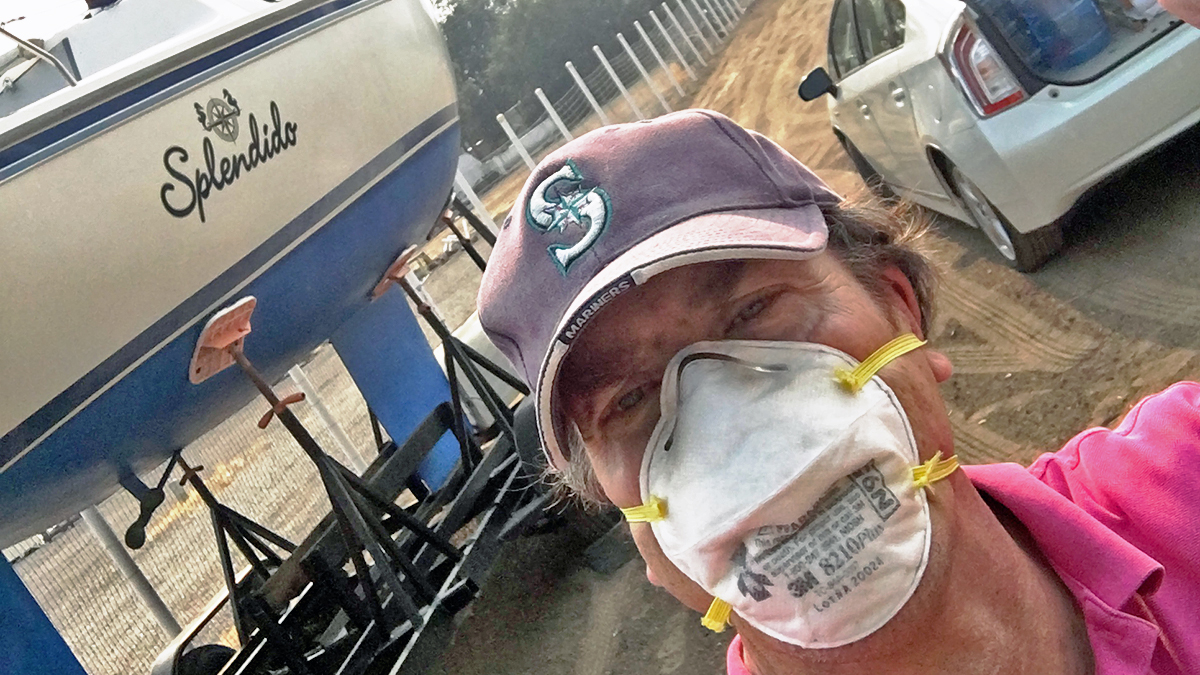
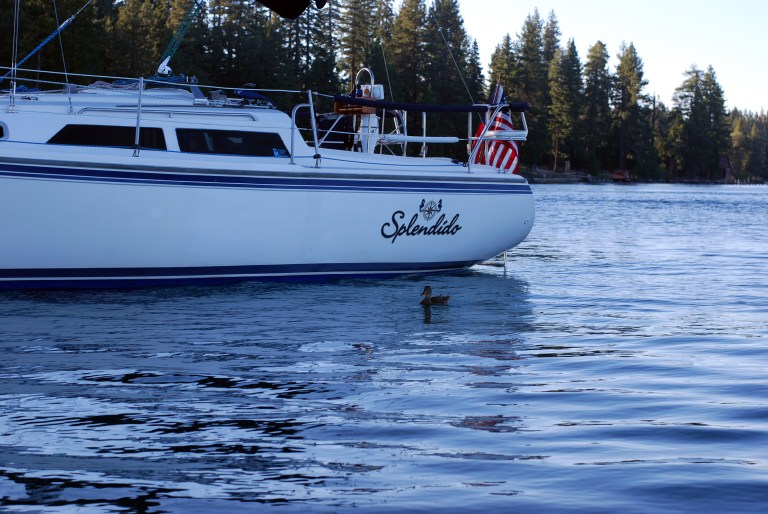
My uncle Ken Holland was a crab fisherman in the Bering Sea from the early 1960s through the 1980s. He always told me that in fishing, you “plan for the worst and hope for the best.” That’s this sailing season in a nutshell. We got lucky and got a mooring buoy in June, got a few sails in, and then the Dixie Fire and then the Caldor Fire hit, blanketing the lake and nearly our whole state of Nevada in thick smoke. At our home in Reno, we saw air quality indexes over 300, and closer to the fires, we saw numbers in the 400s, 500s and even 700 for a brief period. Today, after nearly a month of not sailing, I saw a break in the smoke with some westerly winds hitting around 4 p.m., so I rocketed up to the lake and found our beautiful Splendido covered in ash—inside as well as out.
I primed the Perkins, fired her up, and headed out to the nearly empty lake. Out past the wind shadow of the west shore, I picked up some nice breezes that went as high as 21 knots and blasted northward at 6.2 knots til the gusts softened. I tacked near Sunnyside and blasted back down toward McKinney Bay, catching the Blackwood Canyon winds and putting Splendido through her paces. I was hoping the strong breeze would blow away all of the ash, but alas, our beautiful girl still needs a good vacuum and a scrub, which I’ll be happy to do another day.
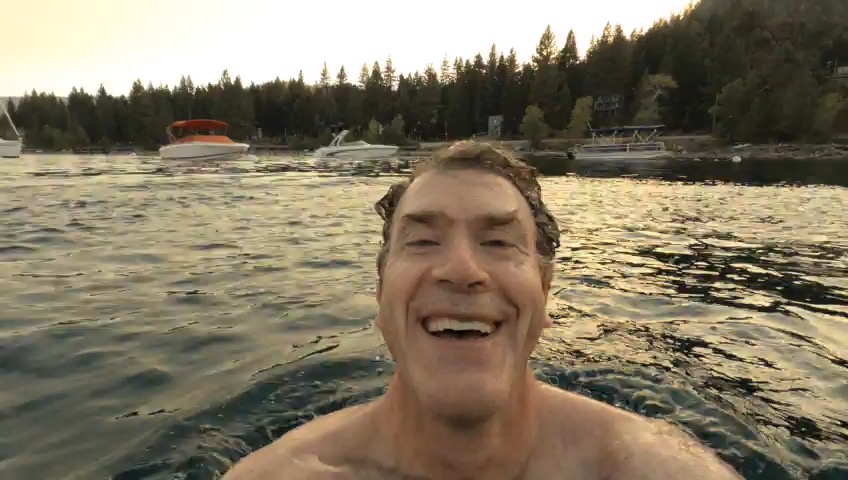
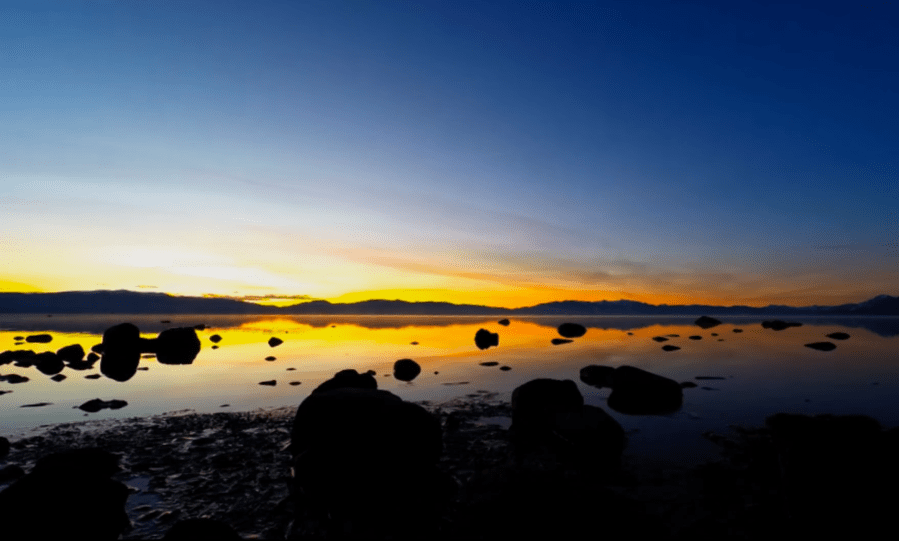
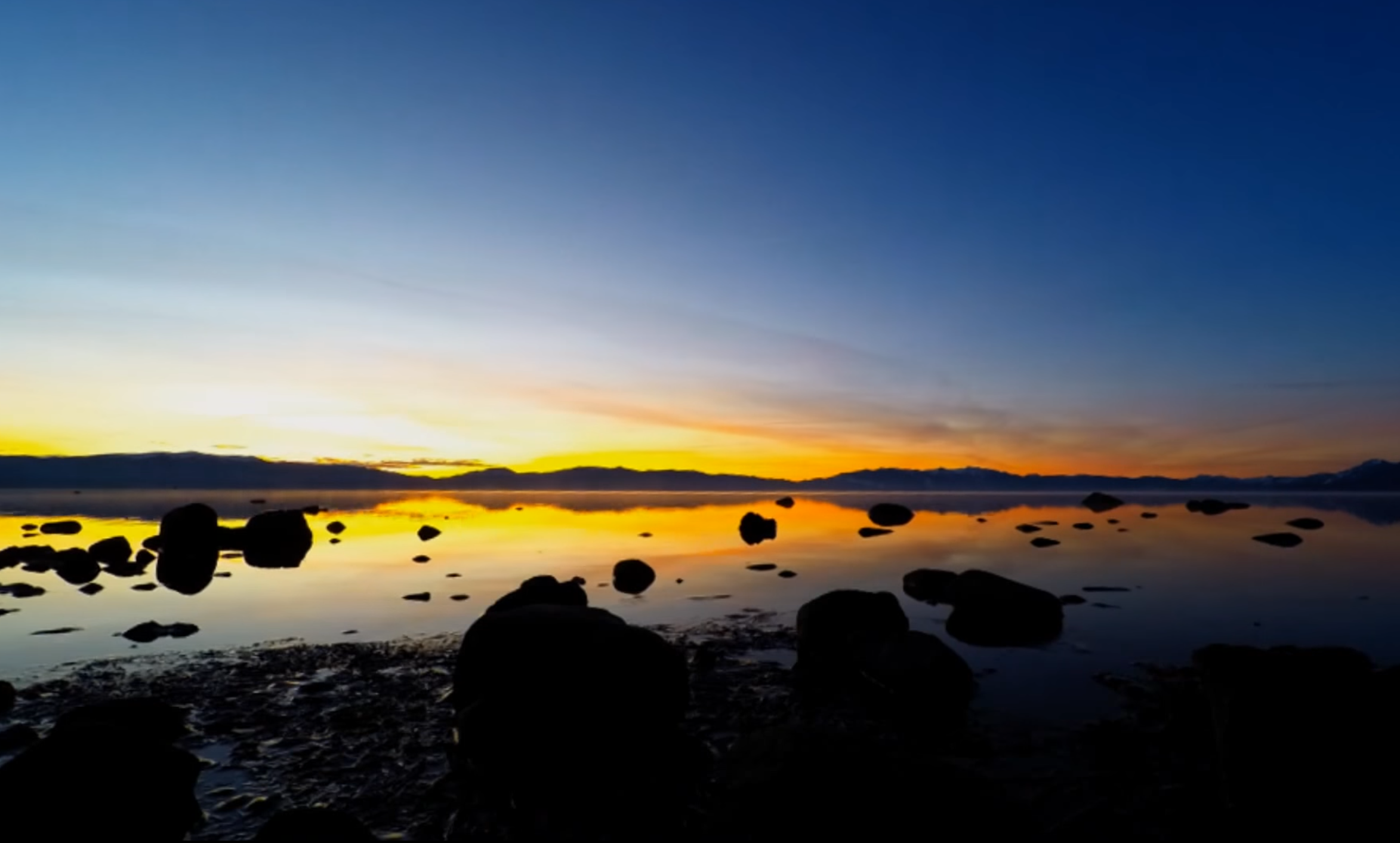
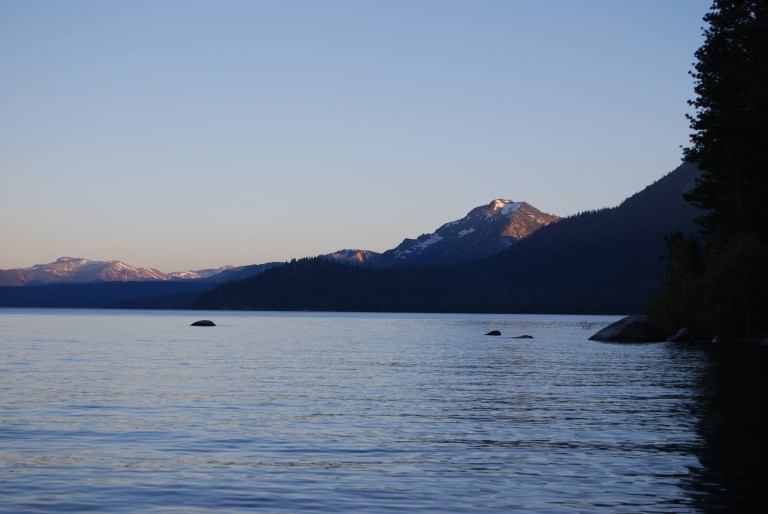
As the sun set in the west at about 7:20 p.m., I got her back on the hook and buttoned her up as the pink glow settled over Tahoe. I’ve been filming a bit on my GoPro, so I decided to take a plunge with the camera. The photo above is a frame from that very refreshing splash over the side. I’m keen to milk every last bit of sailing out of what remains of our summer here at 6,223 ft. above sea level, and praying for cooler temperatures and lots of rain to quench all the fires.
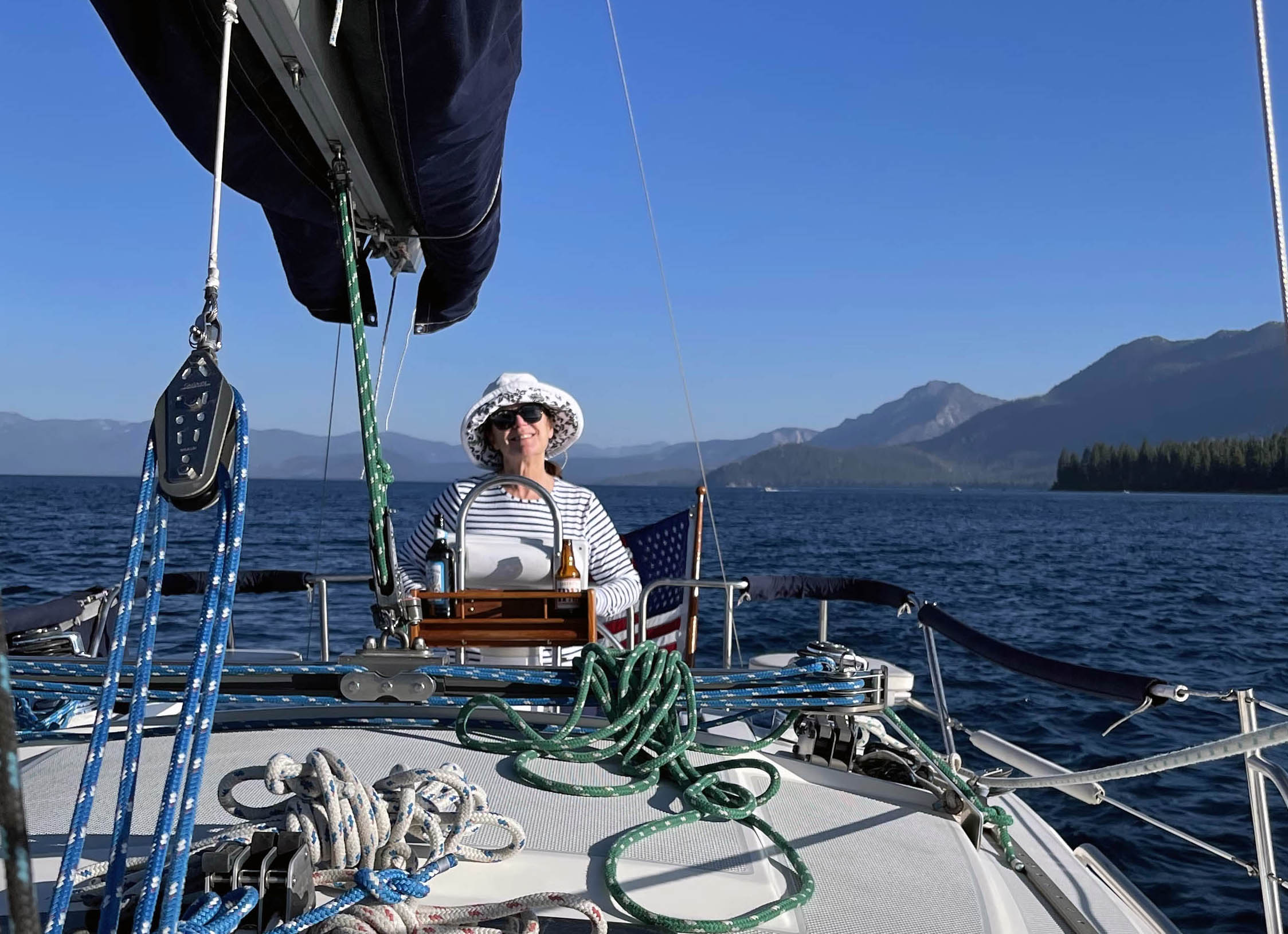
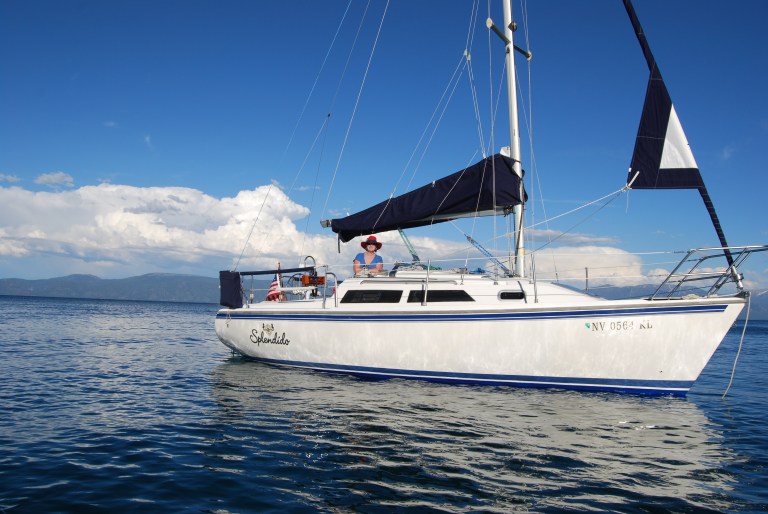
Now that we’ve got the thermostat issue worked out (thank you, Jamie Filbin!), Debbie and I got out for an afternoon sail in 16-21 knots on an ESE heading to Sugar Pine State Park. The breeze—at 90º F.—was as warm as I’ve ever felt at Tahoe, and even in the gusts, Splendido sailed like a thoroughbred as we made our way down to the area just north of the Hellman-Ehrman Mansion. An enterprising American robin had made a massive nest in the anchor locker, which I’d only partly cleaned out a few weeks ago, so I let the entire anchor line out and cleaned out the rest of the hay, grass, feathers and dirt that had accumulated in the locker. Debbie broke out some yummy caprese sandwiches on thick crusty bread, and we lolled about for about an hour watching the changing light, sipping on Lagunitas IPNAs ( a refreshing new favorite N/A beer) and munching on Kettle chips.
The sail back was epic, with Tahoe’s classic canyon winds kicking in for the final boost toward home. I was struck by how few boats are on Lake Tahoe during the week, even at the height of summer. We counted four sailboats besides ourselves and only a handful of speedboats, so it felt like he had the whole place to ourselves—a welcome relief after the rock-and-rolling craziness of July 4th weekend.
It’s been a season on the hard for Splendido and for us. Through it all, though, we’ve been mindful how fortunate we are to be healthy and safe, and looking forward to better times ahead. Inspired by the sailing videos I’ve watched over the past year (thank you, SV Delos and Off Center Harbor), I am learning video storytelling to add a little zing to our blog. I also bought a used drone which I’ve been learning to fly (only three heart-pounding—and thankfully, minor—crashes in a month!), with the aim of getting some footage of Splendido at Tahoe this summer. Oh, yeah … and if anyone along the West Shore at Tahoe can give me a tip about finding a new mooring for her this summer, that would be much appreciated. Evidently our old mooring was snapped up. C’est la guerre.
Splendido is nearly 28 years old and it’s time for me to get after some refitting projects this winter. I am continually inspired by SV Delos skipper Brian Trautman (a fellow UW grad) not just for the cruising lifestyle but also for the hard work he puts in maintaining his 53-ft. Amel Super Maramu.
What I like best about the SV Delos video series—apart from the beautiful locales and fun adventures—is the accurate depictions about the amount of effort it takes to keep things ship-shape. So, duly inspired, I have a list of things I’m going to attack this winter:
Tailoring the lazy bag to fit the sail more snugly—hopefully with less windage
Checking all the standing rigging for signs of wear
Removing all the brightwork that needs refinishing and getting that done in the garage
Light sanding and repainting the trailer, which got pretty scuffed up in recent years
Changing the oil and filters in the Perkins Perama diesel
Polishing the fuel so it’s ready for spring sailing
Replacing the incandescent bulbs with more LED lights to reduce battery drain when boat camping
Repacking the rudder shaft stuffing box
When it warms up, touching up the gel coat
And a bunch more stuff I haven’t thought of yet.
A special shout-out to Ancil Sigman of Le Crapaud fame for letting me work on Splendido at his place this winter. Thanks, Ancil!
I’m also stoked to discover that Brian Trautman’s brother Brady Trautman and his partner Alex Blue (and their new rescue pup, Sharky) have settled for the time being at Lake Tahoe. They’ve launched a new business called Cruisers Academy and have a small fleet of Catalinas at Tahoe offering lessons for all levels. They are both accomplished scuba divers as well, and they’re offering dive adventures next year, starting with what looks to be an epic adventure for more advanced divers in the Galapagos Islands. As an SV Delos fan and supporter, I hope to see them out on the water in 2021. Welcome to the Tahoe sailing community, Brady and Blue (and Sharky, too)!
The pandemic—and my struggles with anxiety related to it—have got me thinking about how I would like to live my life with more adventure and fun in the future. I’ve decided to get a PADI Open Water Diver certification as soon as it’s safe, so hopefully I can participate in the Clean Up The Lake diving project in 2021. I’m also learning video shooting and editing to bring more short videos to this blog, so keep an eye out. I’ll start with simple GoPro videos about my projects this winter as I dip my toes in the water.
In the meantime, mask up, stay safe, and drop a note in the comments below about how you like the blog and what kind of content you’d like to see more of. As this crazy year draws to a close, Debbie and I wish you health, happiness and peace—and optimism for better days ahead.
I just discovered this unpublished post from 2015, when the water at Lake Tahoe was really low and—in retrospect—something that seems so trivial compared with what we’re dealing with today. At any rate, a lovely weekend on the water with my two favorite girls.
Sleeping aboard a sailboat on a calm summer night can be one of life’s simple pleasures. For me, that typically means setting out two hooks in a V-configuration, just to have that extra sense of security, and arranging sheets and halyards to minimize noise in the rigging. I flip on the masthead light and settle in, feeling the residual roll and heave you can expect when speedboats have been out on the lake all day. After an hour or so, these swells flatten out, and slumber is deep and satisfying. Until, that is, there’s a major bump in the night, and you bolt out of bed to see what’s going on.
(c) laketahoeG/The Dam Café @ Lake Tahoe, 2016.
That’s what happened last summer around Labor Day. Debbie and I were boat-camping along the west shore of Lake Tahoe when, at about 2 a.m., I felt a dramatic rise and then fall of the boat. About 8-10 seconds later, there was another. When you’re sleeping, this change really grabs your attention, because you have the sudden and somewhat unpleasant sensation of falling.
I rolled out of the aft berth and climbed up on deck. In the moonlight, I could see a set of widely spaced, two-foot swells coming our way out of the northeast. The distance between the crests seemed like about 20 or 30 yards. In my fogginess, I was wracking my brain to think what would cause these swells on this calm and windless night. I began to think that maybe there had been a localized earthquake that caused them, but a quick check of my mobile news feed shed no light on that theory.
After discussing the phenomenon with a very sleepy Debbie, I decided to bundle up with a blanket and sit on the lazarette for a while to watch and see if anything changed. For more than an hour, this line of swells kept coming, never varying in wave height or wavelength. Staring out across the water, I eventually relaxed a bit and decided to go back to bed, visions of tsunamis put to rest. But I was still curious, so the next day I did some research and discovered seiches, or standing waves peculiar to bounded bodies of water like Lake Tahoe.
I knew from listening to the news earlier that day that there were high winds predicted out over the Black Rock Desert – about 100 miles north of Lake Tahoe – as the Burning Man Festival was happening, and burners were advised to shelter from the blowing dust on the playa. Lake Tahoe is pretty big – about 22 miles long – but evidently the low pressure acted on the northeast end of Lake Tahoe and set up the standing wave known as a seiche. Here’s a beautiful video posted by The Dam Café of Tahoe City that captures the essence of Lake Tahoe’s seiches. Just knowing that the seiche phenomenon is a “thing” will help me rest a little easier.
My buddy Jamie and I spent a couple of days doing a complete rebuild of the heat exchanger on Splendido’s 1993 (British) Perkins Perama diesel engine. We were losing coolant; we thought the season was over; and we weren’t sure we could fix it because frankly, they don’t make some of the parts anymore. In the end, we got it fixed – and this is the celebratory sail.
The upshot of the whole heat exchanger exercise, I realize now (with chagrin) was that the heat exchanger unit wasn’t really broken at all. Three weeks of working on it and nearly a thousand dollars in parts later (don’t get me started on that account), I have come to the realization that this was a classic case of attribution error: Yes, the coolant level was going down every time we sailed, and yes, the hot water heater wasn’t heating water for the boat after a long session of motoring. But after tearing into the systems in the back of the boat over a period of three weeks, I discovered that 1) the hose connecting the engine to the hot water heater had come off, so no water was going into the hot water heater, resulting in (you guessed it) no hot water. Secondly, since I had the opportunity to become intimately familiar with the heat exchanger tank and element over the course of tearing it down three separate times, and getting a better understanding of the way the impeller forces water through it, it dawned on me that replacing the heat exchanger element didn’t improve the situation of the coolant dropping every time the engine was run. The thing just seems to lose water to the level of the lowest point of the heat exchanger element when the engine runs. Keeping a close eye on the thermostat, however, shows the engine staying right at 140 degrees, even on long motors of an hour or more. I’d be open to hearing from anyone who has experienced a similar situation with their Perkins Perama M20.
Fair winds and smooth sailing. DB
Update October 2022:Oh, FFS! The solution was staring me right in the face all along.
For those just tuning in, the backstory is this: When I first bought this sailboat, the guy I bought if from said, “Oh, by the way, you have to add a little water (a pint or more) to the radiator every time you start up the engine.” So, since October 2010, that’s what I did. Apart from being a pain in the behind, though, I alway had this nagging feeling that something wasn’t quite right about that. But it seemed to work, and I was intent on sailing, so the years rolled by.
But that nagging feeling never quite went away. So diving back into this fall, and after doing some research (actually reading the frickin’ Perkins M20 user’s manual thoroughly for once!) I thought the real problem with the missing coolant might have something to do with not having coolant in the reservoir underneath the galley sink (a related part of the solution, as it turns out), but there’s more to the story.
I also thought, after reading up and studying the “caps” on the end of the pipe stack, that the assembly might be missing O-rings on each end (are there supposed to be O-rings?, I thought), to better seal the caps to the tube stack. I was getting closer.
My new best friend and role model Ancil (the fellow sailor who lets me keep my boat in his pasture in the winters and a very mechanically inclined guy) came aboard as I was winterizing Splendido the other day, and I told him what I was up to, and then he said, “let me take a look at the engine.” I had already opened everything up, so I invited him into the cabin and he started examining the engine front and back.
It Was Missing a $2 Hose Clamp on the Exhaust Side, Dagnabit!
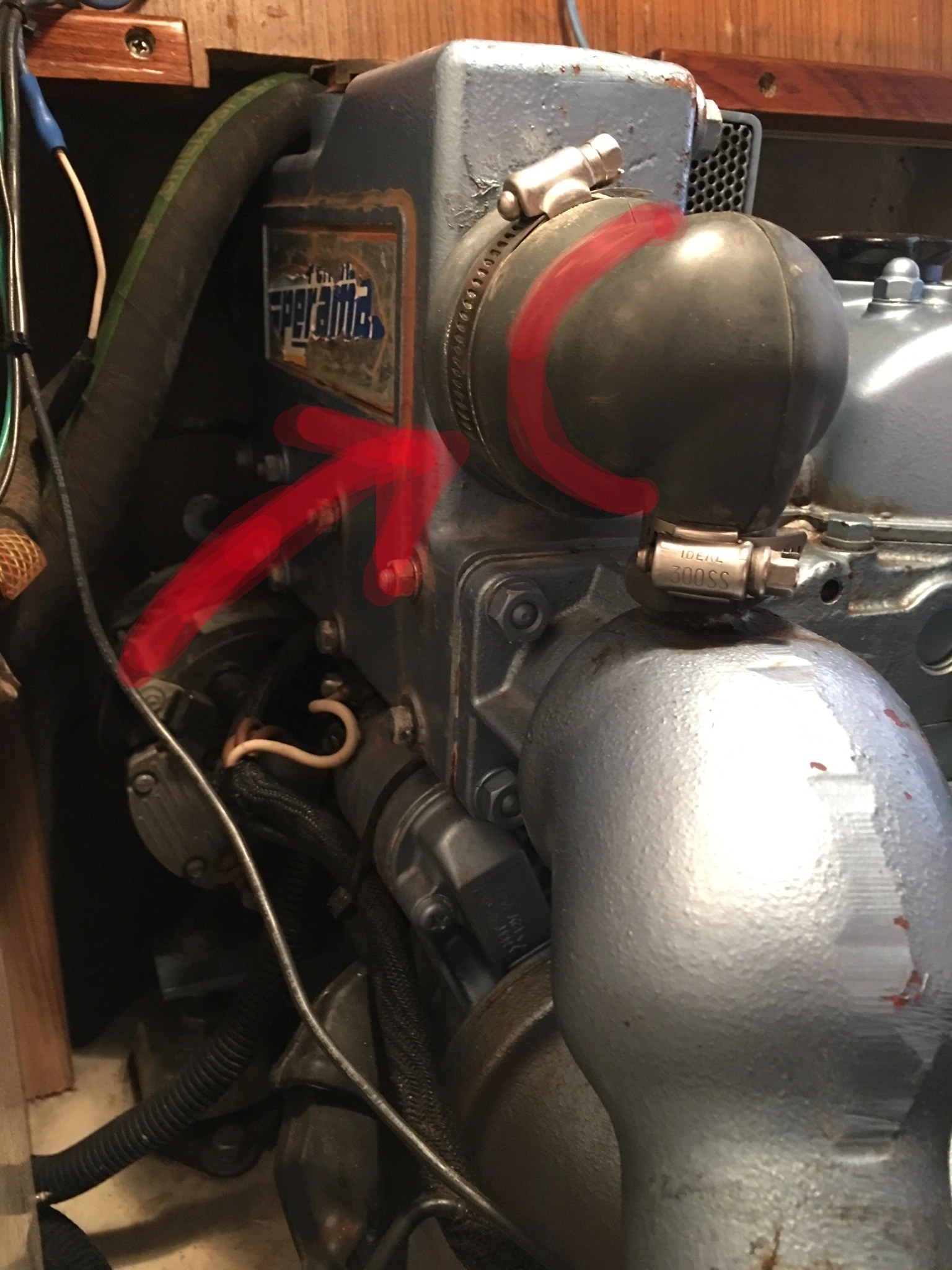
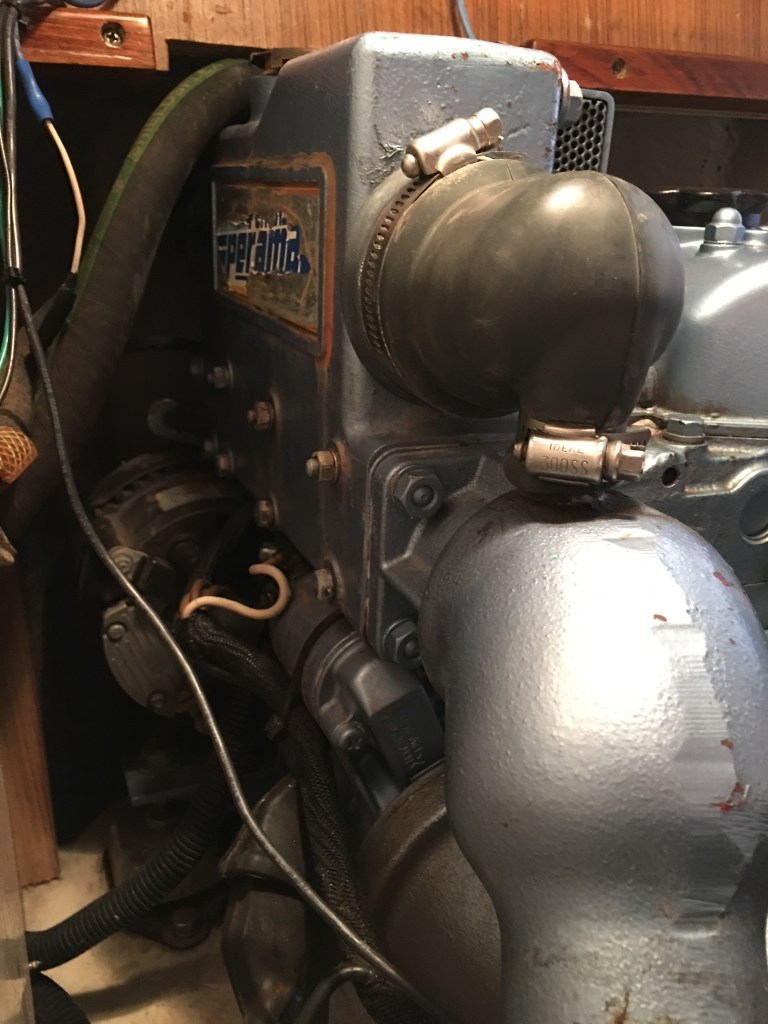
At length, Ancil noticed something I hadn’t noticed in all the years I’ve owned the boat: the “cap” leading to the exhaust only had one (1) stainless-steel hose clamp instead of the requisite two (2) hose clamps — the missing hose clamp was the one that encircles the tube stack itself — so this oversight was allowing the cooling lake water and the radiator coolant water to blow right out the exhaust. (Fortunately, since we only sail four months in the summer, I have only been using tap water as coolant all these years because I didn’t want any antifreeze going in the lake. I just drained all the water out of the engine’s water course when winterizing every fall.)
Ancil tossed me a $2 hose clamp and suggested I get a wire brush (and maybe some steel wool) to brush away the corrosion on the male ends of the heat exchanger housing where the caps connect, and also using some dielectric grease applied to the rubber caps to help in sealing those to the heat exchanger. Then, tighten tighten tighten the hose clamps (all four, in this case) — especially the one exiting the tube stack, and that should fix things.
So, that’s what I did. Then, I topped off the tank with real 50/50 mix coolant (after gently hammering the rim where the radiator cap sits into perfect flatness, as it looked a little high on the front end), attached the fake-a-lake hose to the seawater intake thru-hull, and fired up the Perkins Perama diese engine. I let it run for about 30 minutes to get it up to temperature, then went full throttle for about 4-5 minutes on Ancil’s advice, to blow out the carbon that had built up in the engine. After shutting it down, I came back the next day and opened up the radiator cap, and voila: the coolant was filled right to the rim. For. The. First. Time. Since. I’ve. Owned. The. Boat.
Yes, folks, the Mystery of the Missing Coolant is finally — and somewhat embarassingly — solved.
The red semi-circle shows where there should have been a stainless steel hose clamp right over the exit of the tube stack for all these years.
Addendum: Filling the Undersink Coolant Reservoir
I should note that, before Ancil showed up, I filled up the coolant reservoir (no easy task — for starters, it’s incredibly hard to reach, as it sits on the aft wall underneath the galley sink, and it is quite high up. Access is through the cupboard door below the sink, so it took some serious contortions to get coolant into it. I started putting it in cup by cup, but then took a stab at slithering the 1-gallon jug throught the hoses and gently angling it toward the top opening. My back was beginning to ache, as was my core, so I grabbed the life sling bag and used that to cushion my backside. Ever so slowly, I was able to get the jug’s mouth over the reservoir opening and fill it about 2/3 of the way up. (Hint for next time: Use a sports bottle or get a shallow funnel to catch the spills.)
Happy to Take One For the Team A lot of folks wouldn’t even admit to making such a bone-headed mistake as this one with the missing hose clamp, but if it helps even one sailor out there fix a similar problem, then I’ll take the hit and be happy that someone else doesn’t have to go through the same hassle as we did. Occam’s razor, folks: The simplest solution to a problem is the most likely solution. Painful lesson learned.
I don’t think my fellow sailors are scouring the internet to find out about heat exchangers on sailboat engines, but at the moment, I find myself dead in the water for the past three weeks because our trusty little Perkins Perama M20 diesel engine is under repair. Why, you ask? Well, because it was losing coolant at an increasing rate – a pint or more between sailing outings – and I couldn’t figure out the reason behind it.
The heat exchanger housing is on the left, where you add the coolant water.
Now, Debbie and I have owned Splendido since 2010, and it seems like she was always losing a bit of water level in the radiator since the very beginning. I attributed it to maybe a loose radiator cap or Tahoe’s high altitude (you never really notice yourself sweating here on warm days – our low humidity just seems to wick it out of you). But there was no sign of leaks on the outside of the engine, and no water in the bilge. It was a real head-scratcher, but I didn’t particularly worry about it until recently, when it seemed to be losing more and more coolant.
This is a close-up of the beast.
When I noticed that the coolant level seemed to be dropping to a larger extent between sails, I began to investigate the problem on the internet. After all, Google knows everything, right? 🙂 A couple of other sailors reported a similar situation, and what seemed to happening is that there might be an internal leak where coolant was being flushed out with the seawater exhaust.
The failing Perkins Perama M20 heat exchanger, extricated.
After scouring the Perkins Perama M20 service manual, I decided to email my friends at Trans Atlantic Diesels and find out what I was getting myself into. They assured me that it was a very simple exchange of parts, and they would ship a replacement kit out right away. Thus emboldened, I went to the boat to see about extricating the failing heat exchanger. Now, the working area around the engine in our Catalina 270 is tight, to say the least. I have extra large hands, which makes things even more challenging. Finally, at my stage of life, I need to wear readers to see just about anything close-up, so tearing into an engine in dim light with these constraints had me losing a little coolant as well.
You want a fairly calm day to engage in engine work below deck.
I removed the four bolts that attached the exhaust manifold and the eight bolts that held the heat exchanger onto the side of the engine. Gently tapping and cajoling the liberated unit enabled me to get it about an inch free of the engine, but something was holding it back. Feeling around in the dark, I detected a small hose at the base of the unit. I managed to get the hose clamp off of that – and still no further movement. I didn’t have one of those mirrors-on-a-stick on board, so I decided to remove the alternator to get better visibility into the problem. Once the alternator was off (which took some doing), I could see that it was the housing of the starter that was impeding the heat exchanger from coming completely off. The starter motor is held by two fasters – one of which is a 13 or 14mm bolt. The other fastener, at least on this model, required an 8mm allen wrench – which I didn’t have on board. It was getting late in the day, so I cleaned up everything and drove back to Reno (43 miles) and picked up a full set of metric allen wrenches. (Note: I suspect this is the only fastener on the entire boat that requires an allen wrench.)
The Perkins Perama M20 uses the AM-420 heat exchanger.
The next day I drove back to take another crack at the starter motor, and voila! – the heat exchanger came off as easy as kiss my hand (to paraphrase Captain Jack Aubrey of Master and Commander fame). As luck would have it, though, I then realized that Trans Atlantic had sent me the heat exchanger kit for the Perkins M30, which is a larger engine for a larger sailboat. (A friend later joked that I should’ve called them up and asked for the rest of the sailboat that comes with the M30 engine, as a way of making up for the shipping error. 🙂
Alas, first-world problems. I reconciled myself a long time ago that all this stuff is just part of sailing, and that the joy you get from sailing is only enhanced by the effort it takes to get out there. If it was easy, anybody could do it, right? 🙂
I texted Sheri at Trans Atlantic to get the exchange of parts set in motion, and then dove into 68º F. Lake Tahoe and swam around the buoy field for about a half-hour before I packed up and headed home. Whether it all comes together before summer is over will be the next chapter in this odyssey. Stay tuned!
Looking south at Mt. Tallac and Desolation Wilderness
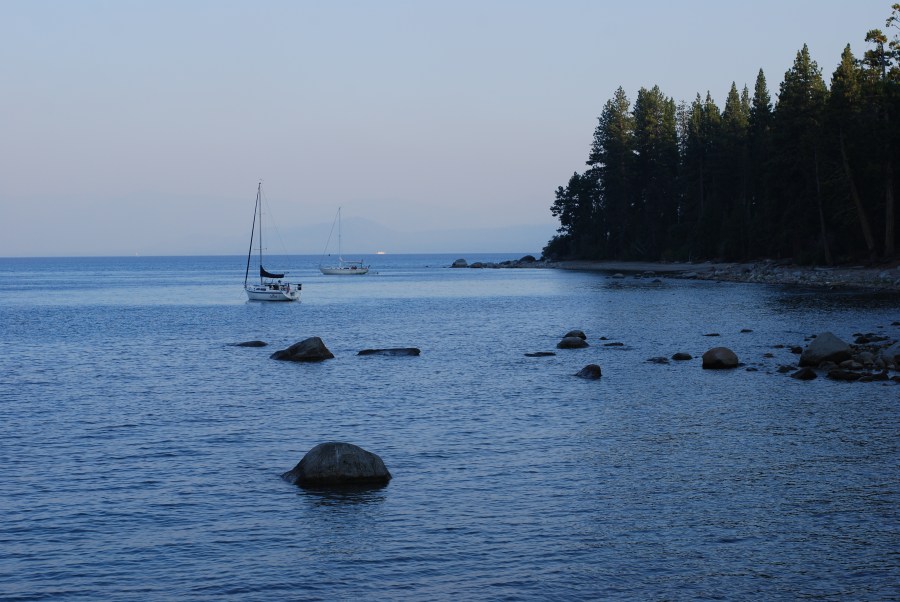
Despite getting off to a slow start this season, we have managed to get a little sailing in and as well as a bit of boat camping. The first night out, of course, is a bit nerve-wracking, as we have a tendency to pop out of the cabin like prairie dogs when strange noises or mysterious swells wake us at 2 a.m.
First Mate Debbie ready for sailing and summer fun
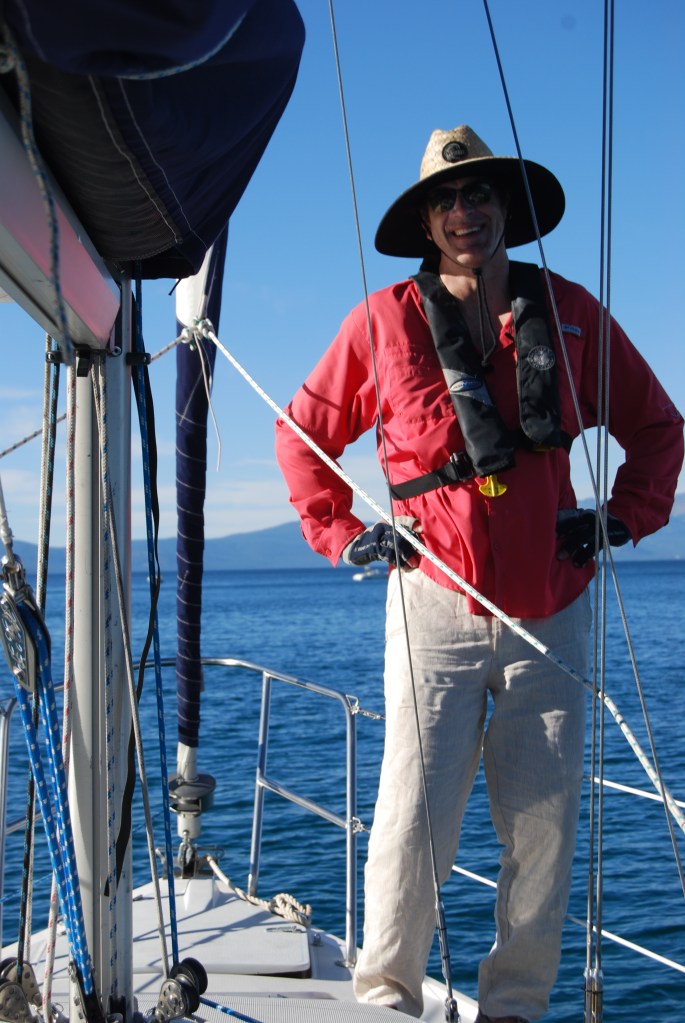
Our first boat camping trip this season was a return to our summer routine – pack up and head to the high country to avoid the heat. I think I’ve finally discovered a “protect the skin at high altitude” solution for sailing at Lake Tahoe: linen pants! I was wearing nylon sweatpants to protect the pelt, but it was just too hot, so I found some linen pants on sale and it’s the hot tip.
Breathable linen pants feel just like wearing shorts – but protect this skin cancer survivor
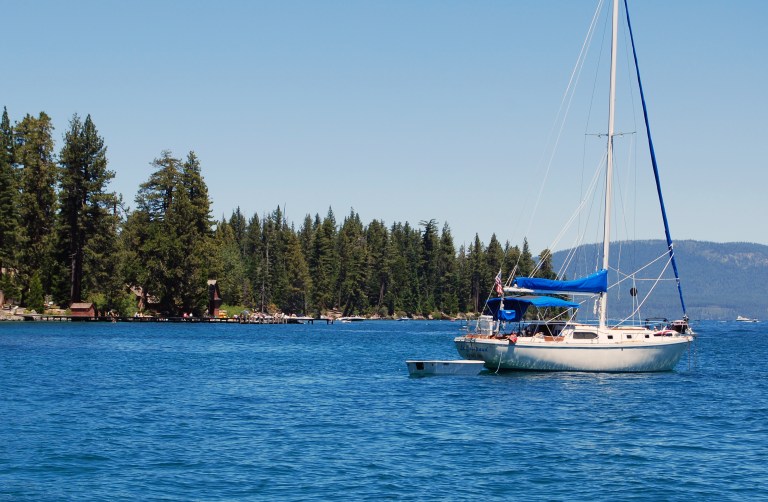
At any rate, the sailing has been great, and I was thinking about why that is. First, don’t let anybody fool you. When it comes to sailing Lake Tahoe, the west shore is the best shore. Good winds, no lee shore for five miles and more, and pretty smooth sailing because of the smallish wavelets. Even when we reach our max hull speed in 20+ knots of wind, you rarely get water over the bow.
A typical day is 10-15 knots of wind with gusts to 20 in the late afternoon
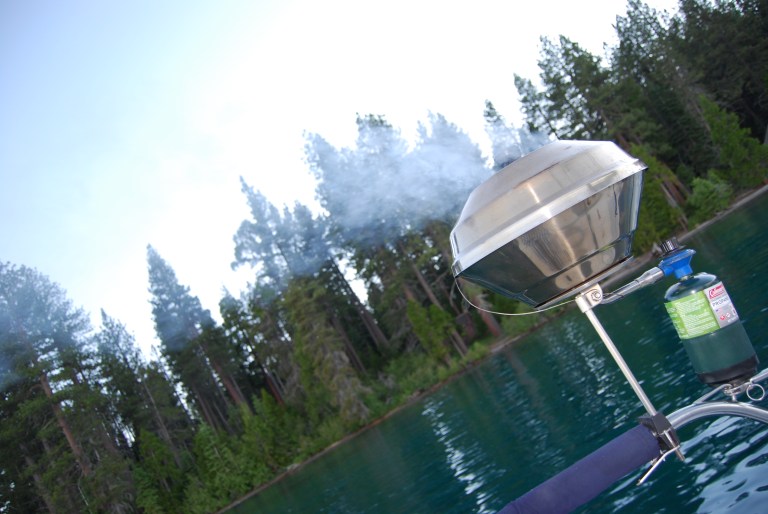
But back to boat camping. We dropped the hook in nine feet of water, fired up the BBQ and settled in as ducks gathered and nearby beachgoers packed up their gear and headed home for the night. About a half-hour before sunset, one of our sailing acquaintances came steaming up from the south aboard Le Crapaud, a 1968 Columbia 36 that we’ve seen out and about for years. I determined that the next morning, I would row over and say hello.
Nothing beats fresh fish right off the grill at Lake Tahoe
To my delight, Ancil, the captain of Le Crapaud, rowed over first thing to say hello to us. We had a great chat, and he invited me over later in the day to take a look aboard the roomy 36-footer.
Le Crapaud, a 1968 Columbia 36
After coffee and chores, I rowed over to take a quick tour of Le Crapaud. I learned that Ancil had purchased her from her previous owner at Lake Mead, which is about 440 miles south of Reno-Tahoe, near Las Vegas. He restored her and put a new engine in, and added great amenities like a stack pack and a wonderful bimini that features zip-off side-awnings as well as a zip-opening mesh feature on top, in case it gets too cool under the awning. I was impressed with the spaciousness of the cabin and especially the roominess of the V-berth, as sleeping aboard is still an issue for us in the otherwise comfortable Catalina 270.
The sleeping quarters for Splendido start at the “S” and go aft. It’s kinda tight.
As boat owners do, we shared war stories about fixes aboard our respective boats, and Ancil got me thinking about solutions for a mysterious disappearance of coolant from our Perkins Perama M20 diesel engine. Ancil – who works in the mechanical world – offered to lend me his radiator pressure tester to help diagnose the problem. More on that later, but I appreciated the kindness and the camaraderie. It gives you a sense of hope that maybe we’re not as divided as a nation as they say on Twitter and TV.
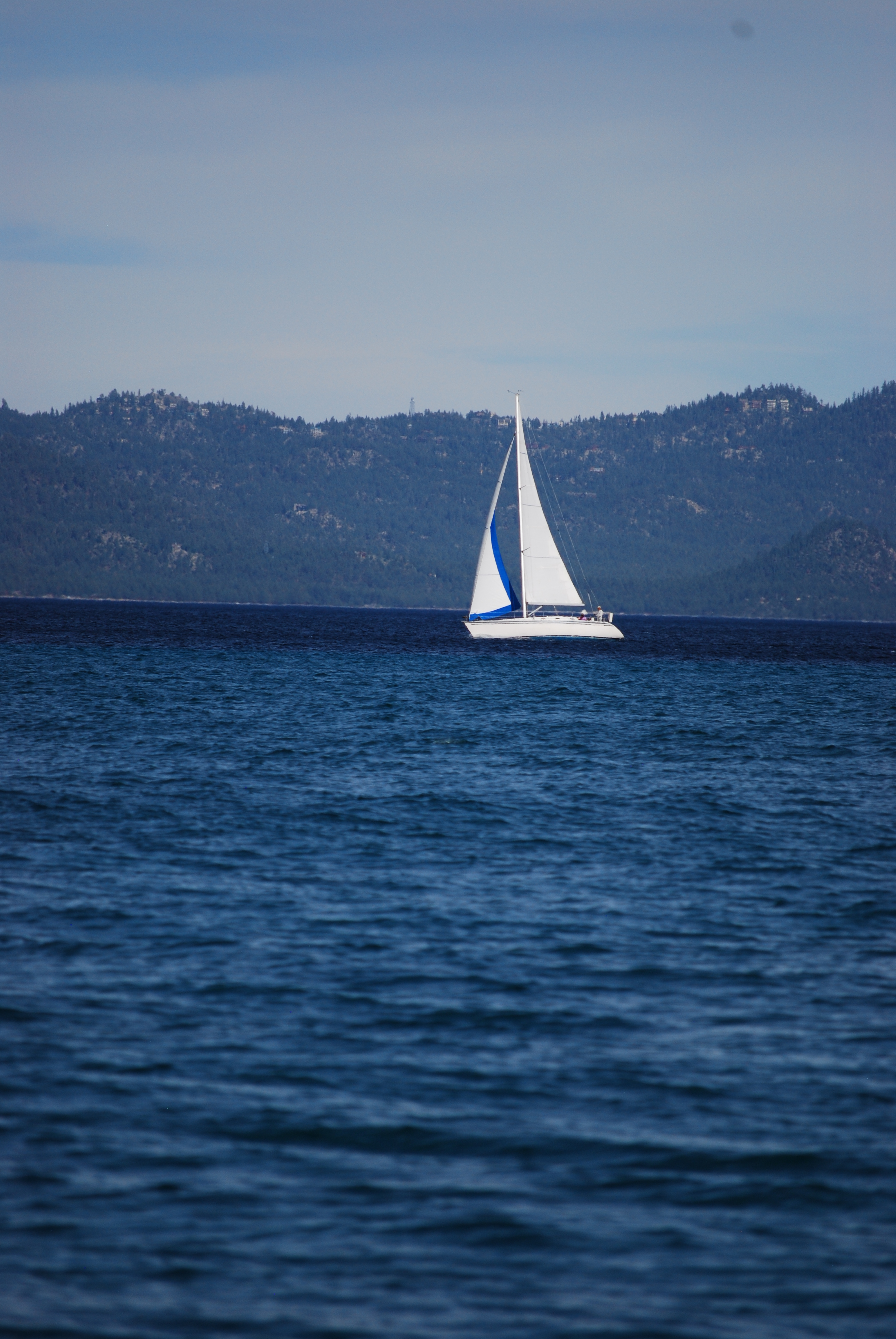
I’ve mentioned in earlier posts that a bunch of us sailors who sail up and down the west shore (the best shore) of Lake Tahoe have formed a free social group called Big Blue Tahoe Yacht Club. We get together for lovely dinners, plan “for fun” regattas and sailing days, raft-ups, full moon sails, and other fun stuff. On June 20th, four or five boats went out for a “regatta”/sailing day, and here are some of the shots. Oh, and that last image? That’s the simple BBTYC burgee I designed. (Can’t have a yacht club without a burgee, right?) Fair winds and smooth sailing. DB













 Sailing Lake Tahoe on a good old boat