A Birthday On Board

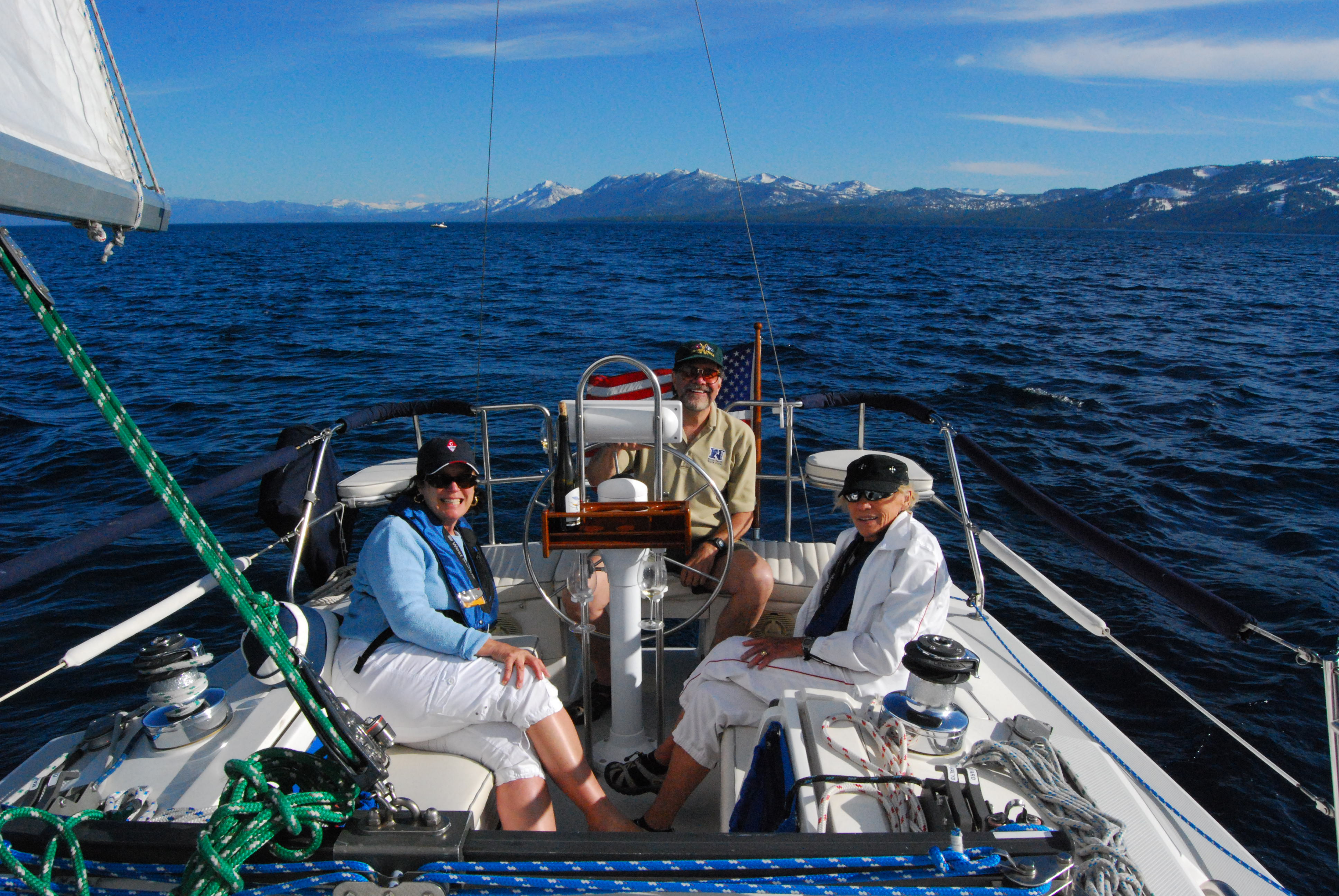
L-R: Debbie, Bob Shriver, & Pam Shriver On Board SplendidoOn Sunday, June 12th, we celebrated our dear friend Pam Shriver’s birthday aboard Splendido. Pam and her husband Bob are our longtime friends and traveling companions, seasoned survivors of many wine country excursions and even weeks abroad in Provence. Debbie prepared some French Laundry-style buttermilk battered fried chicken and a zesty new potato salad, followed by chocolate cupcakes with a vanilla bean ganache. The trio shown here downed an able-bodied seaman’s share of Chardonnay and Pinot Grigio, while yours truly stayed sober and kept all the lines and sheets in order as we sailed in large circles, lazily following the light and variable winds. To her credit, Splendido managed a respectable 6.1 knots at her peak. The day turned out to be a little warmer than expected, and a good time was had by all. At the end of our day, the stern-wheeler Tahoe Gal had anchored near our buoy and had a band playing on board, so I had to chase off a poaching spectator boat off our buoy at Tahoe City Marina so we could put Splendido to bed. Note to self: Prepare a quantity of water-balloons for future encounters with thoughtless buoy poachers.

Fair winds and smooth sailing. DB

Messing About In The Boat

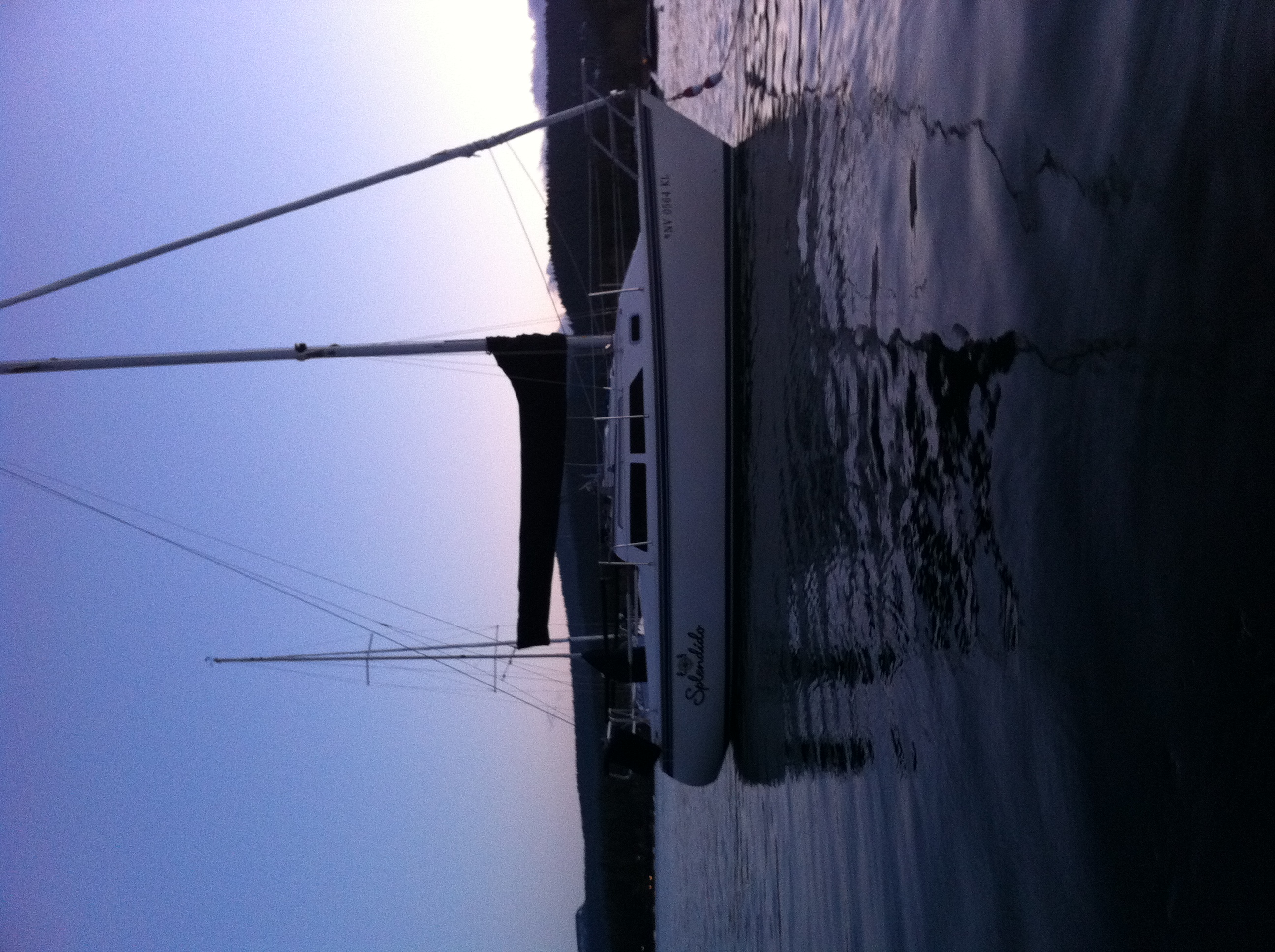
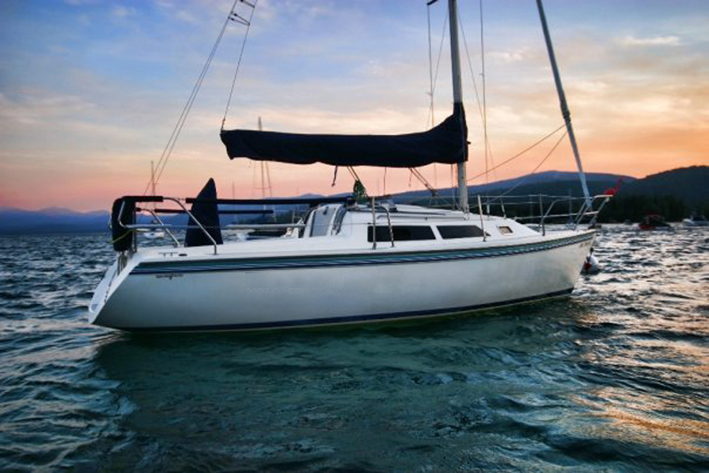
Splendido at Sunset, Lake TahoeTonight, Debbie had a big catered event to put on at the Nevada Museum of Art, so I finished up a meeting with a prospective client and drove up to Tahoe City, arriving about 7:15 p.m. I borrowed the skiff and motored out to Splendido  because a couple of things have been bothering me: First, the darn coolant header tank on the Perkins Perama M20 diesel engine keeps losing all of its water, and I’m afraid I’m going to overheat the engine. I also noticed the impeller is starting to split its fins, and it has less than an hour running time so far this year. Second, the new sole (floor) that Tracy and I built doesn’t fit perfectly after we re-installed the seat risers. It’s a little too tight, and it sort of “buckles” at the widest edges, so the edges  need to be planed 1/32 of  an inch at a time until it fits properly.I tied up the skiff and threw my “sea bag” on deck, climbed aboard, and unlocked the cabin. There was a gentle, rolling swell out of the east, so moving around the boat took some getting used to. I attacked the engine first, getting out the flashlight and looking around the coolant header tank. I spotted the problem almost right away: The small hose from the coolant header tank to the overflow tank under the galley sink had come loose, so I suspect I have been losing coolant header tank water through evaporation. I tightened the tiny hose clamp and re-assembled the fiberglass engine housing.

Working on the sole was a bit more challenging because of the swell. I ended up working on it in the cockpit, attaching a metal straight-edge with C-clamps and then planing off a tiny bit at a time, using the straight-edge as a guide. It took four or five tries, but it finally appeared to fit well, and besides, it was fast approaching 9 p.m., and I was losing daylight.

As I was going through my security checklist, I had the brilliant idea to try removing the coolant header tank cap and re-fill it with fresh coolant water. One brief twist of the cap, though,  revealed that the hose-clamp I had tightened was now effectively blocking the cap from turning. With not enough light left, I had to save that project for another day.

The drive back to Reno was amazingly peaceful, with the waning light casting a beautiful pink glow over the lake and mountains. I’m constantly in awe of how close the gem of Lake Tahoe is to our home in Reno, yet how it feels a world away.

Fair winds and smooth sailing. DB

First Sail 2011

First Sail 2011 - David & Tracy


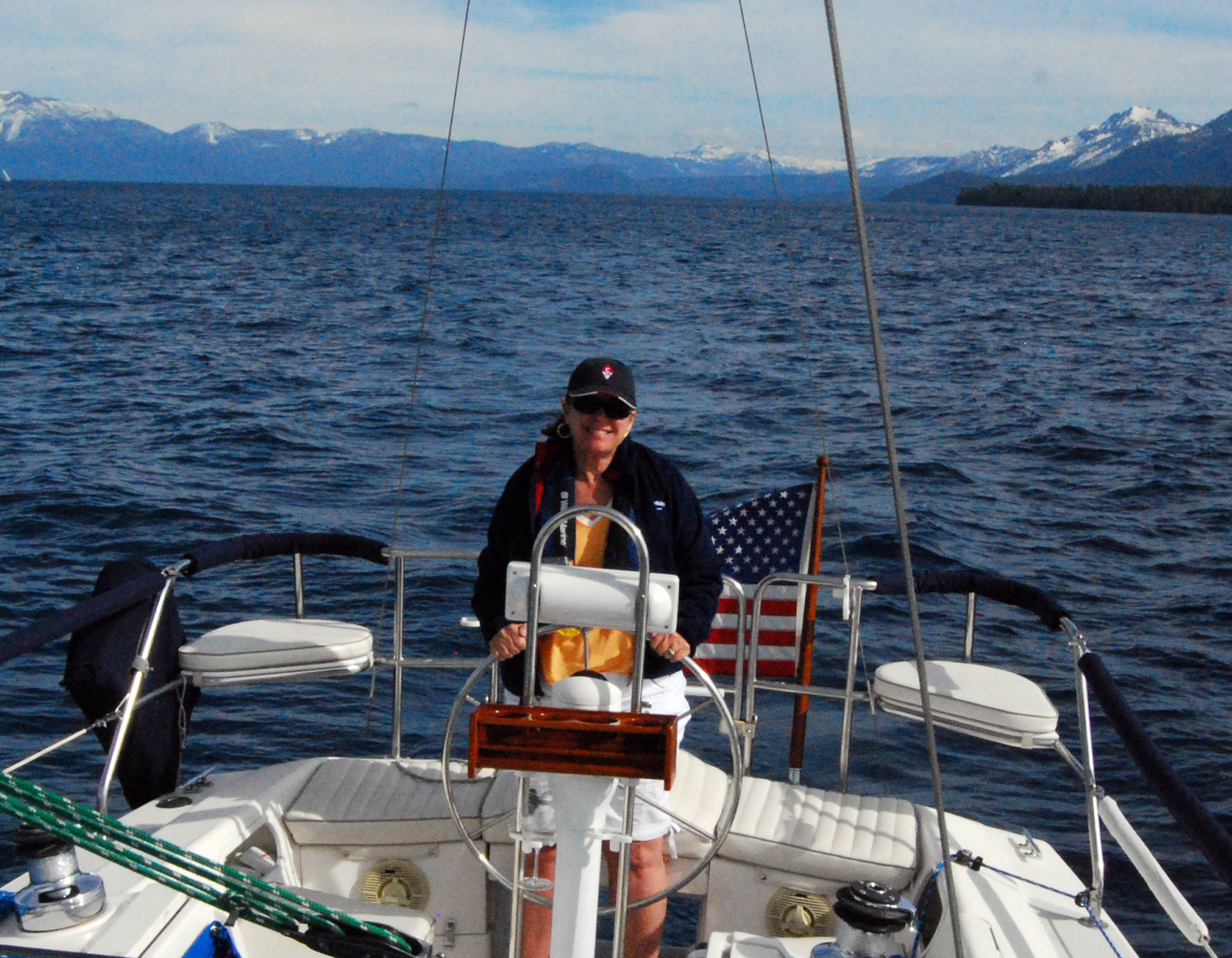
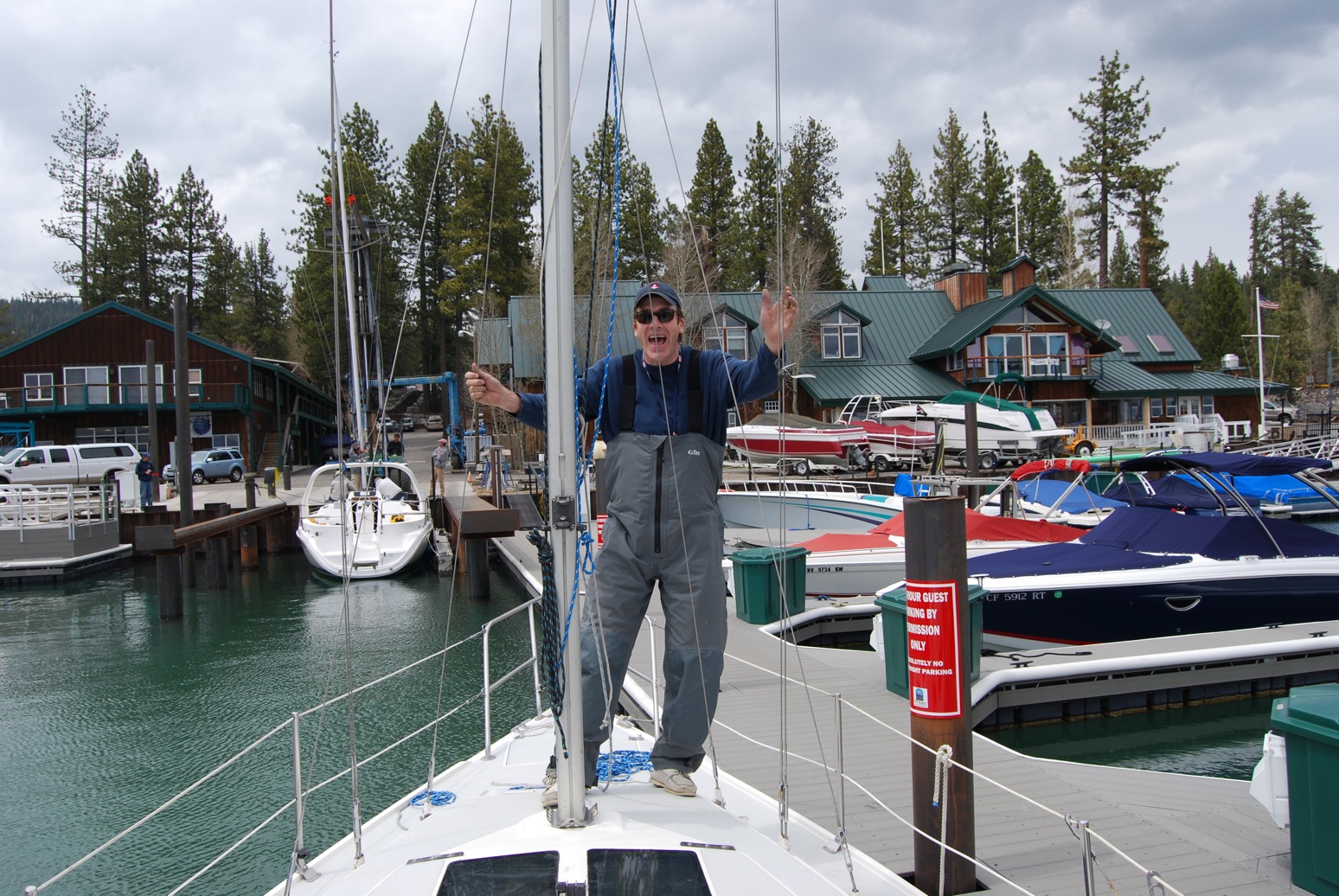
Before I took Debbie out on Splendido, I wanted to do a shakedown cruise with Tracy just to make sure we got everything right during commissioning. So, on Wednesday, June 7th, Tracy and my nephew Eric Hieber joined me on our first sail from Tahoe City Marina down towards Sugar Pine Point. Winds were light and variable, but we managed a top boat speed of 6.2 knots under her mainsail and smallest jib. For Eric, an A+ third-year law student at Boyd School of Law in Las Vegas, this was his first time on Splendido, so we let him drive, and he did great. You can see by his smile that he’ll be back for more.First Sail 2011 - Eric and Tracy

Fair winds and smooth sailing! DB

Cabin Fever

Splendido - New InteriorWe’re really proud of the way Splendido is turning out after going a bit crazy with the refit this past winter. For me, one of the most remarkable things is the transformation of the interior. I was actually OK with not doing anything on the interior this year, but Debbie wanted to “feather the nest” a bit and so she asked around and discovered a really talented young upholsterer from New Zealand named Chris Goodwin of Goodwin & Son Upholstery. Chris came out to the boat earlier this spring and spent more than an hour taking measurements, getting the feel for the interior, and asking questions about what we were looking for. I think the results (above) speak for themselves.

The previous interior was the standard 1993 Catalina 270 LE interior of light blue velour upholstery and the reverse-pattern sole of mostly holly and small strips of teak. As I posted elsewhere in this blog, Tracy and I built a new floor with a PlasTeak® laminate. That, in turn, made the bench seat risers look a little tired, so I re-did them. All this activity in the interior put Debbie in mind to re-do the upholstery. While I didn’t have a chance to take a photo of the interior before the project, the following is a shot of a 1993 sistership who’s interior looked virtually identical to the way ours looked only two months ago:

Interior_Before

Both interiors have their merits, obviously, but we’re pretty stoked with the way Splendido‘s new interior turned out. Interestingly, the white buttons were an afterthought. Chris wasn’t happy with the way the Navy blue canvas was wrinkling after his first “fitting” of all the cushions, so he went back and made—by hand—all the half-dollar size white buttons you see in the first picture (above) to create “intentional” wrinkles in the cushions. Since that photo was taken, Debbie’s added a bunch of Pottery Barn accent pillows, so it’s starting to look downright homey. The look continues throughout the boat, making our 18-year old baby look in her prime once again.

Fair winds and smooth sailing! DB

Fine-Tuning The Rigging

Marc Sykes, "The Real Sailor," to the rescue!As you may have guessed, I am an eager student when it comes to all things sailing. So, if I’m not sure about how something works, I’ll find somebody with more expertise than I do who I can ask for advice. On May 24th, sailor Marc Sykes joined me and my brother-in-law, Tracy, on board Splendido to check on how Tracy and I had initially rigged her. Marc is an accomplished sailor who owns a J-35 in the Bay Area, and who frequently races to places like the Farallone Islands and Monterey, often single-handed. A former U.S. Coast Guard man, Marc has sailed on Splendido since she was new, so he has known the boat “man and boy,” as Master & Commander novelist Patrick O’Brian would put it.
I had only met Marc briefly after I had purchased Splendido last fall. He had come up to Tahoe City to help with the de-commissioning, and I quickly saw why friends call him the “Real Sailor.” He certainly knows his way around sailboats, among many other things. I jumped at the opportunity to have him check over our work. Here’s what we learned in three hours of hands-on work and discussion:

The In-Column Mast We did a pretty good job of stepping the mast on Splendido, despite sort of winging it. We were within 1/2 inch of vertical side-to-side. Marc showed us how to measure mast alignment athwartships by using the main halyard. Touch it to the water fill-port cover and take up the slack, then lock the cleat. Walk the halyard around (outside the shrouds) to the holding tank port cover, and measure again. This will show how straight the mast is. The halyard should touch each cover, and let you quickly see how much adjustment is needed.
Forestay/Backstay Forestay and backstay tension is established through the backstays. On our 18-year old Catalina 270, they are pretty cranked down.
Shroud Tension Use the Loos® gauge to measure the relative tension on each set of shrouds, comparing port and starboard measurements. We balanced each set, then wrote down the measurements (15 – 16 seems to be the range).
Turnbuckle Security Rather than use stainless-steel cotter rings, Marc recommends UV-protected, exterior-grade zip-ties (the very small ones)to secure the turnbuckles on both the standing rigging and the lifelines. At the end of the season, it’s just a matter of snipping the zip-ties at de-commissioning time.
Fairleads For our smaller #3 jib, position the fairlead blocks up to the fourth or fifth hole from the bow end. For our larger jib, we’ll move the fairlead blocks to the second or third hole from the stern end.
Mainsheet Position the mainsheet angled back just like the boom vang for more vang-like control of the boom.
Traveler This is used to control twist in the sail in windier conditions. Marc says to play with it to sense its effect on sail trim. (He also said he’d sail with us to demonstrate.) My sense so far is to move it to windward to increase twist and spill off excess wind at the top of the sail when the wind comes up.
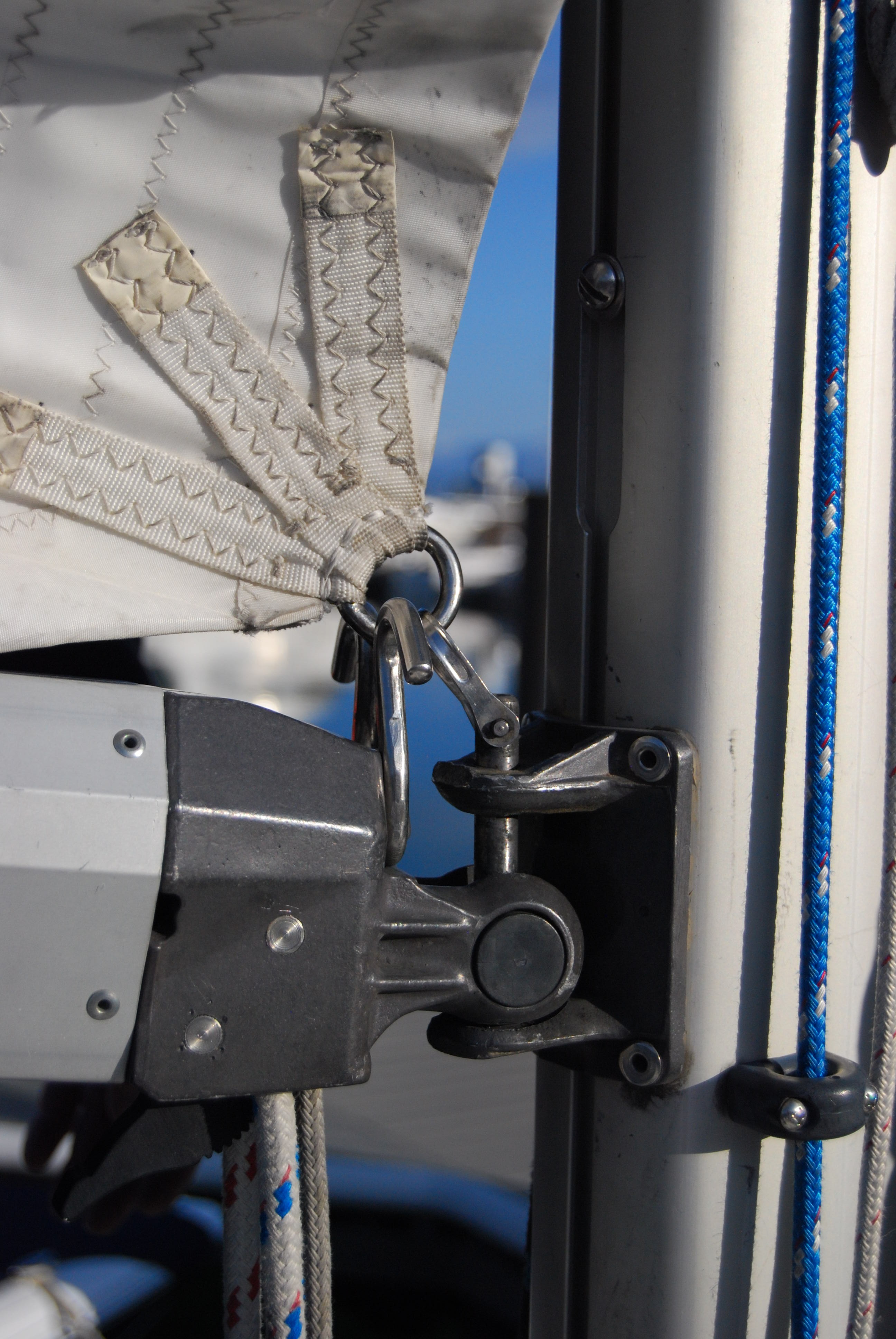
What We Screwed Up On When I was attaching the boom to the mast at the gooseneck, I had put the pin in upside down (I inserted it from the top. It should insert from the bottom.) The shackle at the top is what the mainsail attaches to. (I had the mainsail hooked to one of the reefing hooks!) Marc got a good chuckle out of this. Here’s how the gooseneck on the Catalina 270 should look when assembled.
The Gooseneck assembly on a Catalina 270
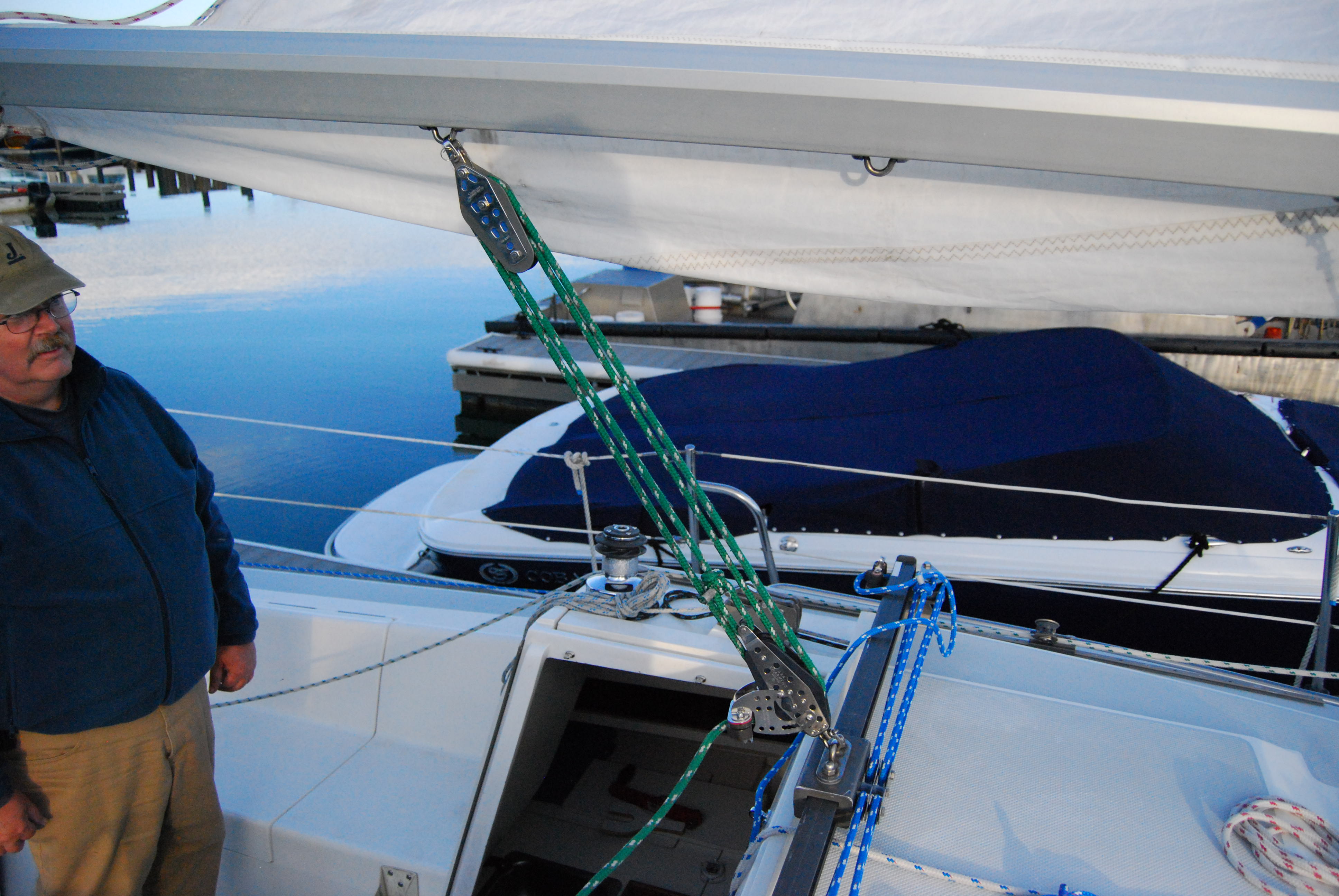
The next screw-up was accomplished with the help of another friendly sailor, who offered advice from dockside while we were putting on the boom vang. (We ultimately installed it upside down. You can see it incorrectly installed in the top photo, behind Marc). Here’s how the boom vang on the Catalina 270 should appear when it’s assembled correctly.Proper boom vang assembly on a Catalina 270.

Our next screw-up was straight out of the Catalina Owner’s Manual. We were “painting by numbers” and reading the manual with its hand-drawn pictures, and we ended up with the mainsheet too vertical. Marc advocates raking it back so it has more boom vang-type action, so we angled it back. Here’s how the mainsheet on the Catalina 270 looks when properly assembled.

Proper mainsheet assembly on the Catalina 270.

Reefs This was another of my screw-ups, but I forgot to take photos. Anyway, on the Catalina 270, the reef lines are rigged red to port and blue to starboard. The lines go through the holes on their respective sides, and tie off at the boom with a simple figure-eight knot through the D-ring under the boom. When reefing, loosen the main halyard, hook on either the first or second reef point with the upside-down “W” shaped hooks at the boom gooseneck, and then tug on the red or blue reefing line to bring the clew-end down to the boom. To shake a reef, reverse this process. The reefing ropes in the sail should be ½ & ½ on each side of the sail. Use a simple overhand knot to secure those lines in place.
Main Halyard On the Catalina 270, Marc recommends that, when not in use, the main halyard should be clipped to the D-ring by the stern pulpit (near where our LifeSling® is located).
Backstay & Boom End When securing the boat, wrap a bungee cord around the split backstays and the topping lift, to keep the boom from swinging if the wind comes up.
Coiling The Lines Marc recommends using a figure-eight motion (this prevents twist in the ropes), then proceeding with a twist at the top, wrapping the standing end around several times and then “through, over, and around,” pulling it tight at the end. This makes a great-looking, twist-free coil.
Flaking The Sail Hoist the sail all the way up, then have the person by the mast use one foot as a “brake” on the main halyard as it runs through the block at the mast base to slowly let the sail down. Make folds of even length, letting the alignment of the “cars” or “slugs” indicate the folds. The battens should always fall on top of the boom. After three or four folds, tie a sail-tie on, then keep up the same technique as you move toward the mast. The sail should flake beautifully every time. Then, put on the sail cover and tuck the lines in for a tidy boom.

Other Important Things We Learned
Get Captive-Pin Shackles All those small pieces get squirrely when the boat’s rocking and rolling, so consider replacing older shackles with captive-pin models.
Our Weird Plumbing Is OK Marc thinks the “pull the water from the lake” T-fitting at the engine-cooling water thru-hull (for unlimited water for the sinks and showers) is fine, as long as it doesn’t leak. (Just double-hose clamp everything and shut off the thru-hull normally when not in use.)
The Paint Is Hard Pettit Trinidad is a hard paint, not ablative like I first thought.
Keep The Boat Flat A flat boat is a fast boat: too much heel is slow—and uncomfortable. Reef early if weather threatens. Consider getting the books “Sail Trim” and “More Sail Trim.”
Rebuild The Winches Every Season Harken has a great video, and Marc said he’d help if I ask him.
Our Sails Are Old Consider replacing Splendido’s sails with newer ones as budget allows, and consider getting a UV sleeve for the furling jibs, to protect from sun exposure at 6,229 feet above sea level.

It was an outstanding afternoon of learning on board Splendido with Marc Sykes, and many thanks to him for his friendship and expertise. Splendido is now fine-tuned to sail, and we can’t wait to get out on her once the weather improves.

Fair winds and smooth sailing! DB

Launch Day 2011

Obsessions are funny things. They sneak up on you. I was thinking I’d be content just to do the very short list of “necessary” fixes and tweaks to Splendido over the winter, and then go sailing. No such luck. In addition to simply adding cotter rings to life lines, rebuilding an older Whale Gusher™ bilge pump, replacing the missing compass, and maybe giving her a good wax and polish, I suddenly found myself obsessed with making her beautiful.

You get to looking around, and you start to see things. I noticed the original wood floor of teak and holly was looking like hell, so I got online and found a really great-looking vinyl product that had the exact look of teak, but without all the maintenance. At first, I tried removing the teak-and-holly slats, but the wood beneath was too fragile, so I fabricated a new subfloor, and that’s where the real fun began.

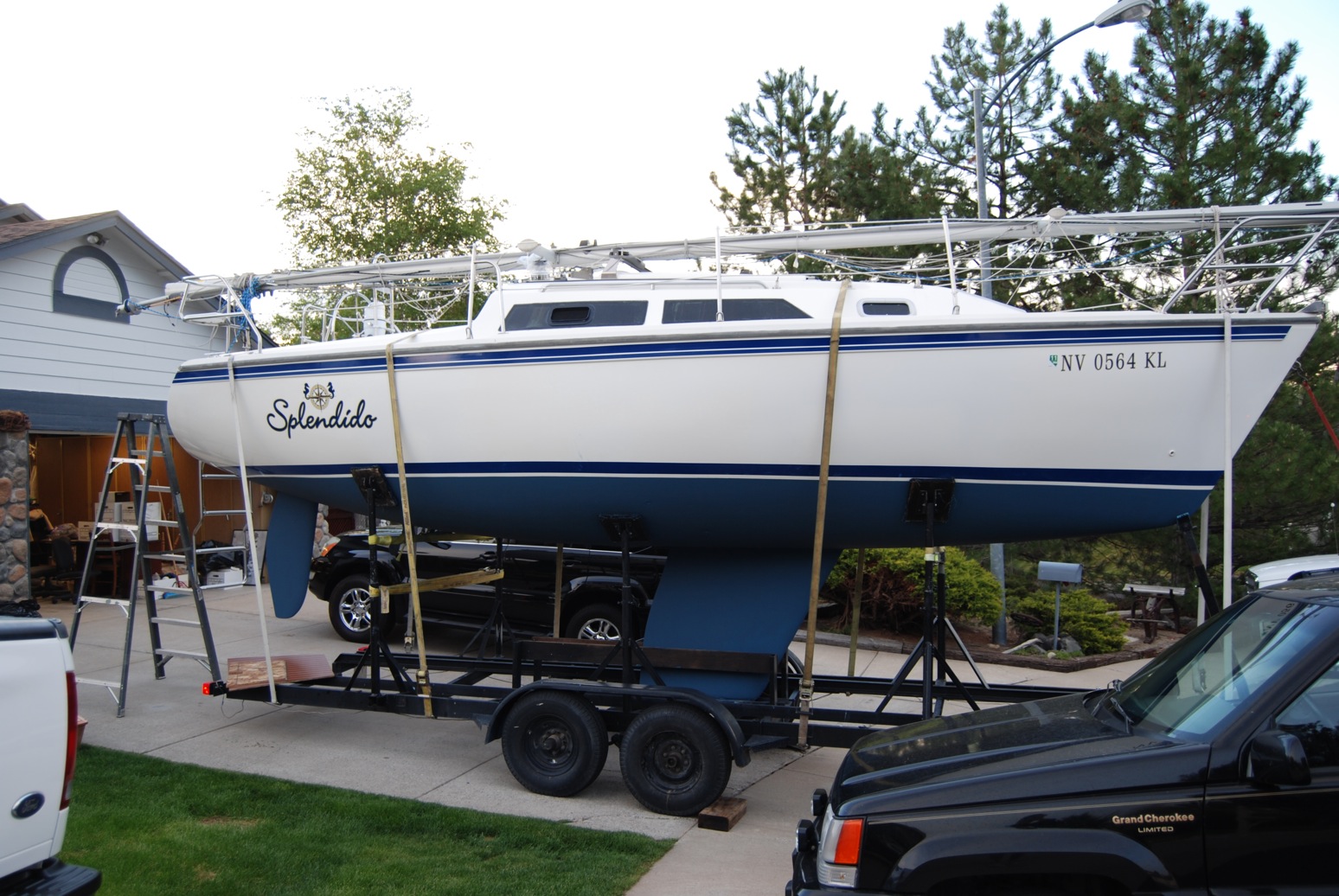
It all happened innocently enough; I asked my brother-in-law, Tracy, about maybe helping me a bit with the new PlasTeak floor, and about dropping the pads on the trailer so I could sand and re-paint under them. The next thing I know, the boat is in Tracy’s driveway, and we worked together from around 5:30 p.m. to past 10 every night for a week looking things over, testing electrical systems, checking the plumbing system, and installing the new PlasTeak® sole (floor). Fortunately, Tracy is an engineer by training, and as mechanically-inclined as a person can be. He also has, I’ve decided, every tool known to mankind, and what he doesn’t own, we can fabricate out of something else he has. This skill helped immensely when we dropped the pads, as we needed to shore up the rest of the pads that were distributing the 6,400 lbs. of Splendido’s weight. As luck would have it, Tracy had four extra “camper jacks” that allowed us to spread out the load, do our sanding and painting, and get two coats on her wet surfaces. Here’s what she looked like when we finished.

When we moved the boat from her winter storage to Tracy’s house the week before, we were alarmed to discover the trailer “bucking” every time Tracy hit the brakes on his big pickup truck. Having a 13′ high sailboat bucking and ramming a pickup is a scary thing to watch (I was following behind in my Jeep), so we pulled over and found that the trailer’s brake system was out of brake fluid. So, I ran to the nearest auto-parts store and bought a quart, and we topped it off. That seemed to help a little bit, but when we got her parked at Tracy’s, we found that the master cylinder was rusted all to hell and needed to be replaced. Tracy called around and got the parts, and $278 later, we had a new brake system on the trailer. (Or so we believed at the time.)

We left Tracy’s house in northwest Reno at about 6 a.m. on May 14th for our 9 a.m. launch appointment at Tahoe City Marina. We hadn’t driven a mile before the trailer started bucking again. Tracy had blown out, dried, and refilled the brake lines, so we figured it had to be the brake drums seizing up. Since we were basically going uphill all the way, we had little need for massive braking, so we went for it. We arrived safely, stopped by the Lake Forest Coast Guard Station launch to have the boat re-inspected for invasive species (even though she hadn’t been anywhere but Tahoe…the guys who worked on the hull this winter had snipped the Tahoe-Only seal to move the mast. (Don’t get me started). Freshly-armed with a new seal, we motored back to Tahoe City Marina, where the fine folks there lifted her off the trailer, helped step the mast, and let us tie up to finish the commissioning at dockside.

It took a fair amount of trial and error to get everything set up correctly, but we had Catalina’s sort of cryptic instructions (e.g., the mast should be straight both fore and aft and athwartships; the lower shrouds should be neither loose nor tight…) and just took our time. We had a bit of excitement when we were checking out the plumbing; I hadn’t tightened a hose clamp quite tight enough after “airing them out” this winter, and we had a leak where the bilge was filling rather quickly. Fortunately, Tracy got it sealed off, the bilge-pumps worked wonderfully well, and a soggy mess was averted.

About 6 p.m., we called it a day, as the weather was threatening (forecast: big winds and 4-6″ of snow at lake level overnight), and we were pretty bleary after working pretty much non-stop all day. The kind folks at Tahoe City Marina let us tie up Splendido in a slip (complete with spring lines and extra ropes in case of a major blow), and we checked all the systems and put her to bed. She still needs her sails put on and some fine-tuning of her rigging, but all in all, I think she looks great and we’re looking forward to some relaxing cruises as the weather warms.

Keeping Things Ship-Shape

Catalina 270 Sailboat on Lake TahoeI know you’re not supposed to discuss a lady’s age, but the simple fact is, Splendido is an 18-year old boat, and while she has had many, many lovely sailing days on Tahoe, both cruising and racing, she was beginning to show her age when we bought her at the end of the 2010 season. So, partly because I had to (for boat insurance) and partly because I wanted to (just so I would know), I had Splendido surveyed last fall by a wonderful marine surveyor named Vince DiLeo, AMS, of Admiralty Marine Services, LLC in Truckee, California.

Vince spent fully eight hours crawling around Splendido, checking every inch of her inside and out. His 37-page report spelled out news both expected (she had more than a few cosmetic dings all around the hull, including a pretty good hit on the port rub rail) and unexpected (she only has 386 hours on the Perkins Perama M20 engine; she needed a gel coat repair at the hull/keel joint; and the manual bilge pump needed to be completely rebuilt). Vince also noted that Splendido needed three port stanchions straightened, a number of cotter-rings replaced, a new head cap for the engine, and a few new hoses for the engine. As we walked around the boat, he pointed out that the knot-meter was out of alignment with the centerline, thereby giving a false speed reading. All pretty minor stuff, thankfully.

So, armed with Vince’s report and an internet connnection, I quickly sourced a head cap, Whale® Gusher™ bilge pump rebuild kit, and a new Ritchie compass, as Splendido‘s Danforth original had given up the ghost and was missing when we bought the boat. I also had a sneaking suspicion about the Jabsco raw-water impeller, and upon inspection, found that five of its six blades were split about half-way through.

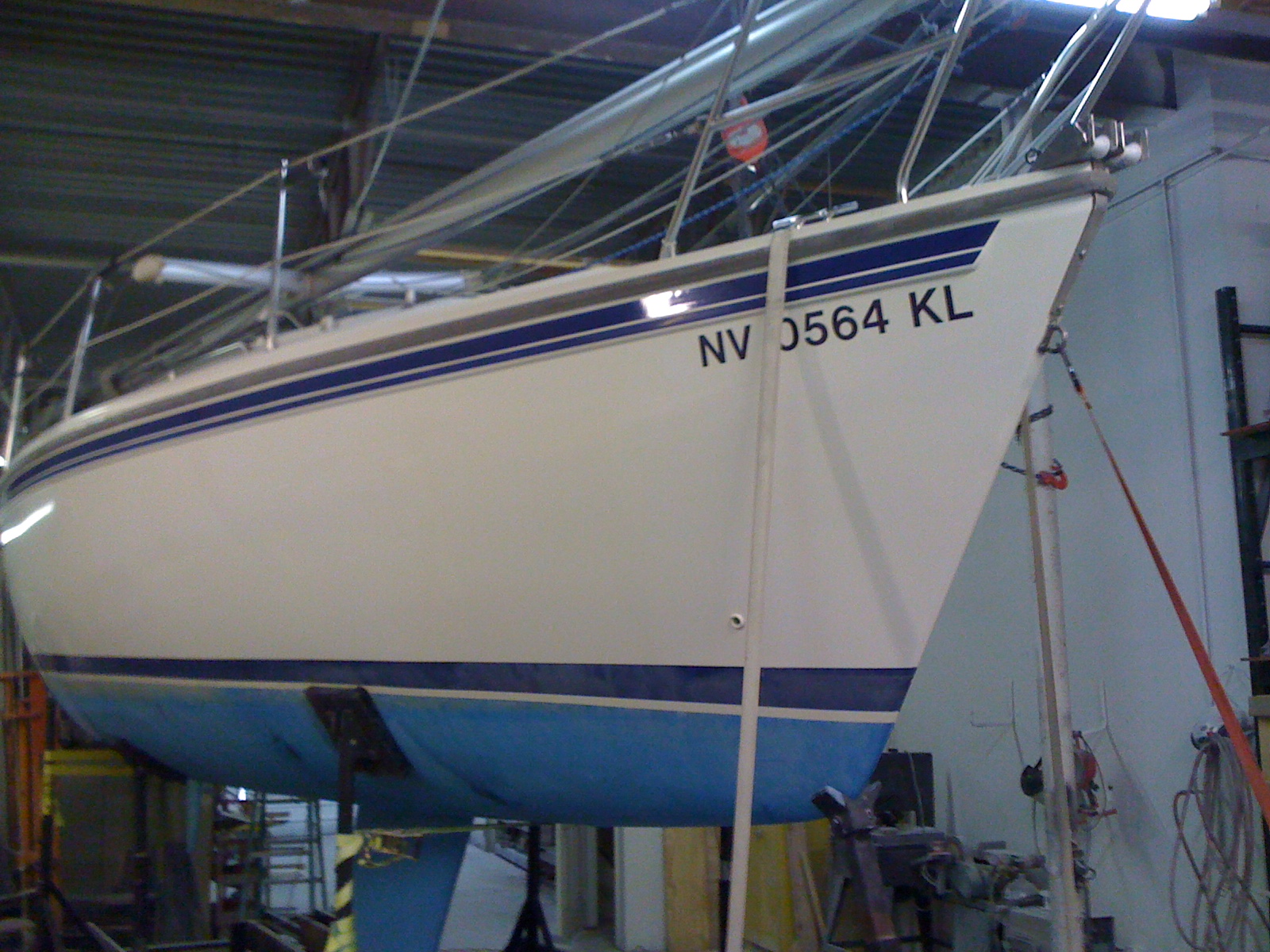
But all that could wait. Debbie was quick to point out that Splendido needed to live up to her “beautiful” name (the first thing she noticed upon seeing her was her faded striping), so I called up Ted Thurston of TNT Auto & Marine Painting in Sparks, Nevada to have them make her all pretty again after 17 years of nicks, dings, and rough emergency MarineTex repairs made by previous owners. Ted and Kevin Thurston went to town on Splendido, creating a like-new appearance on the freeboard and transom, which had seen the heaviest wear over the years. They did expert fiberglass repairs where necessary, and finished everything with exact-match gel coat (I had contacted an engineer at Catalina who still had the factory gel coat codes, which he had forwarded to Spectrum Color). They even went the extra mile, painting perfectly-matched bottom paint over the “Catalina smile” repair where the hull and keel meet. The real kicker for me was how well they buffed her out and polished her hull after they made all the gel coat repairs. Now, she shines like the sun, replete with new Navy blue striping.

On the inside, Splendido looked pretty great, but I did notice a few water-stained pieces of trim and flooring that needed a little work. So, armed with my shop-worn Makita drill, I backed out the screws and removed five or six pieces to take home. After a bit of research, I picked up some Minwax pre-stain conditioner, natural stain, and Helmsman varnish. For the water-stained teak-and-holly sole, I decided to pick up some oxalic acid to bleach a football-sized area of dark water stain. This didn’t work, so I abandoned the idea of trying to repair this and decided to just make a new sole.

As I mentioned earlier, I noticed that one of the “seat risers” was so badly water-stained, I took it out and started to sand it down. At first I didn’t realize it was a teak veneer overlaying the plywood core until I accidentally sanded all the way through the veneer! So, I did my web search and found a great outfit back east that had quarter-sawn teak veneer that seemed to match what I already had in Splendido. I ordered a roll, prepped the original piece, and laid it down. It looked great. I hit it with five or six coats of Minwax Helmsman varnish with light sanding between coats, and it turned out great. After fabricating and installing a new PlasTeak™ floor (a big job, but a very satisfying one), the rest of the teak trim was looking a little shopworn, to put it mildly. Naturally, I had to pull out all the easier-to-remove teak trim pieces on the boat and go through the same process with them. (The rest can wait until next winter!)

I’m not gonna lie; from haul-out to winter storage to parts and repairs, everything costs more than I thought it would, and the big ticket item of the year—mooring—is due to be paid later this month. But, it has been an opportunity to part with toys we no longer use, like his-and-her golf clubs, a telescope, and my snowboard and boots. Still, we’ve already got a list of family and friends who want to soak up an afternoon of sailing Tahoe when the weather warms, and for that alone, the sacrifice is worth every penny.