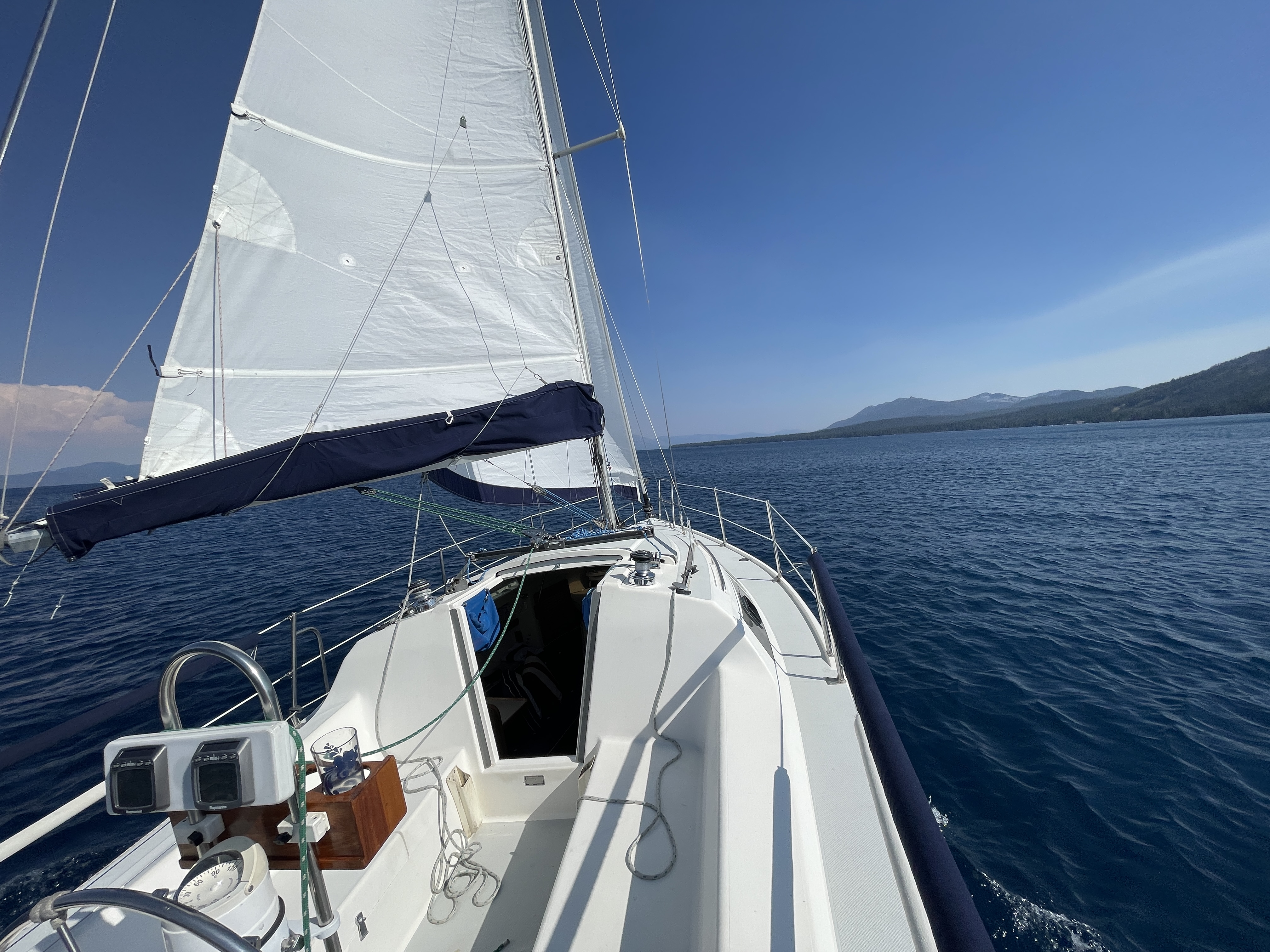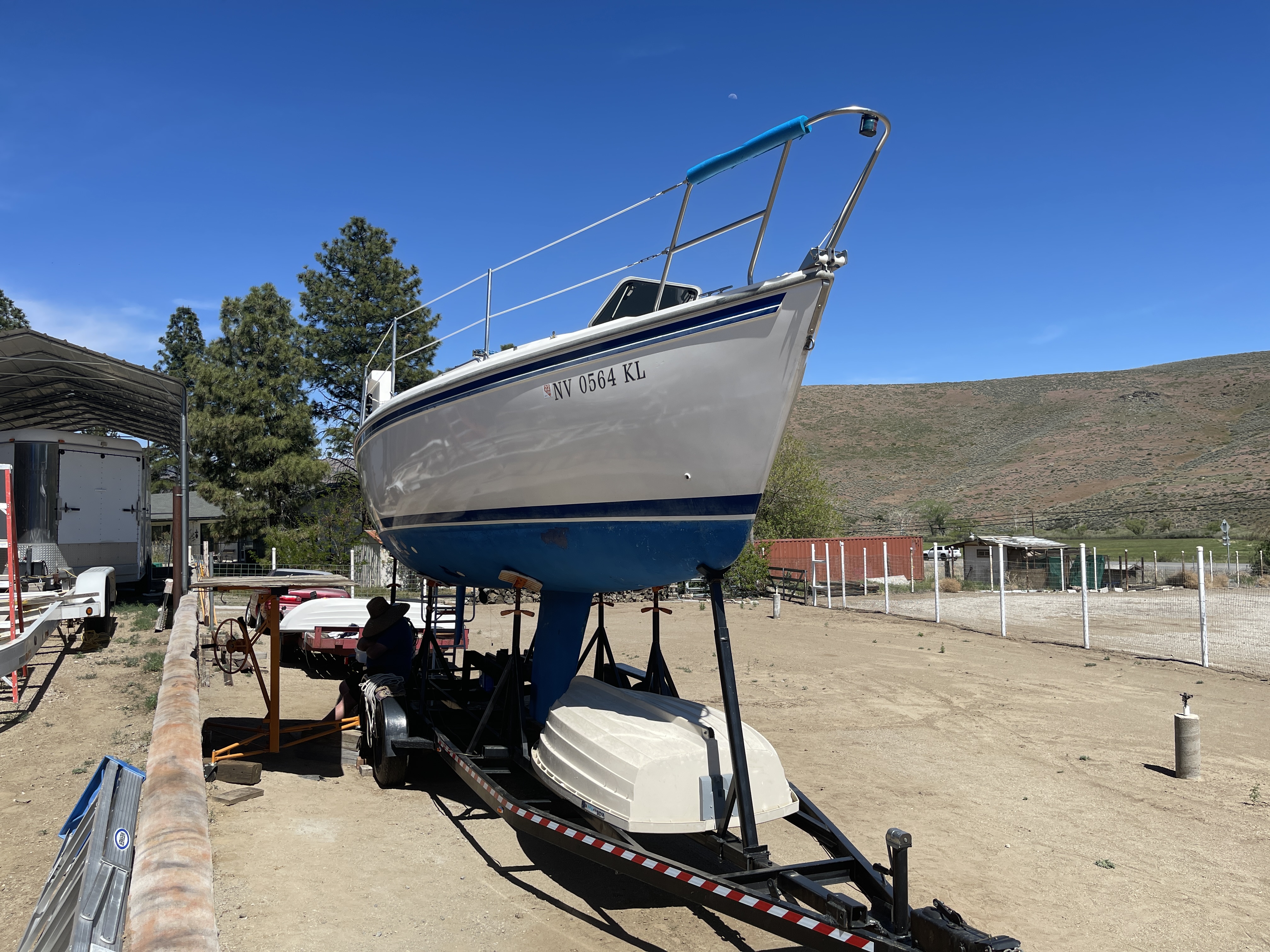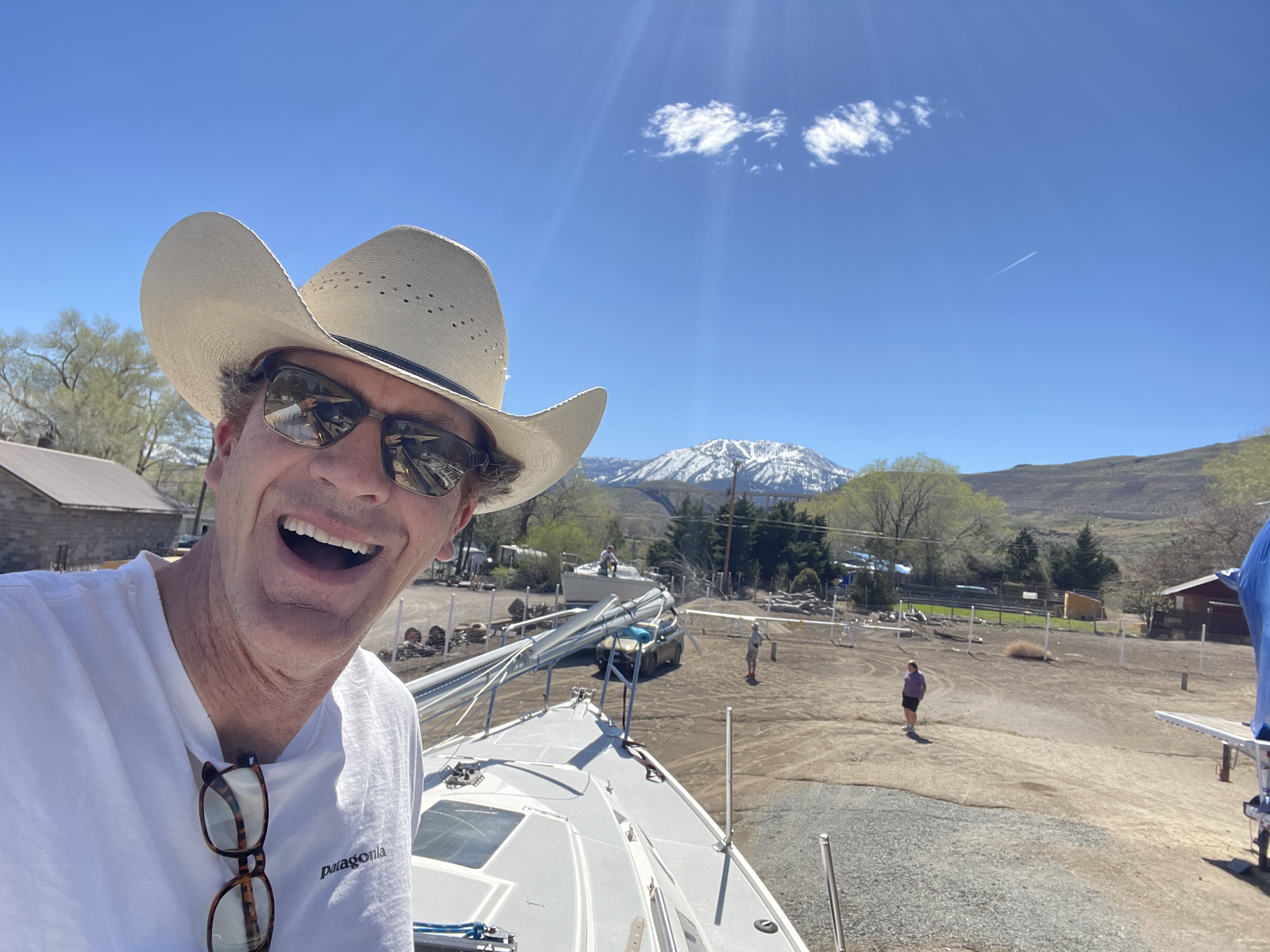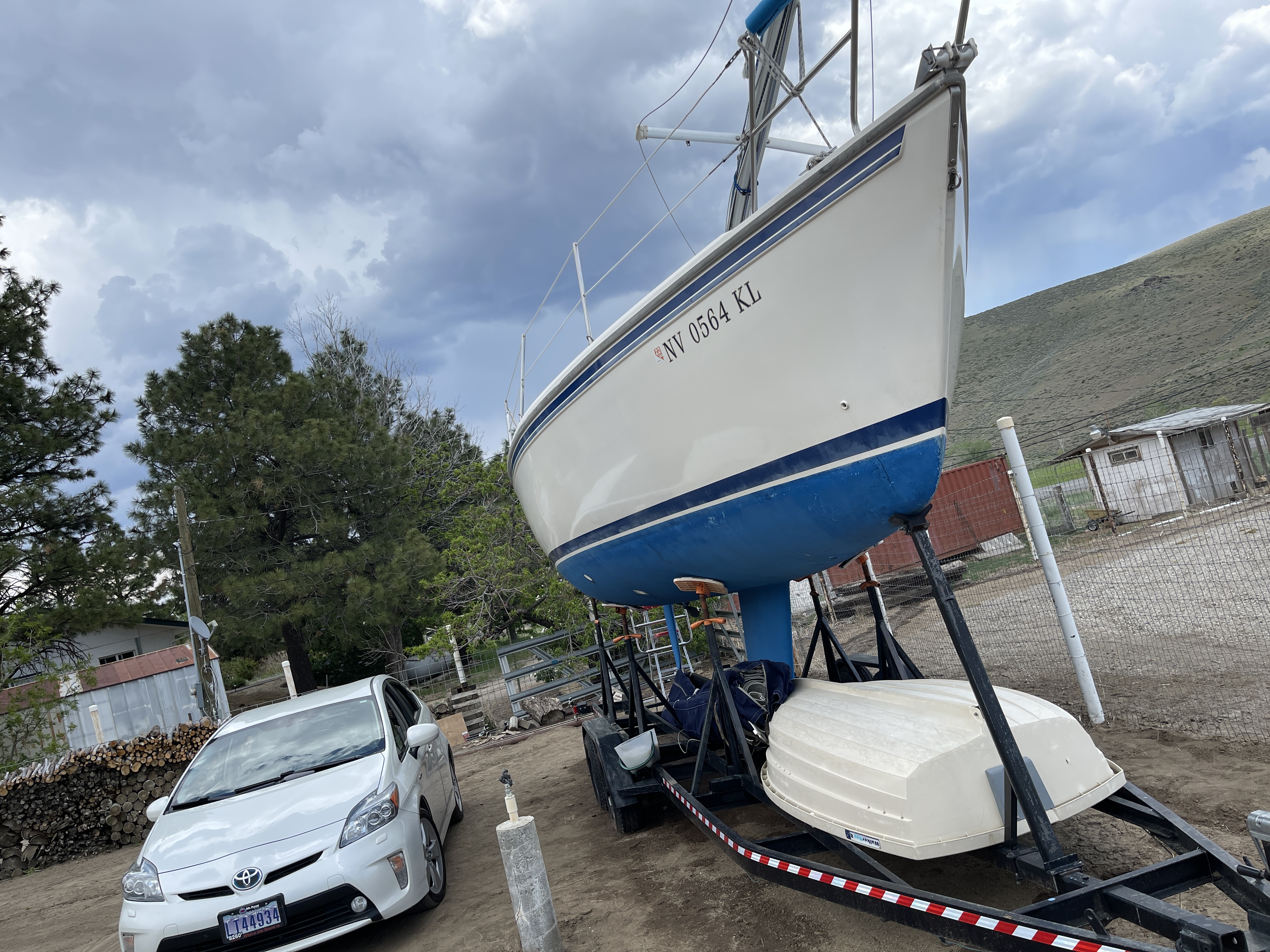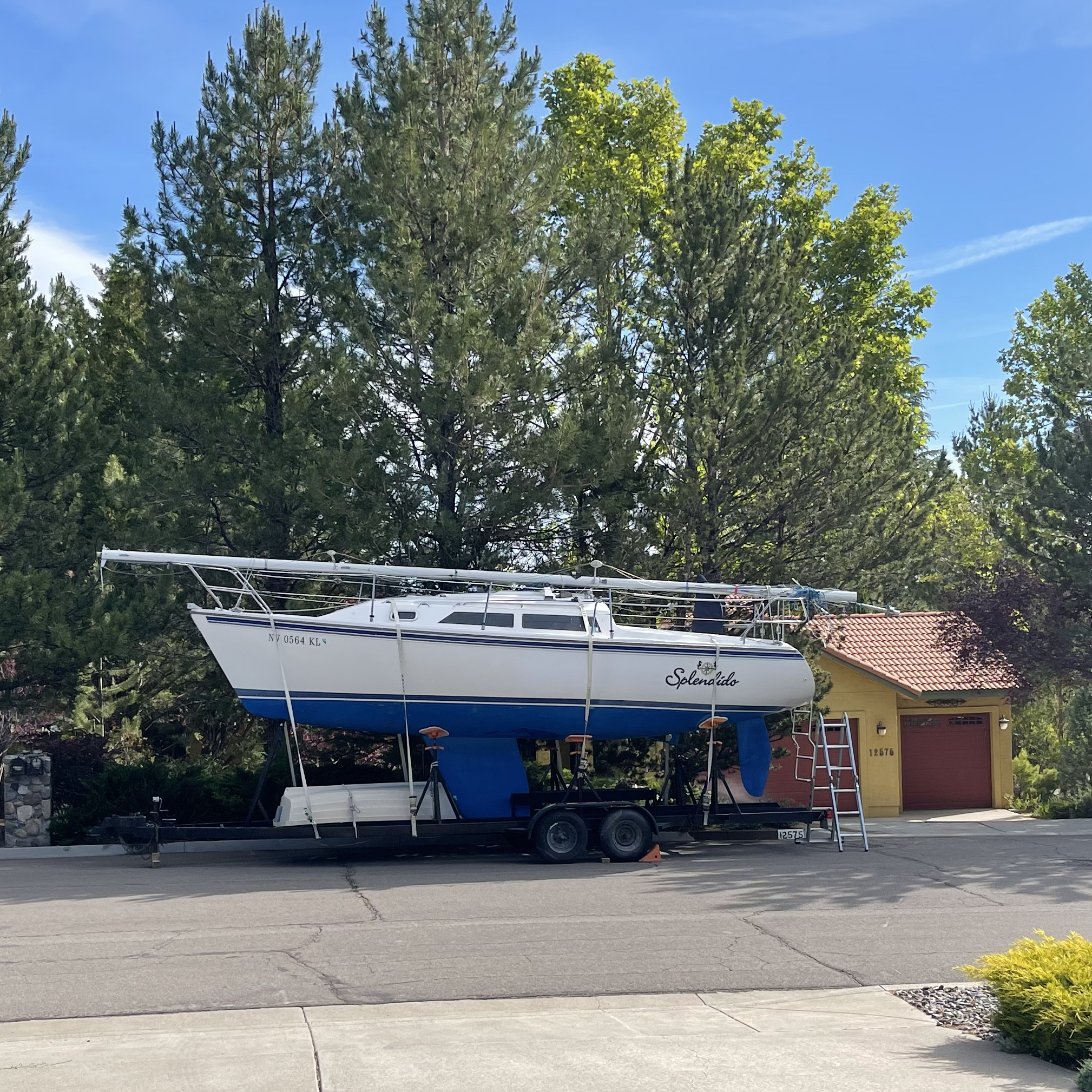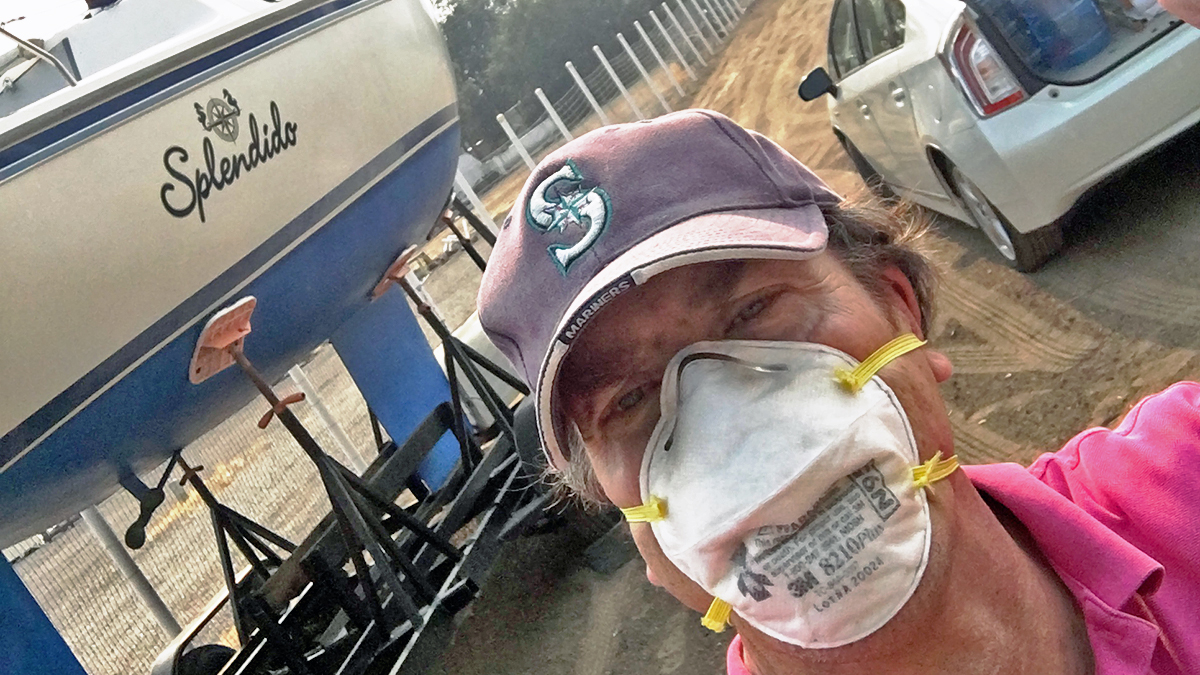
Splendido, our beloved Catalina 270 LE, is for sale — and ready for new adventures

A lovely woman and blog-reader from the Chesaspeake Bay area reached out to us a few weeks back with an interest in buying our much-adored Splendido. Her story really struck a chord with me: Now in her 70s, she had grown up sailing on Cal 25s and, reminscing on those happy times, had a vision of buying Splendido for herself and her college-age son, who is absolutely wild about sailing on those legendary waters. She had recently bought a second home on the water’s edge, and we had several long and delightful phone calls about the pros and cons of buying this boat for what she and her son were seeking. She had fallen in love with the appearance, upgrades, and care and attention that Debbie and I had put into Splendido over the years. In the end, it turned out that hauling this 27′ sailboat and her 38′ double-axle trailer 2,700 miles across the country would add $7-10K to the cost, and — not suprisingly — that was the deal-breaker. Though disappointed at the missed opportunity to pass along our Splendido to someone who truly appreciated her, Debbie and I loved that she saw in our boat what we see — a refitted, lovely, sea-kindly “good old boat,” which is exactly what we set out to achieve when we bought her.

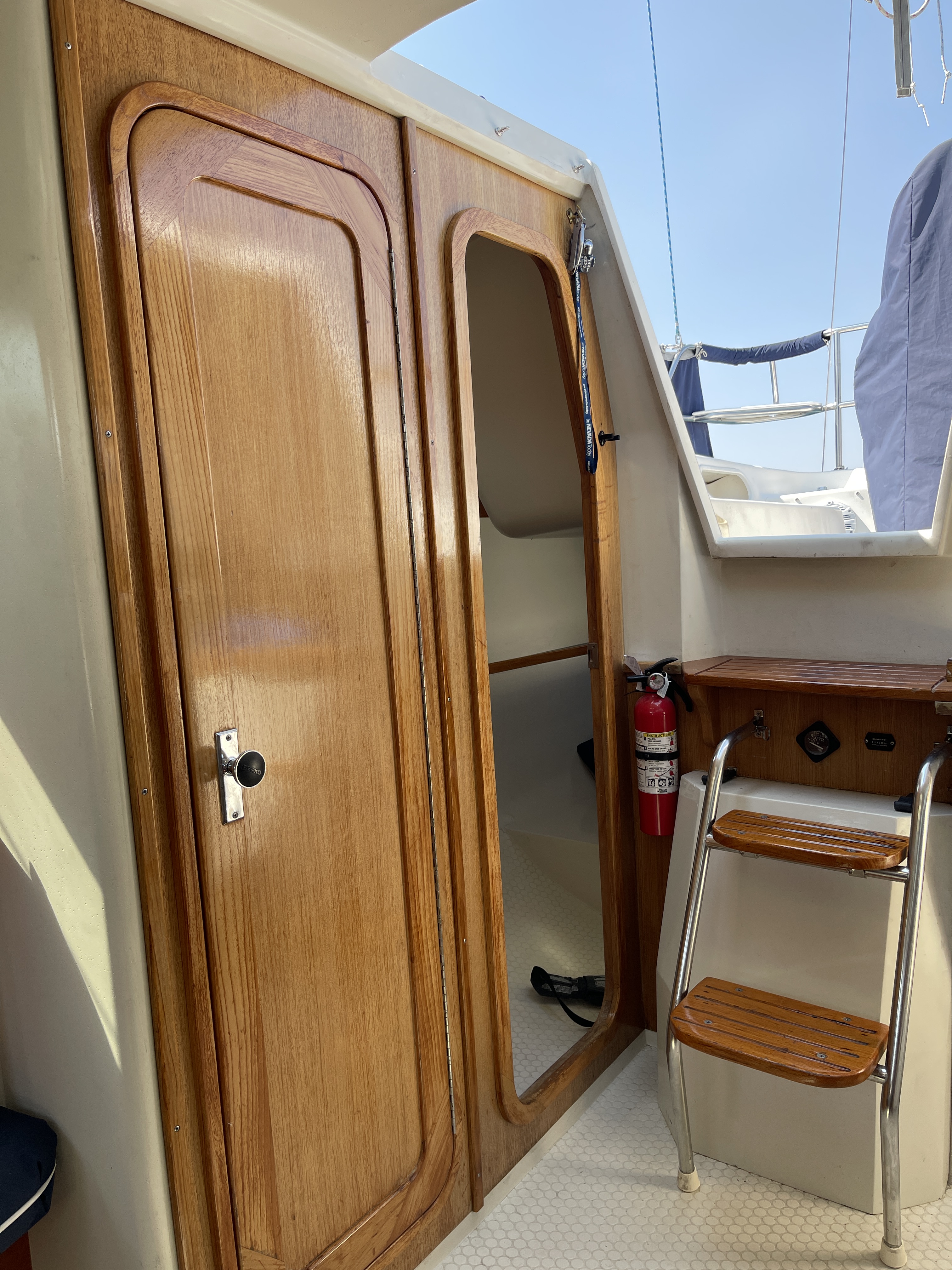
Splendido - New Interior

I’d like to give credit where credit is due, however: When we bought the boat in 2010, the first thing I had done was an eight-hour-long, comprehensive survey by Vince DiLeo, AMSÂŽ of Admiralty Marine Services. Vince provided us with a detailed report of everything that needed to be done to restore Splendido to first-class working order, mechanically, structurally and equipment-wise. We immediately prioritized the list and got after it, and — as I’ve said before — while you can’t make a good old boat “brand new” again, you can make her the best “good old boat” she can be, which I think we’ve achieved.

That said, we’re selling Splendido in the condition you see here (and, though I flatter myself, I doubt one could find a better-documented (the good, the bad, and the hard work involved) sailboat ownership journey anywhere than the 15-year-old blog you’re reading now!), in a package that includes her two-axle trailer, Walker Bay dinghy, Shipshape winter cover and frame, plus four tidy storage bins full of the sailing necessities you rarely think about that makes buying a “pre-loved” boat a bonus over buying new.

Before I sail off into the sunset, I want to give a massive shout-out to my sailor pal, shipwright and mechanical wiz Ancil Sigman of Pleasant Valley, Nevada, who found ways to restore and improve Splendido that I hadn’t even dreamt of. She wouldn’t be half the boat she is with Ancil’s tireless tinkering, expertise, and care. Thanks, Ancil!

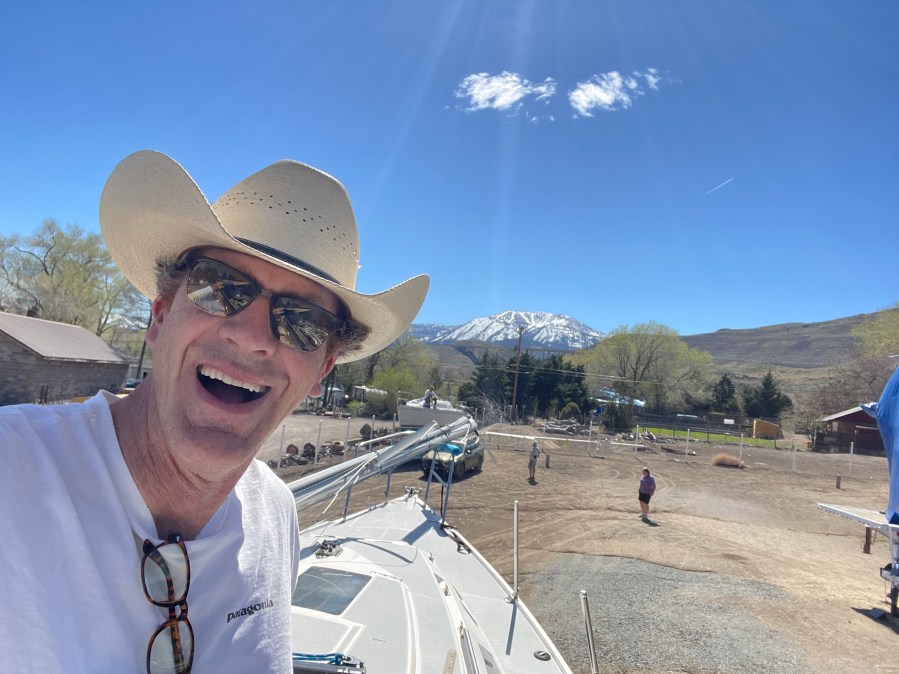
Thanks, too, to you, gentle reader, for sharing this news with your personal and professional networks. I’m giving personalized tours beginning this afternoon to interested sailors, though I have to laugh — it’s a different experience showing a boat that’s on the hard, on her trailer, winterized and all packed up for our seven-month “sleep” here in the foothills of the High Sierra, versus having someone climb aboard at Obexer’s or Tahoe City Marina, cast off and head out across Big Blue. I’m getting a little misty-eyed just writing this, so I’ll sign off by saying fair winds, smooth sailing, and here’s my favorite sailing poem to meditate on. Until next time… DB

Sea-Fever

BY JOHN MASEFIELD

I must go down to the seas again, to the lonely sea and the sky,

And all I ask is a tall ship and a star to steer her by;

And the wheel’s kick and the wind’s song and the white sail’s shaking,

And a grey mist on the sea’s face, and a grey dawn breaking.

I must go down to the seas again, for the call of the running tide

Is a wild call and a clear call that may not be denied;

And all I ask is a windy day with the white clouds flying,

And the flung spray and the blown spume, and the sea-gulls crying.

I must go down to the seas again, to the vagrant gypsy life,

To the gull’s way and the whale’s way where the wind’s like a whetted knife;

And all I ask is a merry yarn from a laughing fellow-rover,

And quiet sleep and a sweet dream when the long trick’s over.

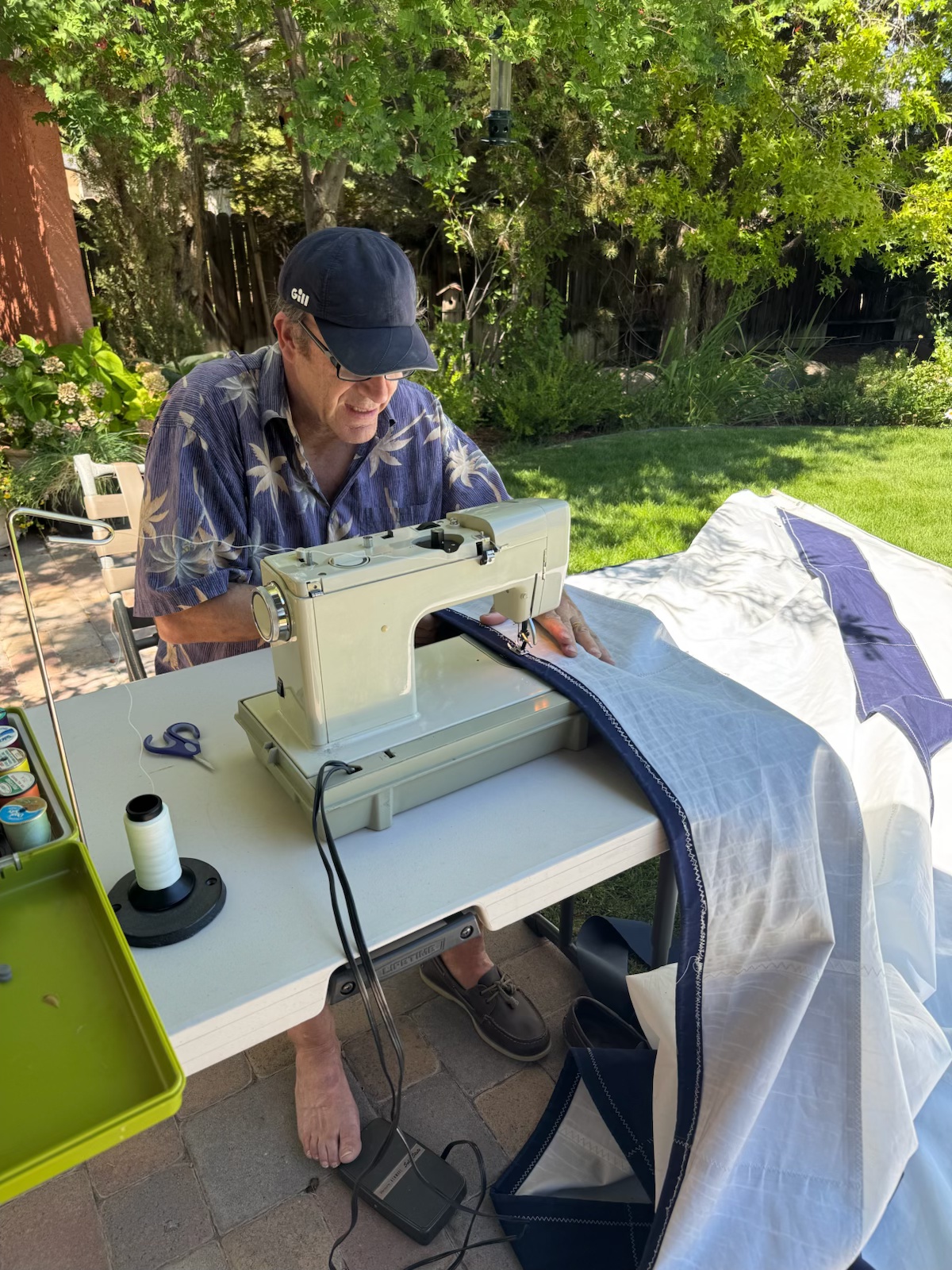
David Branby smiles as he looks up how to use a sewing machine.

Remind me again… how do I sew a seam on a sail?

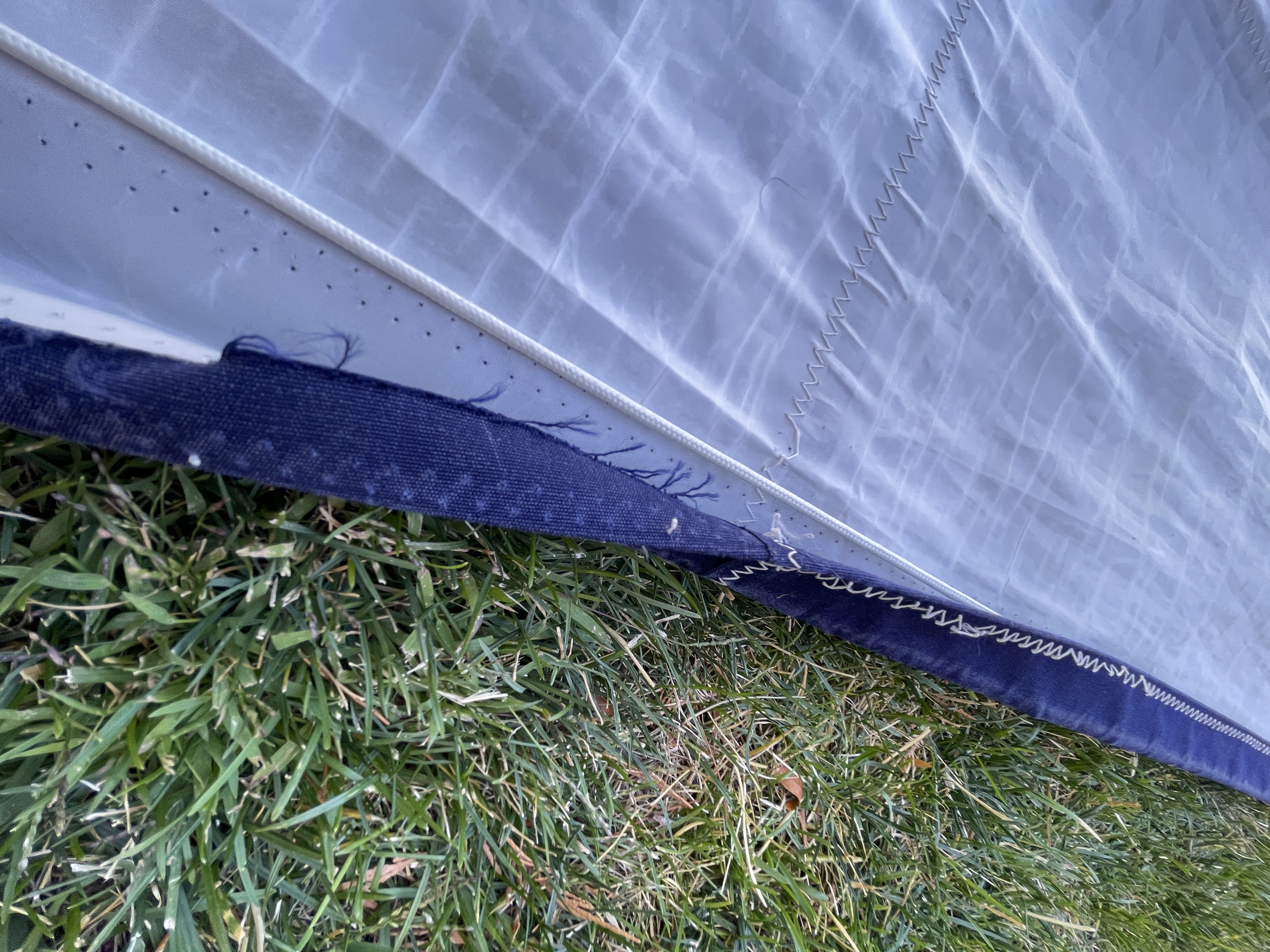
It’s been several weeks since I have been able to sail, so yesterday’s outing on Lake Tahoe was a real treat. Winds were fresh out of the SSW at 15-16 knots with gusts up to a sprightly 23+ knots, which made for some exhilirating moments. To shake off the rust, I sailed down to Chambers Landing, then tacked and sailed back up to Mark Zuckerberg’s place before heading in. Along the way back, I noticed the leech (trailing edge) of the genoa looking a little ragged. Nothing major; the stitching had come undone on the sacrificial UV strip (the blue fabric that protects the white DacronÂŽ cloth of the sail) along the last 8-10 ft. up from the clew. Back on the hook, I dropped the genoa onto the deck and did my best to roll it up and stuff it into the dinghy so I could take it home and re-sew the material.

Once I got home, I dragged out the ol’ sewing machine, found some UV-protected upholstery thread, and got to work. I had actually forgotten everything about using a sewing machine, including how to put thread on the bobbin and even how to re-install the bobbin. A few minutes with the 1970s-era manual, and I was back in business.


As luck would have it, I broke the needle at the very last stitch down the leech. I still have a bit of work to do on the cross stitching that holds the sacrificial UV strip on, and then it’s time to re-hoist the genoa and go for a sail. August is the best month for sailing Tahoe. The weather settles down and becomes nicely predictable, and the water is warm enough to go for a swim. Can’t wait to get back up there. Until then…

Fair winds and smooth sailing! DB

The peace of mind that comes from sailing safely

I went out for a singlehanded sail last Monday; winds were light at 8-17 kts and the temperature was downright balmy. I saw six or seven sailboats out, which made me smile. I’m glad things have settled down a bit after the ups and downs in the weather of the past few weeks. 

I have to admit, I was pretty shook up by the tragic white squall that hit Tahoe on June 21, and it cast quite the pall on sailing for me for a few weeks. So, I turned my shock into action and got busy checking all the safety gear aboard Splendido. I checked the CO2 cartridges in all six of our Type V (inflatable) PFDs, then made sure all of our Type II PFDs (the bulkier orange kind) were in easy reach. I also checked the expiration dates of the flares, checked the air horn, both fire extinguishers, and refreshed my knowledge of using the VHF radio in an emergency. Folks who’ve sailed with me know I ask everyone to wear inflatable PFDs while on board. It’s a habit I’ve had since childhood, when a neighbor down the beach from our home on Fidalgo Island in Washington’s San Juan Islands tragically drowned one morning when he was out checking crab pots just 50 yards off shore. Now, it’s not clear whether the eight folks who drowned at Tahoe on July 21 were wearing PFDs, but we do know the two survivors had PFDs (one was wearing one, the other was clinging to one when rescued). As a skipper, knowing everyone aboard is wearing a PFD gives me one less thing to worry about so I can relax and enjoy the time on the water.

Because we sail Splendido on California waters (Tahoe is about 1/3 in Nevada and 2/3 in California), I’m now required to carry a California Boater Card. It’s a new rule for skippers of any boat with a motor in it as of January 1, 2025. I found a free U.S. Boat course online, and it was a really great refresher on boating safety. I already have my American Sailing Association 101 through 104 certifications, but I was surprised at how much I learned by taking this course. One thing that blew me away was learning that more hunters drown from falling overboard each year than die from getting accidentally shot. The course took me about five hours to complete, but I got my card and I’m legit now. To celebrate, I went out for an afternoon sail and had the whole gorgeous lake to myself.

Splendido at play on McKinney Bay at Lake Tahoe, July 14, 2025.


Back on the hook, I turned my attention to taking care of the interior woodwork, which tends to dry out in our low-humidity, high-altitude sailing area. I think it turned out pretty well. I can’t make our 32-year-old boat new again, but I can make her as beautiful as elbow grease allows. 🙂

A photo of newly-oiled interior woodwork aboard Splendido, a 1993 Catalina 270 that sails at Lake Tahoe.

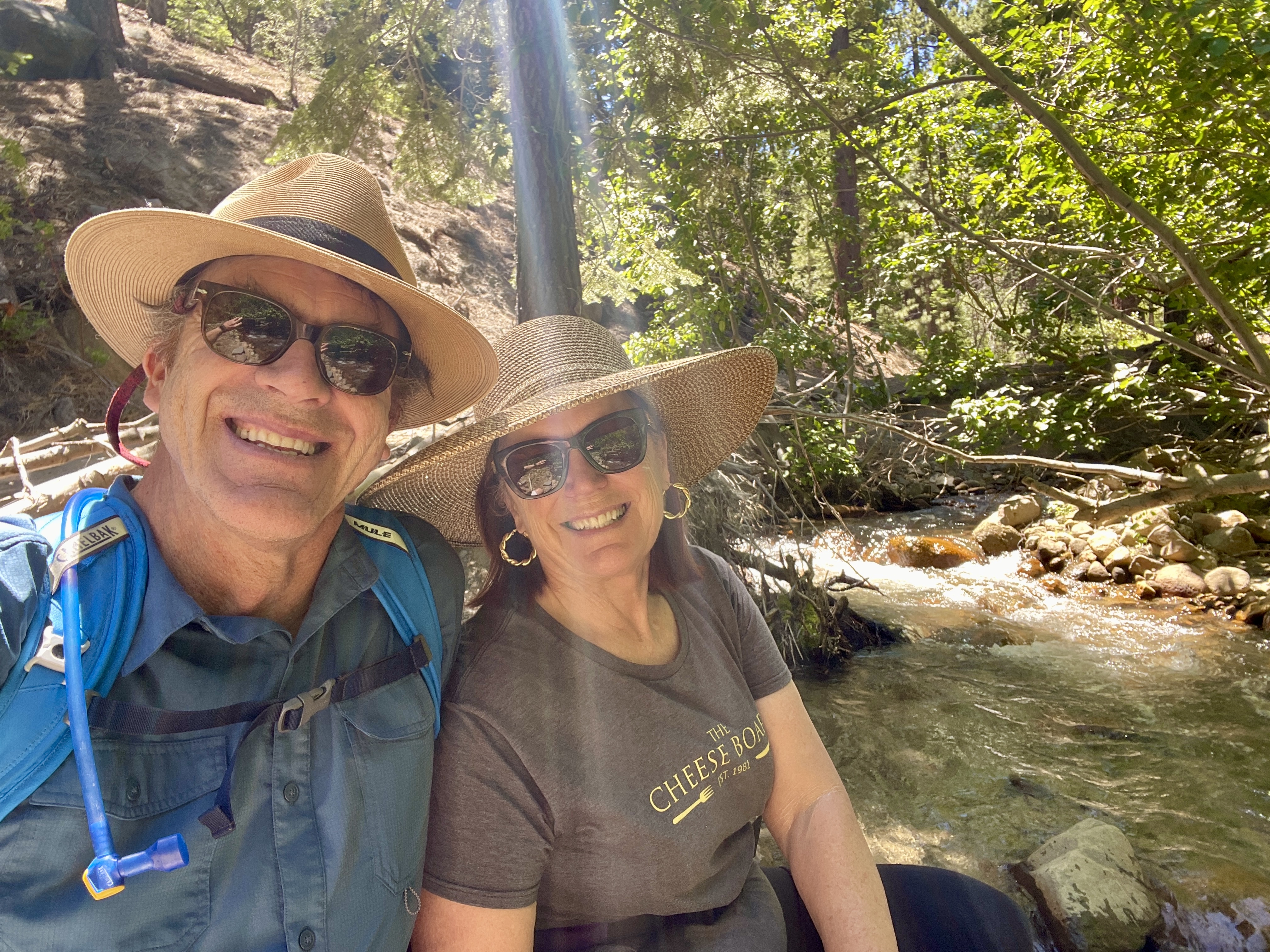
While the weather was sorting itself out in late June and early July, Debbie and I took the opportunity to do some hiking in the Sierra Nevada. We did some training hikes on the Jones Creek Loop trail south of Reno, then had a picnic hike on Whites Creek – Dry Pond trail, which is just lovely this time of year.
David and Debbie Branby taking a break while hiking the Whites Creek - Dry Pond trail in the Sierra Nevada near Reno.
The forecast is for perfect sailing conditions for the next week after today’s blustery winds settle down, so that’s what we’re aiming for — quality time on the water of our beloved Lake Tahoe.

Fair winds and smooth sailing! DB

Just Add Water

We launch Splendido in three days, and the past six weeks have been a whirlwind of activity getting her prepped for the Tahoe sailing season. The theme this spring was, â€œOK, what really needs to be addressed on a well-loved 31-year old sailboat that has seen lots of use? Fortunately, my mechanical-genius pal Ancil Sigman had plenty of suggestions, as you’ll see below.

The things I intended to fix in the off-season:

  • Make a better rope with knots in it to pull up the swim ladder.

The things Ancil heartily encouraged me (and tirelessly helped me) to fix in the off-season:

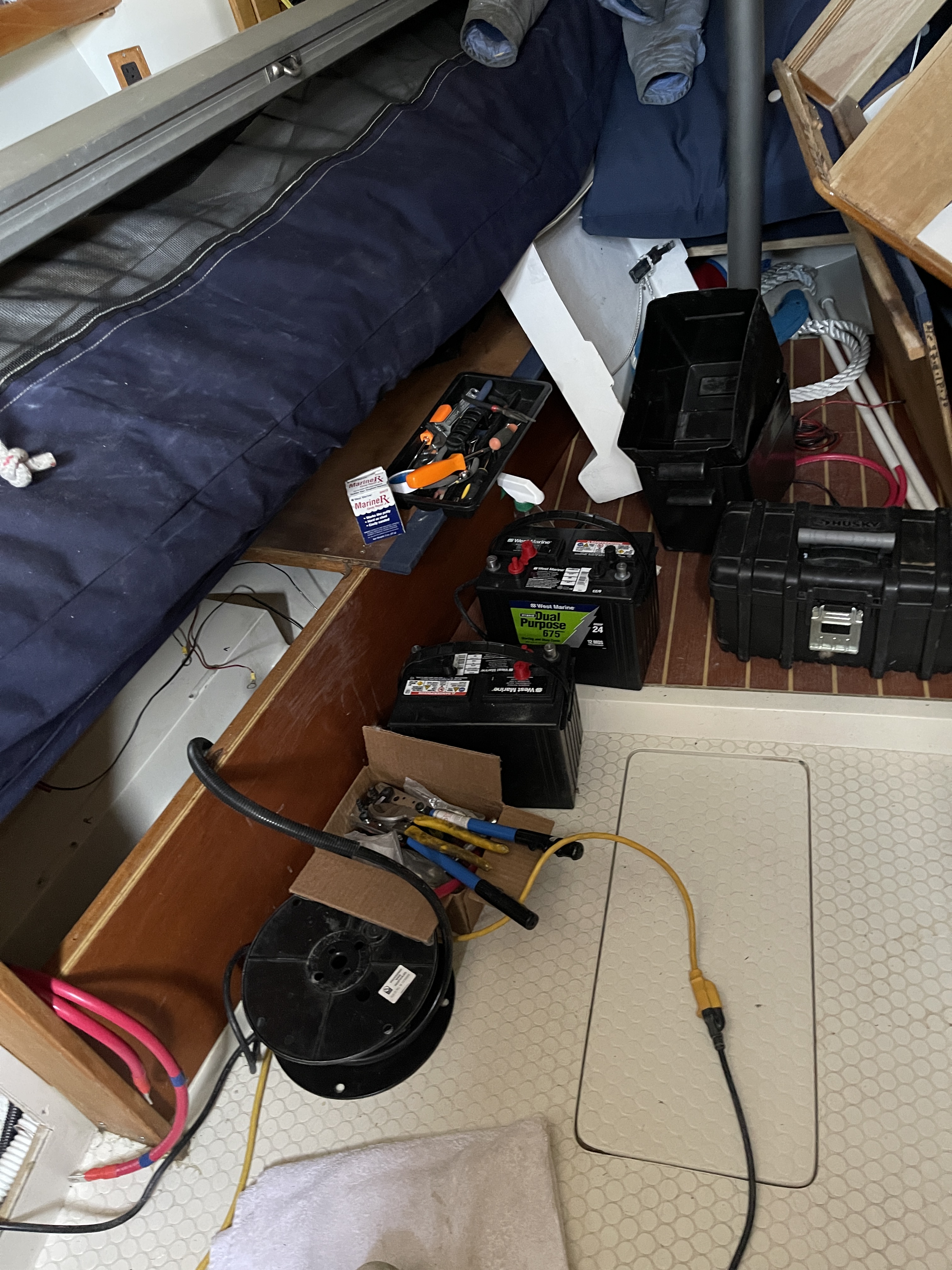
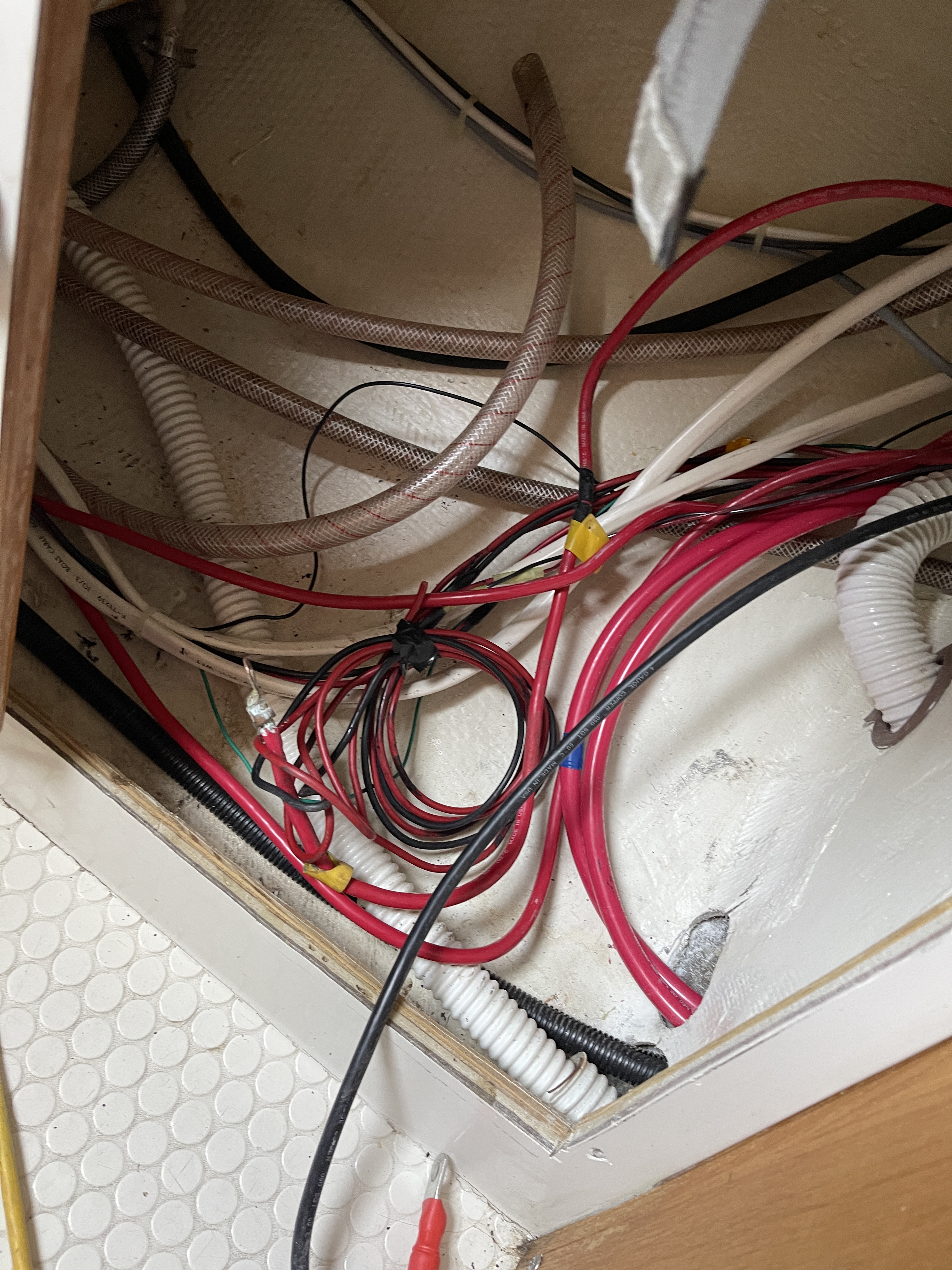
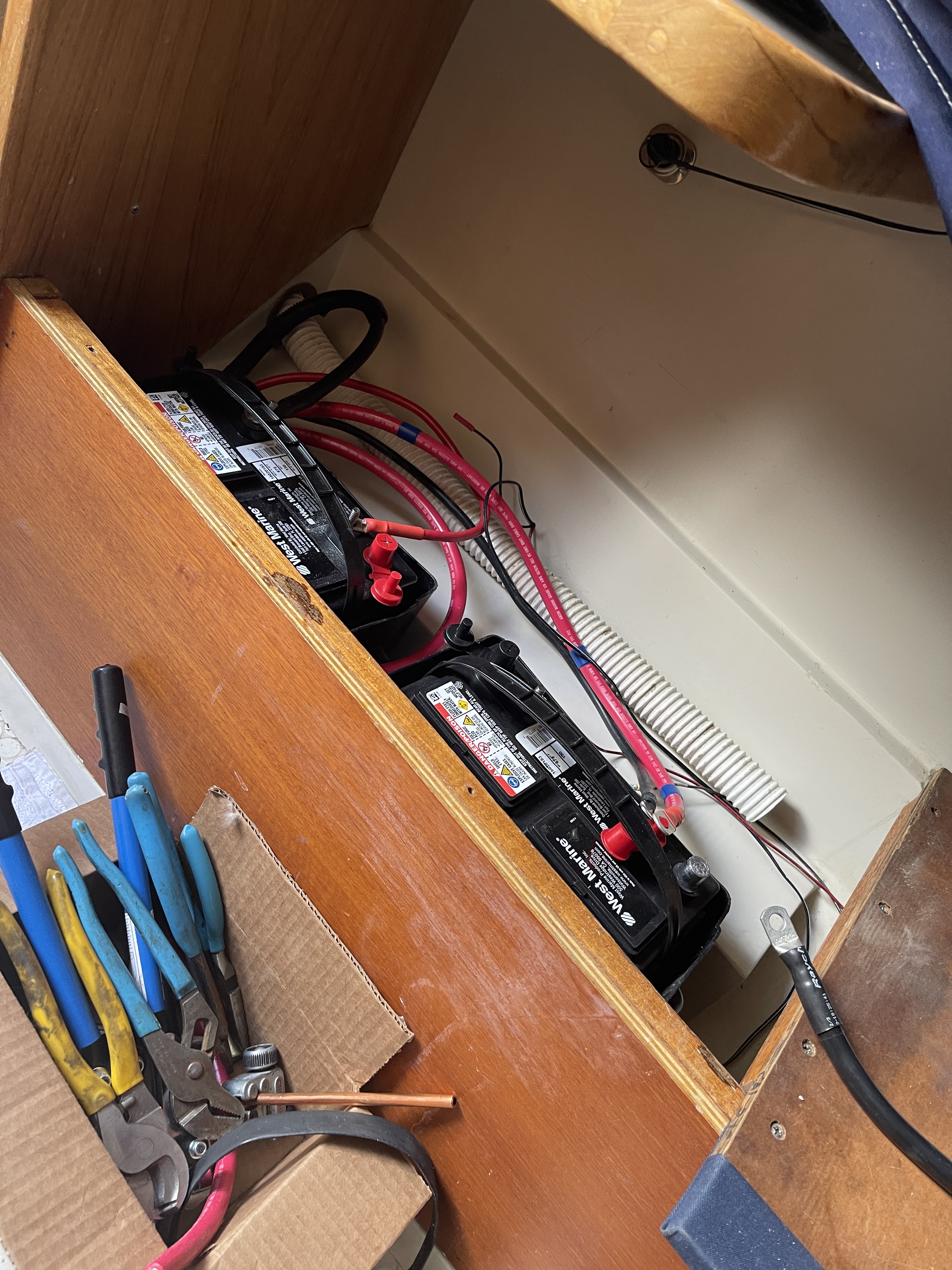
  • We pulled out every inch of the original (but significantly corroded) battery cables and replaced them with beefier, brand-spankin’ new cabling, all nicely heat-shrinked, from the battery bank to the panel to the engine, inverter, etc.
  • Upgraded the boat trailer with new running lights, from hitch to taillights.
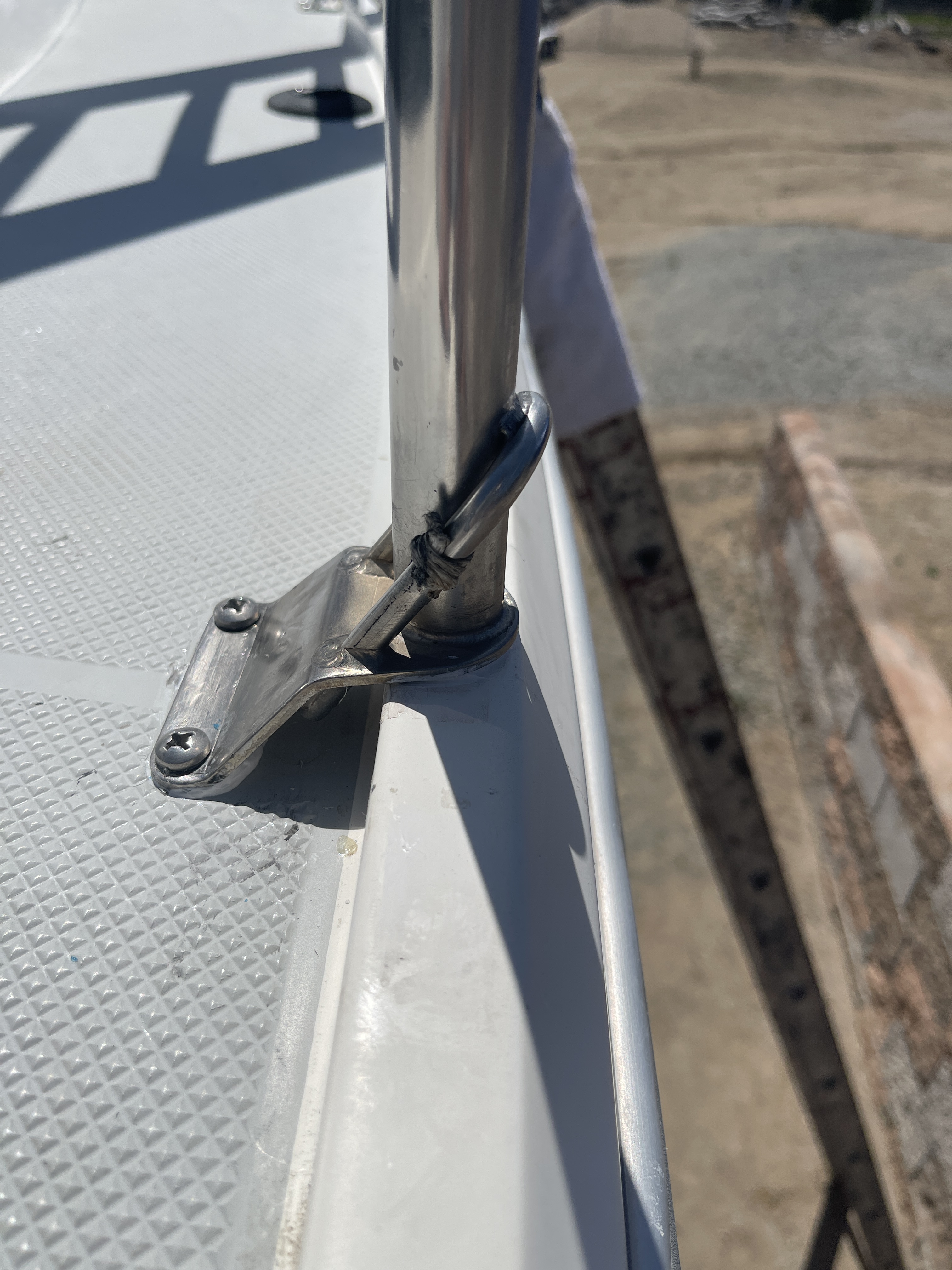
  • Pulled out two bent lifeline stanchions, straightened them, then properly re-bedded and reinstalled them.
  • Replaced all the lifelines on the boat.
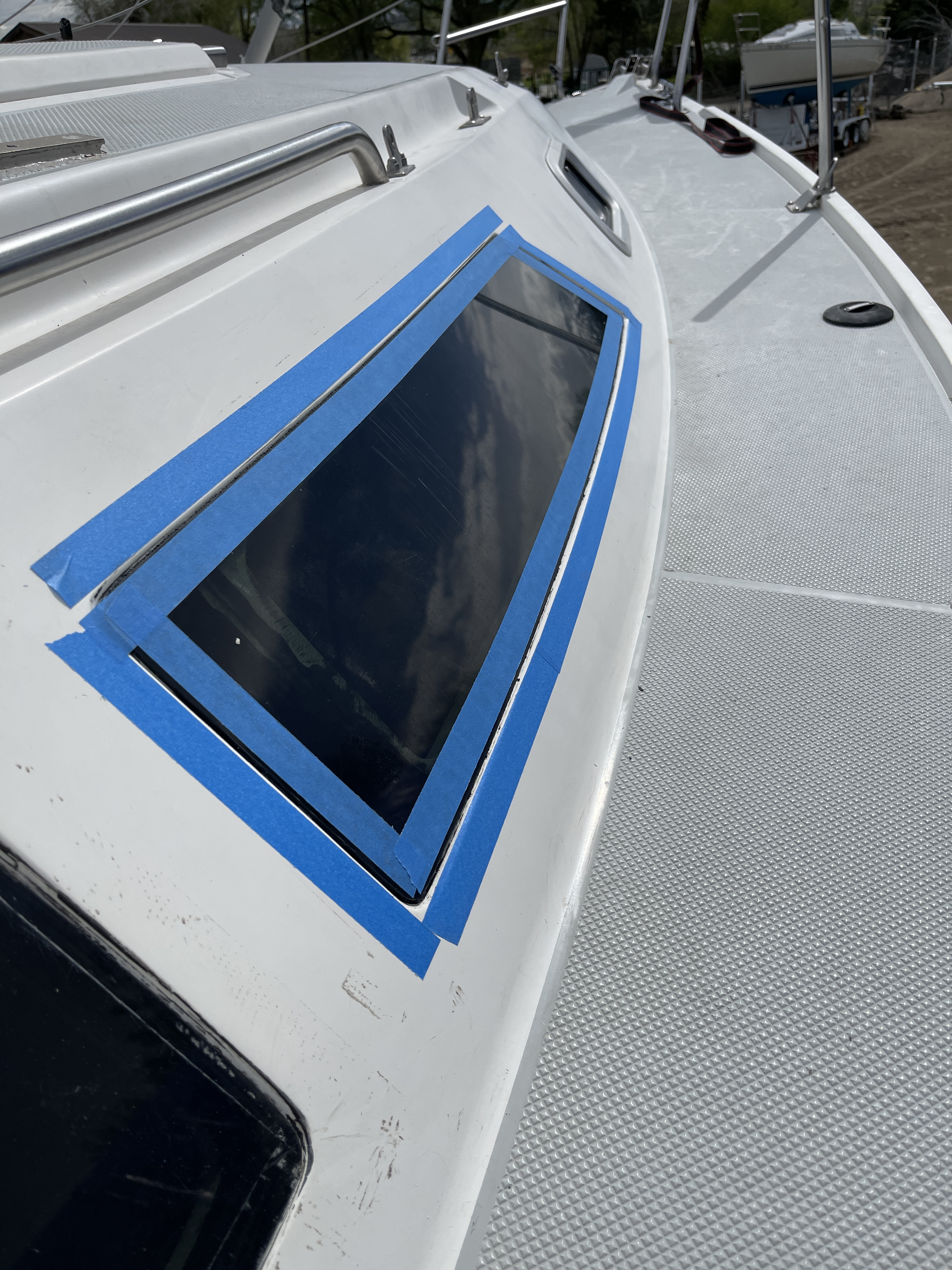
  • Removed the cabin windows that were popping up (hey, 31 years is a pretty good run), re-glued them with 3M VHB tape, and scraped/re-caulked all the windows on the boat.
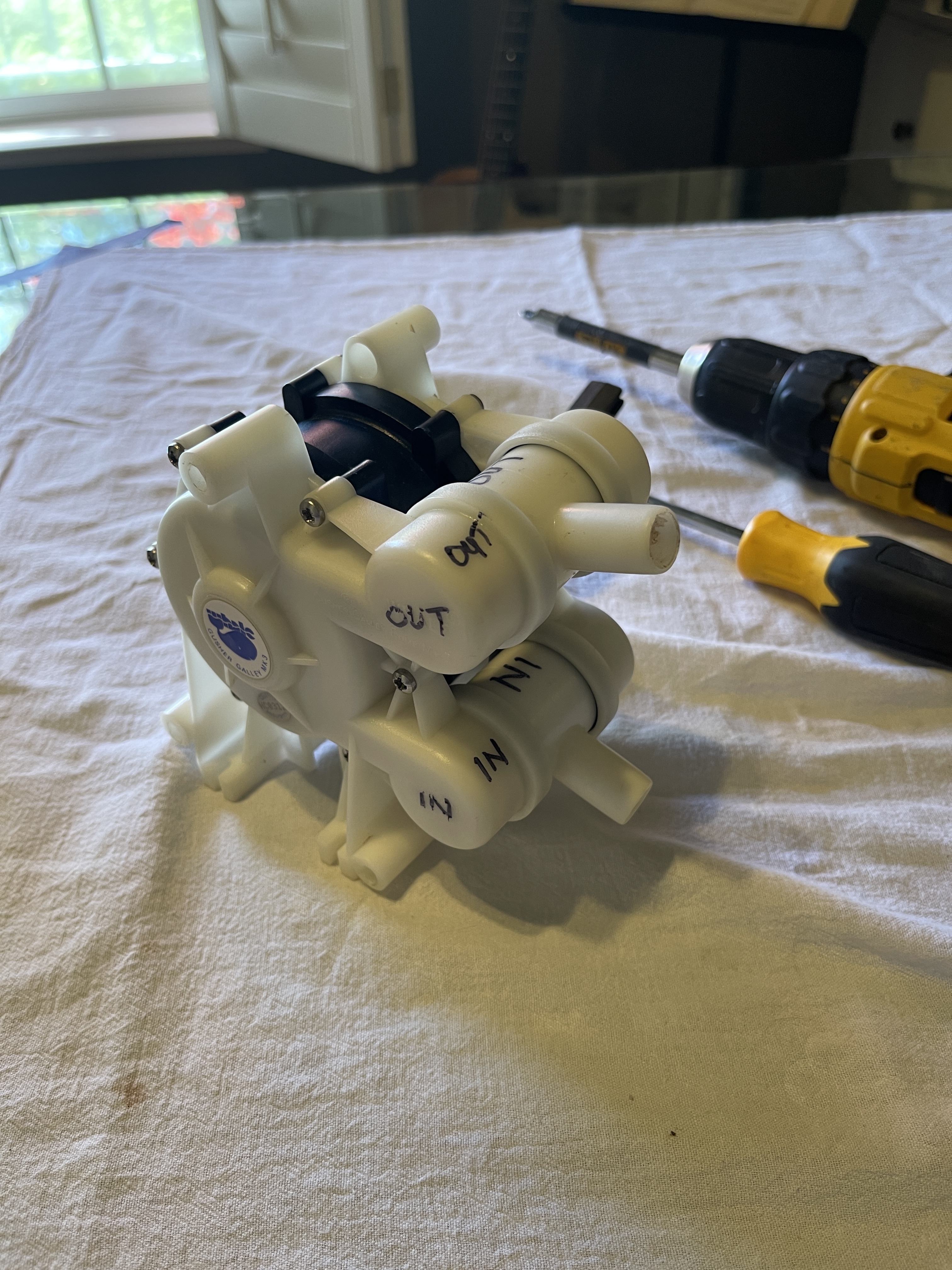
  • Completely rebuilt the Whale Galley Gusher pump with a new service kit (way, way harder and less intuitive than it sounds). First clue: The schematic they provide was way too low-rez to be helpful, and nothing on YouTube™ showed how to do it properly. Even the factory’s customer service lady gave us the wrong instructions. In the end, I had to call on Perplexity.ai to finally spit out the right way to do it.
  • While the icebox pump was out, I sanded, cleaned and re-fiberglassed the area under the stove with a couple layers of cloth. Turned out great. 
  • Also laid in some fiberglass cloth and epoxy on the stern shower fixture door, which had cracked with age. It looks pretty good now with a little gel coat added.
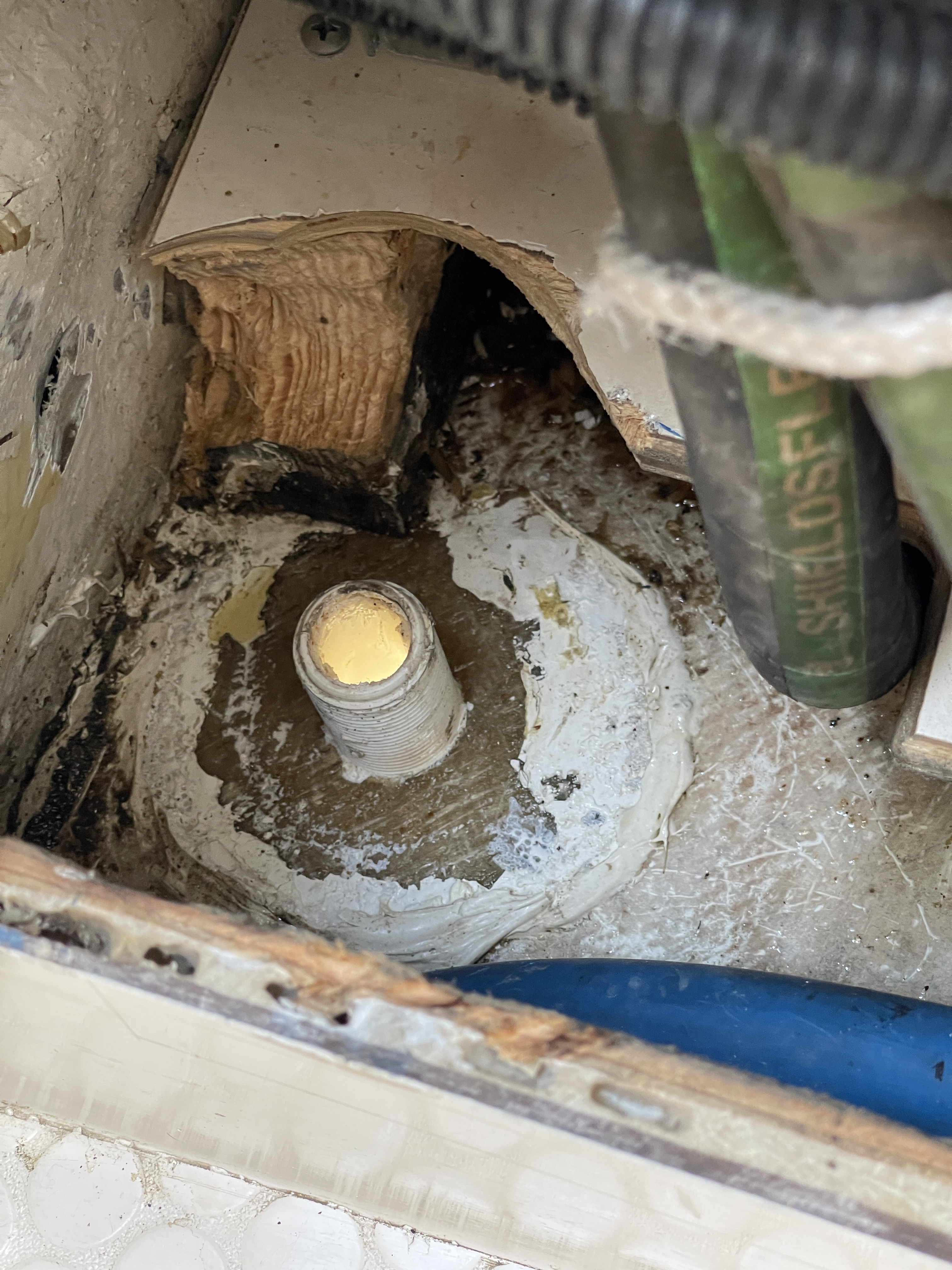
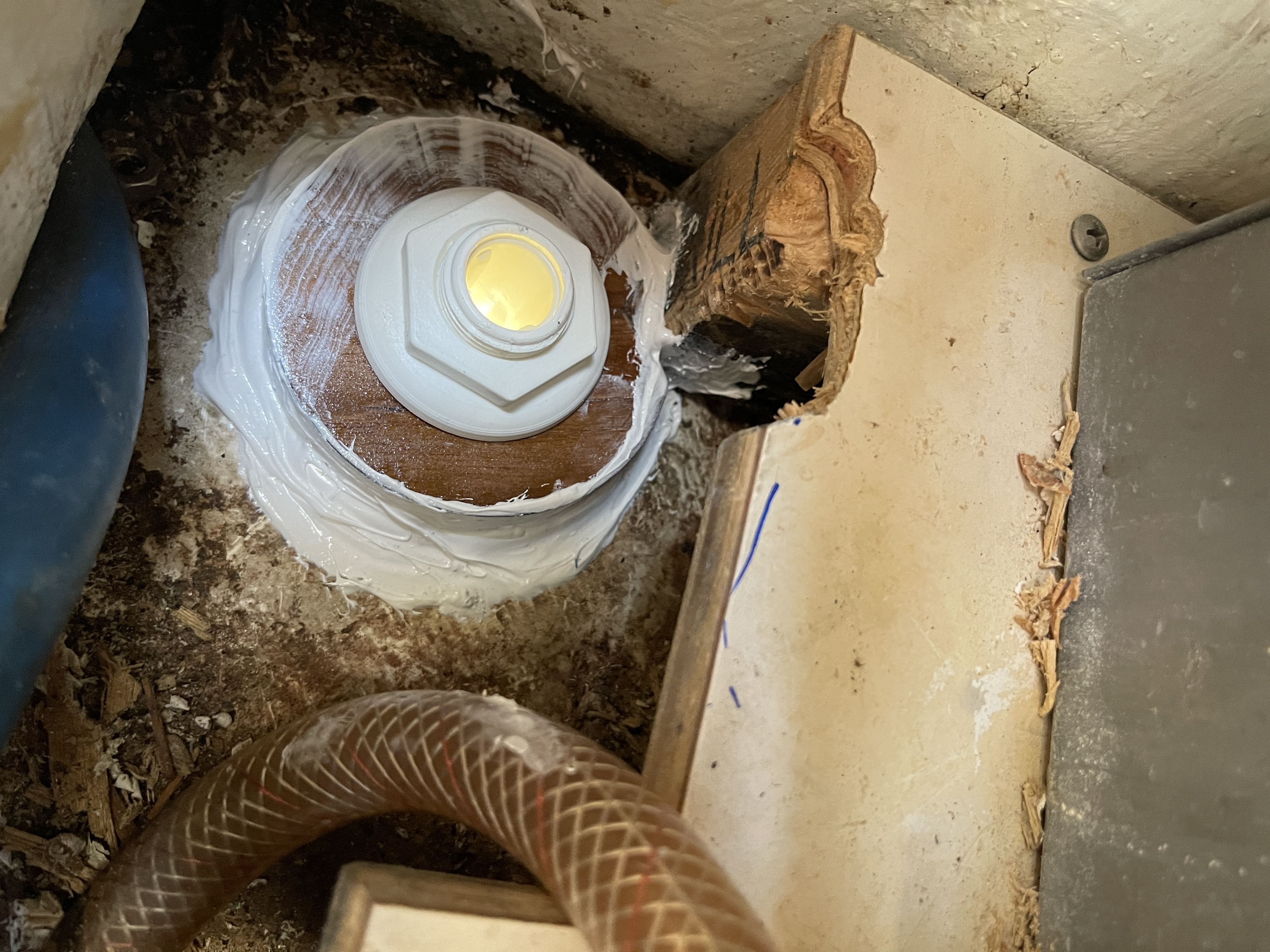
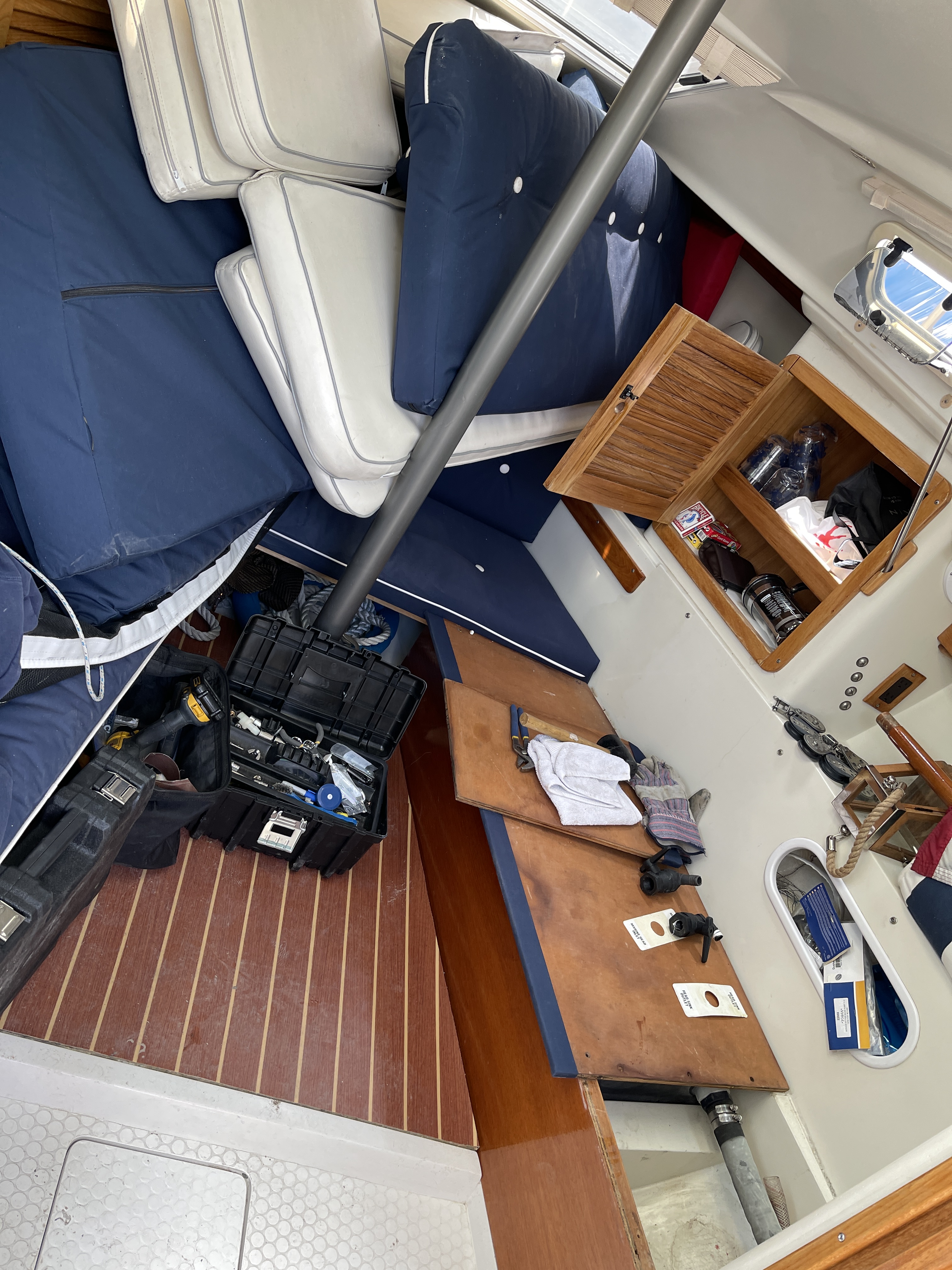
  • Replaced every seacock on the boat with new ForesparÂŽ Marelon™ seacocks. This took a ton of work because the handles don’t come off of the new ones, so you have to grind out the cabinetry in the tight spaces so you can screw the new seacocks onto the thru-hulls.
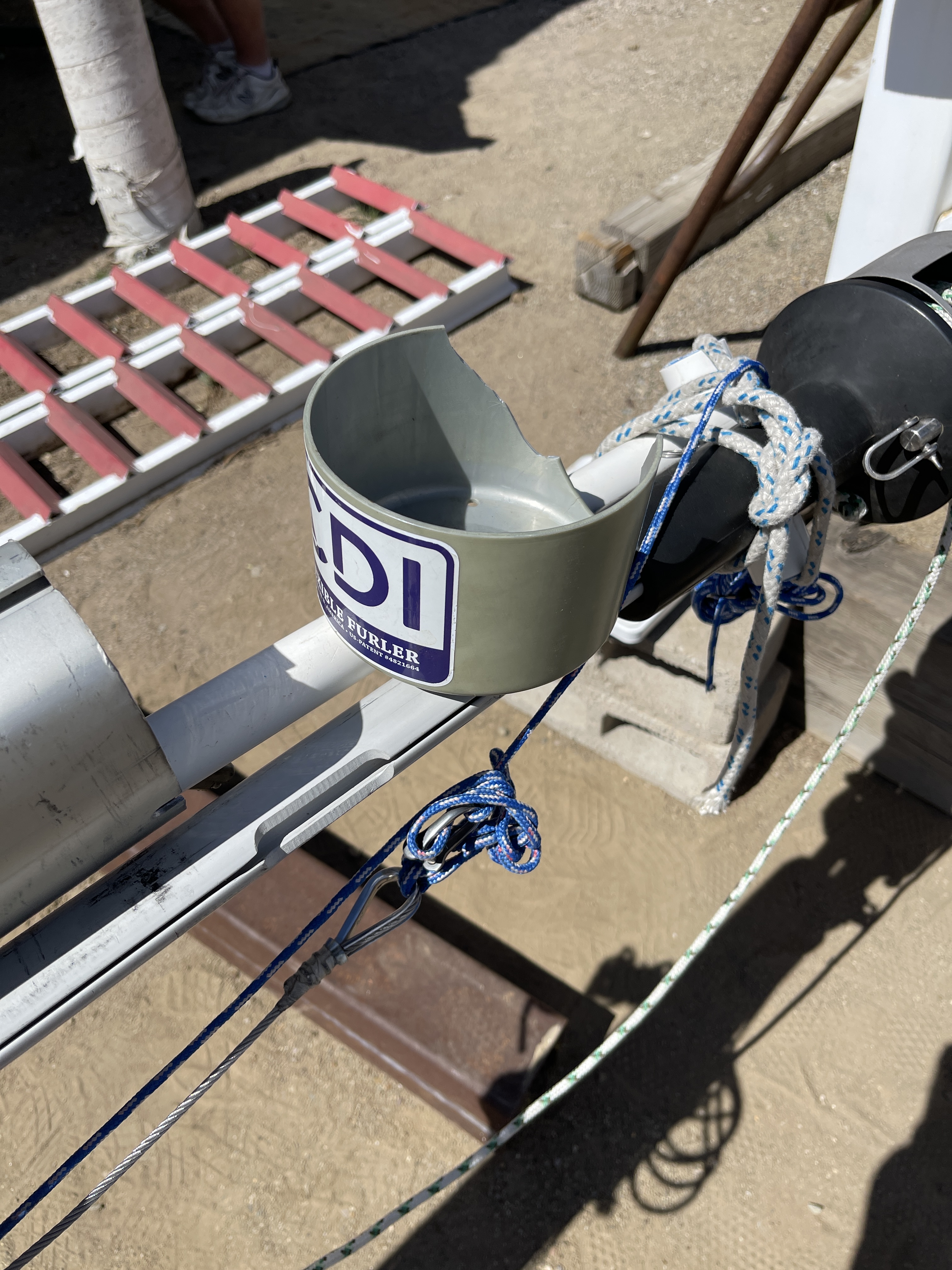
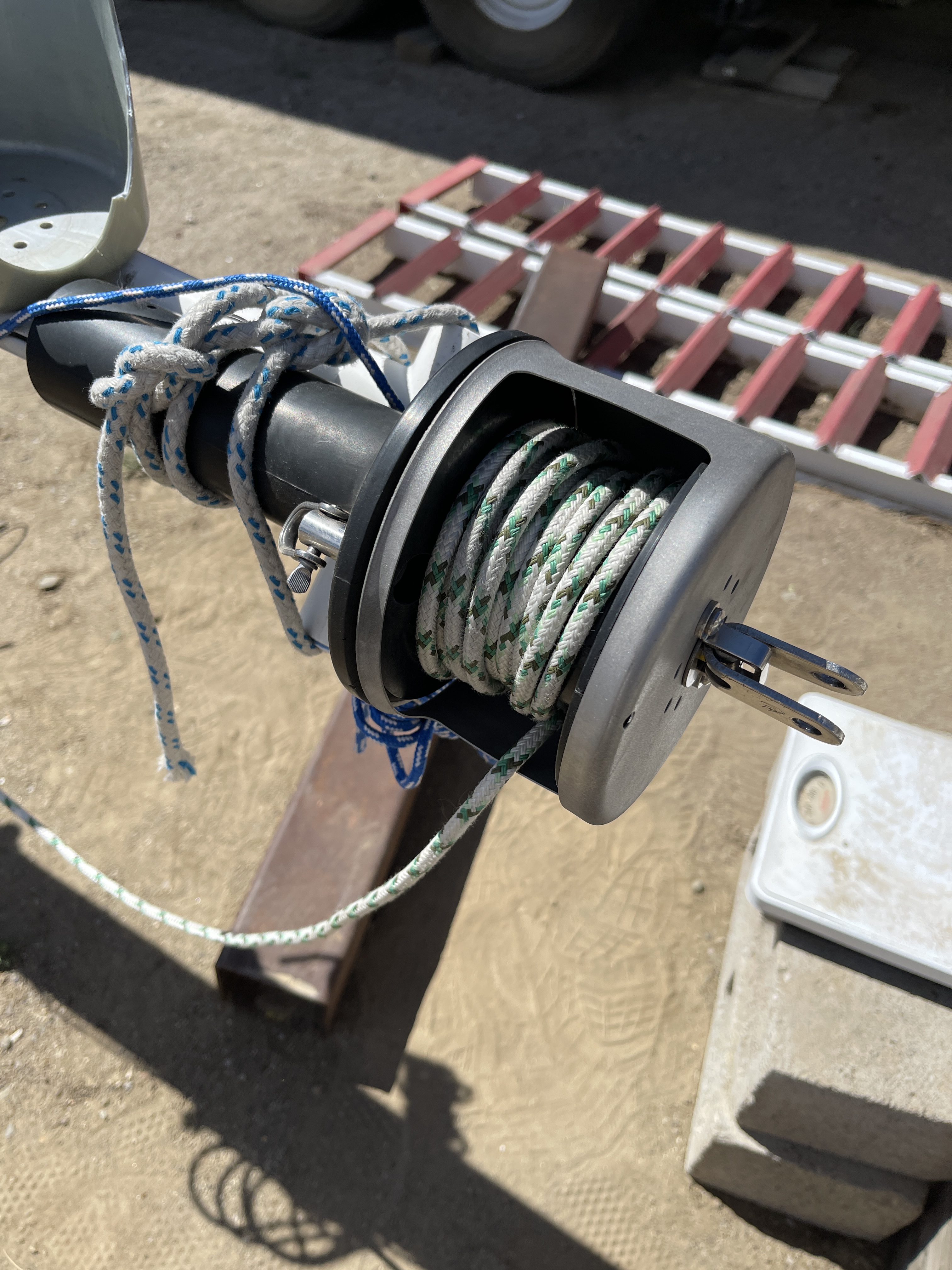
  • Replaced the cheap CDI plastic furling drum cover that broke after only two seasons (are you listenin’, CDI?) with a proper metal replacement drum cover which should have been standard issue to begin with. (Replacing this was a major pain).
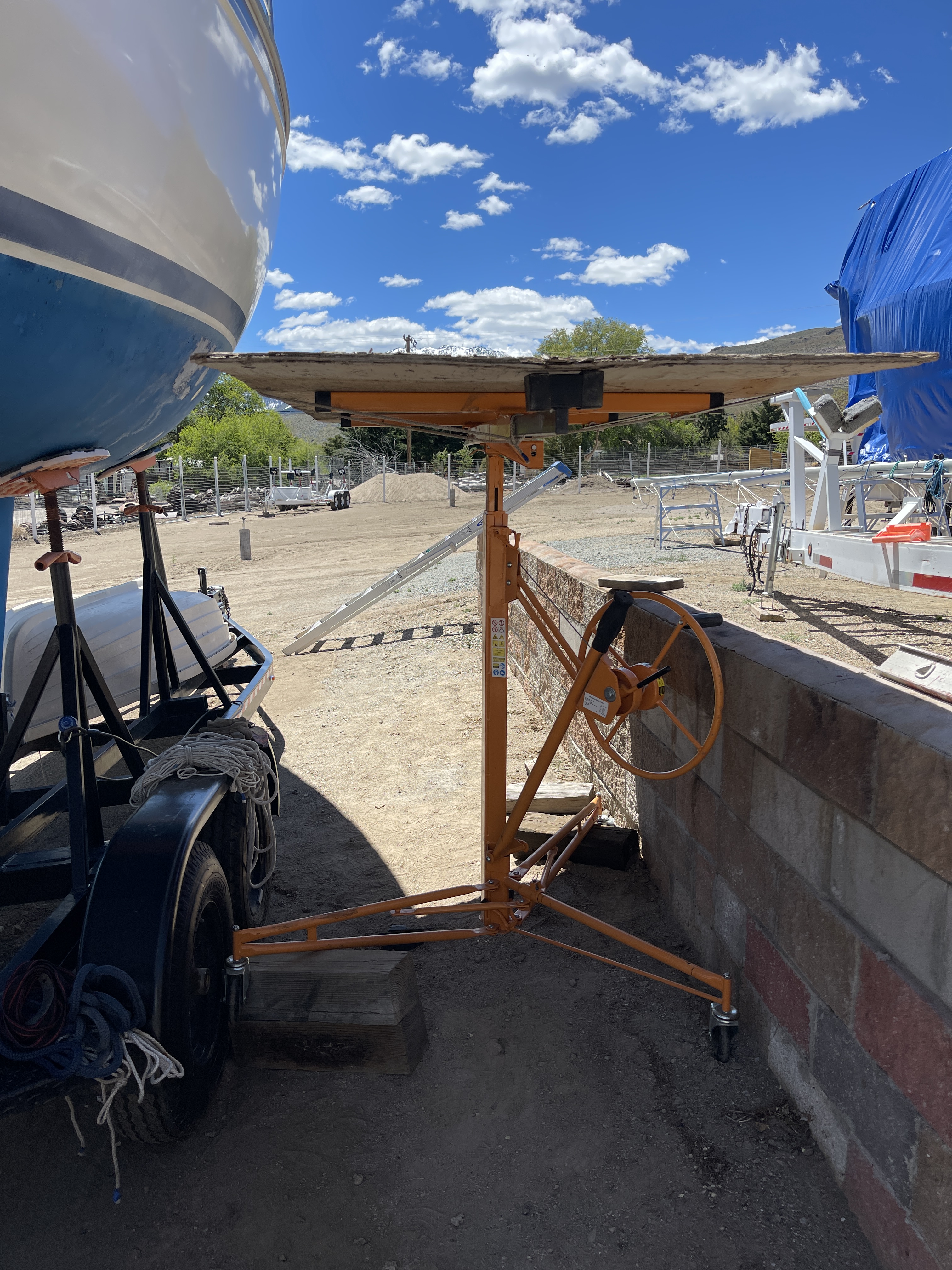
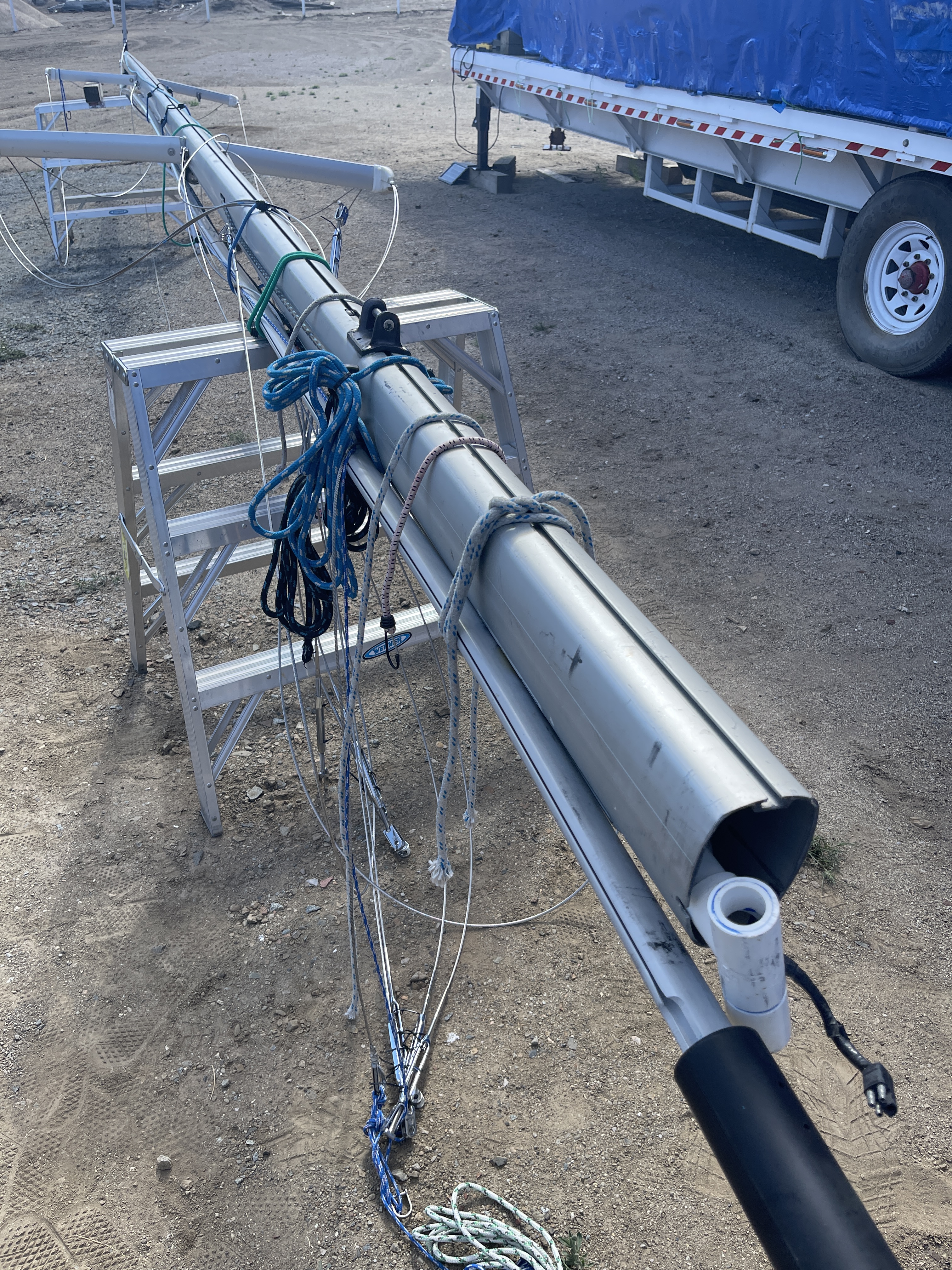
  • Since the mast was down on sawhorses, we took the opportunity to service it from tip to base, checking the sheaves, fasteners, spreaders, boots, wiring, lights, etc. Ancil rigged a gypsum-board lifter to help get the 200-lb. mast back up on the boat. Thank you, Ancil!
  • Checked the steering cables looking for fishhooks (there weren’t any — whew!).
  • Tried to remove the pinkish stain around the port-side Splendido logo that happened the winter we kept the boat on the hard up at Obexer’s. Tried four or five coats of oxalic acid, several fiberglass cleaning products, Soft Scrub … nothing worked. At best, I got it to lighten maybe 15% or so. Dang.
  • Applied gel coat to nicks on the transom and elsewhere in the cabin, then wet-sanded it and polished it up.
  • Removed all the original curtains in the boat, soaked them in OxyClean and mild washing soap, re-sewed the hook-and-loop parts that had come undone, and re-attached them. They look great.
  • Removed old epoxy spills in the cabin and on deck.
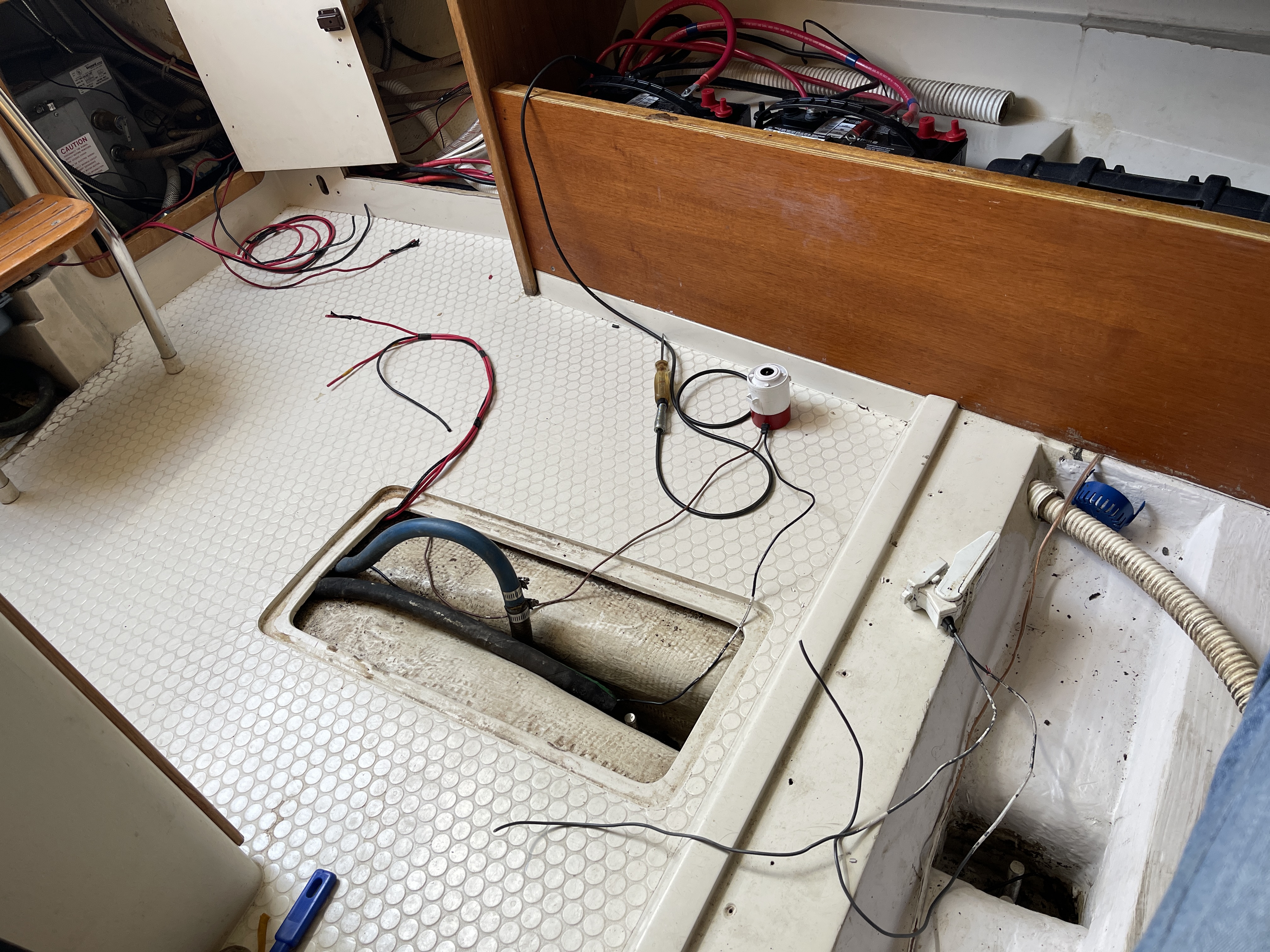
  • Used 3M 4200 to glue down the bilge pump and float switch in bilge. Also, finally wired the bilge pump properly to the panel so it operates automatically and manually as well.
  • Touched up the bottom paint with blue Total Boat Krypton.
  • Put 4-5 coats of PolyGlo (amazing stuff!) on the hull, and now she looks great.

I never did get around to making a better swim ladder rope.

After some rest, I’m looking forward to a relaxing summer of fair winds and smooth sailing! DB

Swapping out the cutlass bearing (and other joys of spring boat prep)

Our good old boat turns 30 this year, so it was no big surprise that spring commissioning would entail a few more tasks than usual to keep her ship-shape. It helped a lot to have fellow sailor Ancil — an incredibly talented, mechanically inclined guy — poke around Splendido when she was on the hard and notice things I hadn’t noticed. One day, he grabbed hold of the prop drive shaft and said, “You need a new cutlass bearing.” Before I knew it, we were working together to remove the old bushing that supports the drive shaft and tapping in a new one, as shown in this video. The untold part of the video above is that we got a little excited and ended up crimping one edge of the new cutlass bearing as we were tapping it in, so I had to buy a new $75 part from Catalina Direct and re-do it. C’est la guerre.

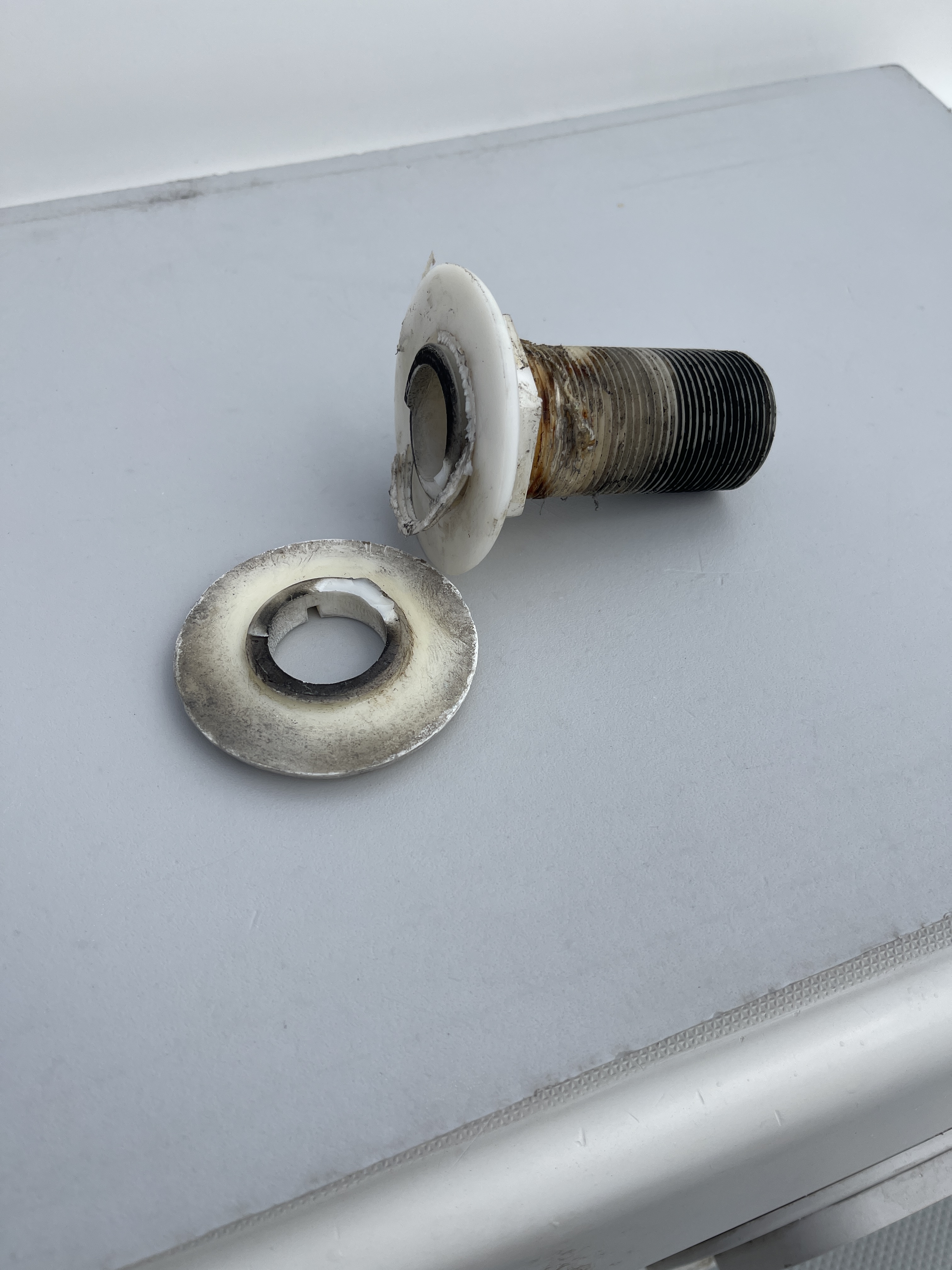
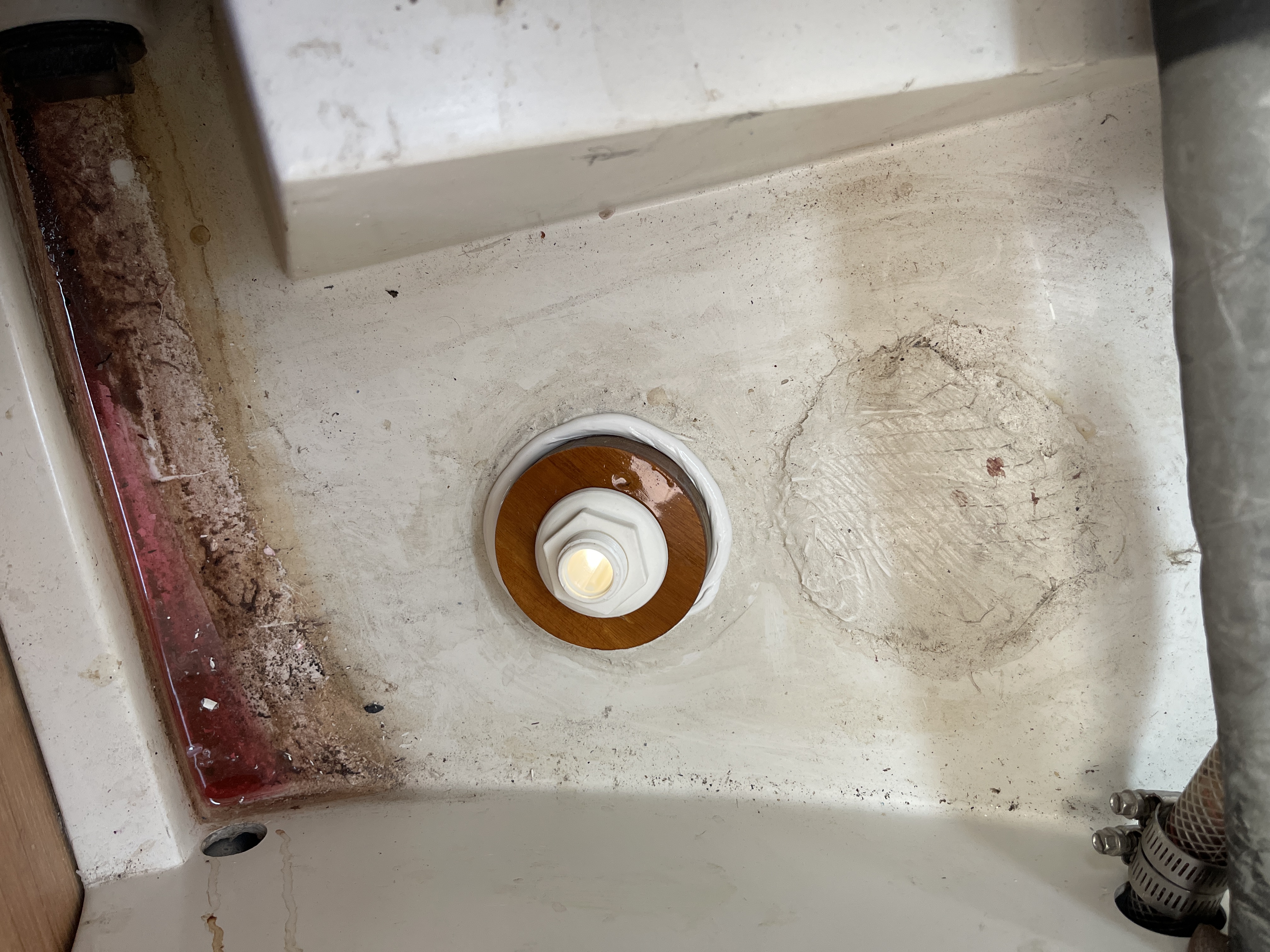
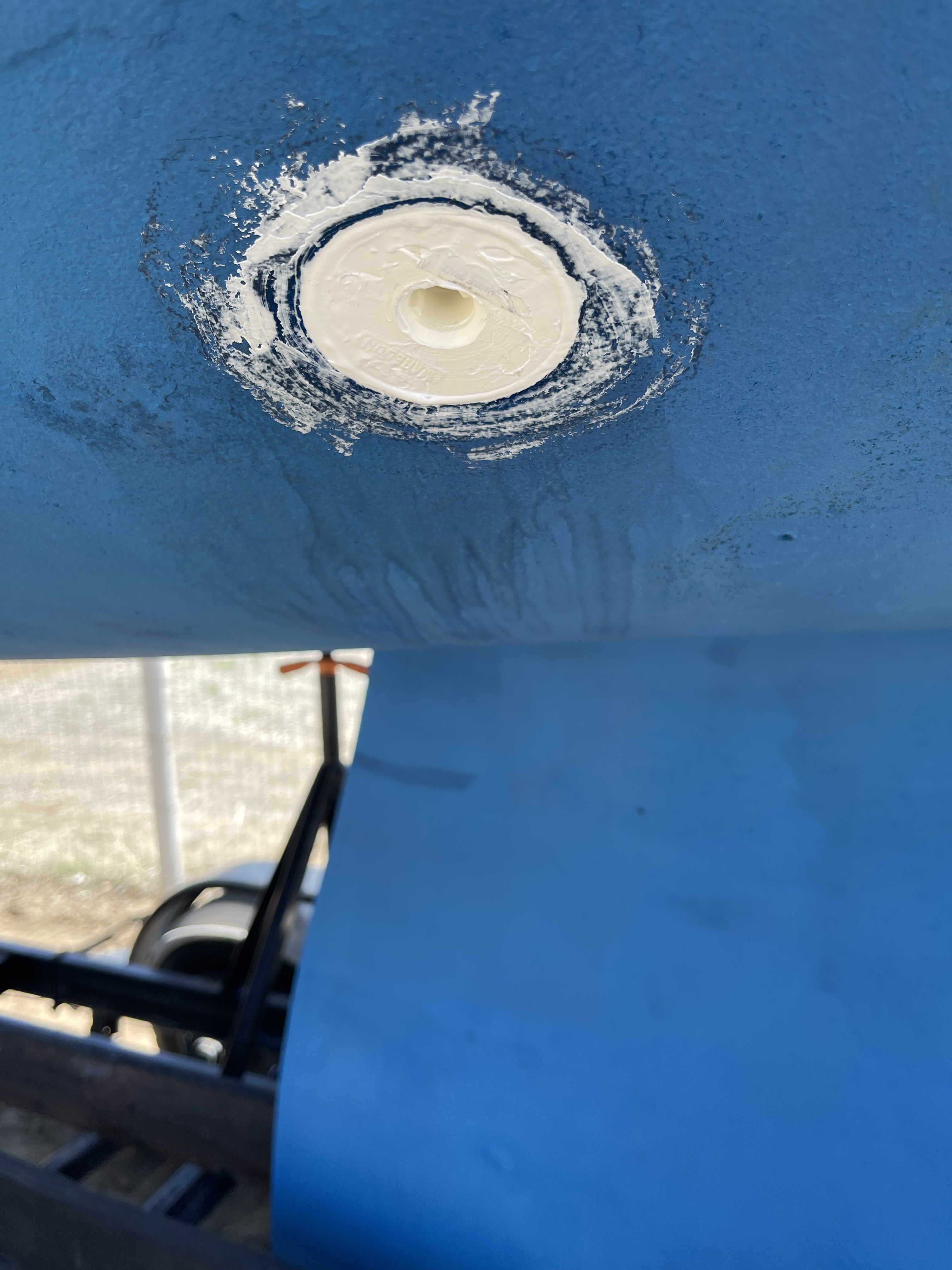
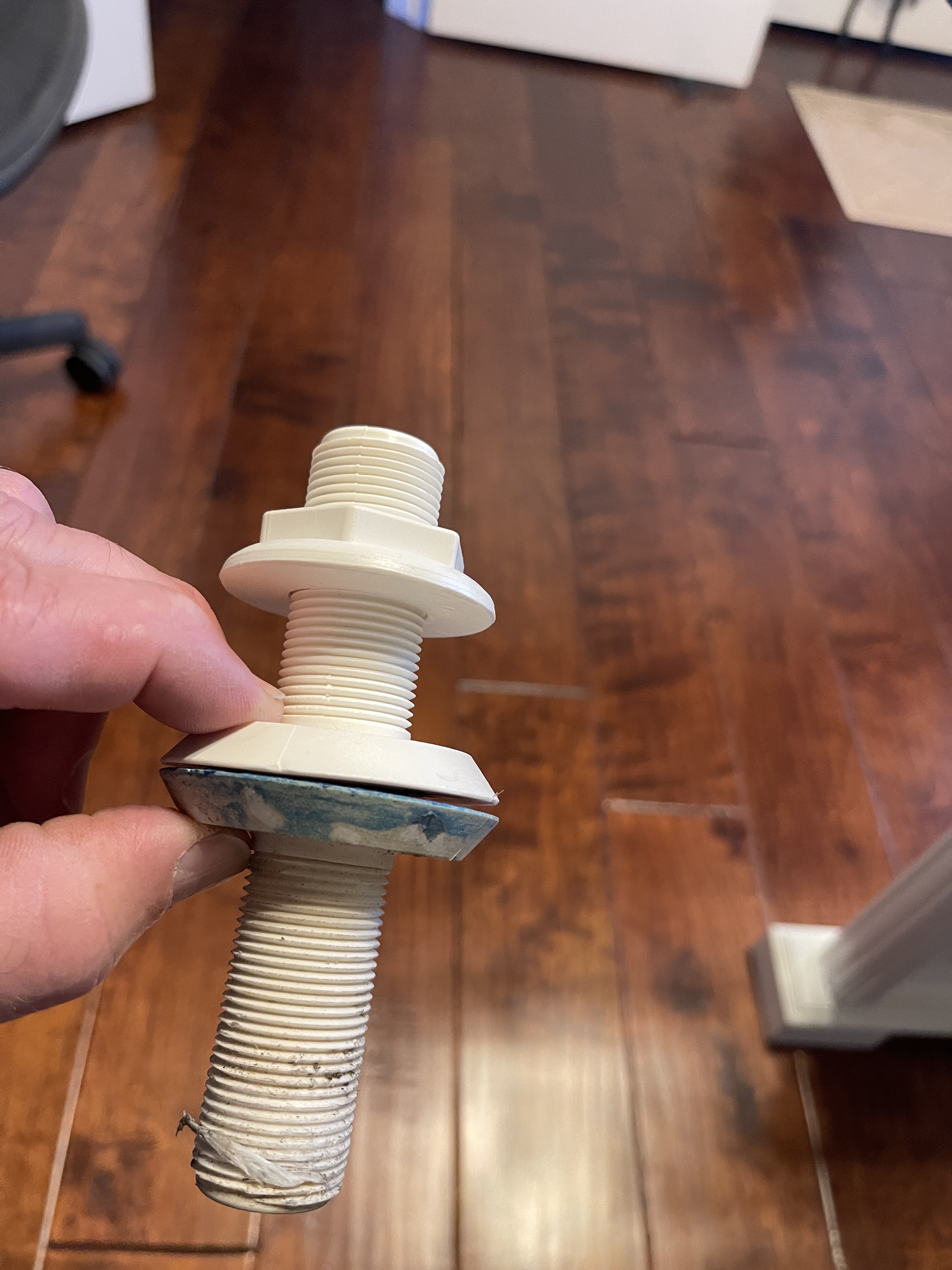
Ancil struck again by noticing that Splendido’s exhaust thru-hull was cracked. That was a bit of a shocker, as I started playing with it and it broke and literally fell out of the boat. Yikes! Many online searches and phone calls later, and I was able to get Catalina Direct to source a serviceable replacement that is now posted on their website. Having that one fail inspired me to replace four more of the thru-hulls in the boat, and I think they turned out pretty well — plus, it gave me an easy opportunity to use Marelube on all of the seacocks, and to improve access to the annoying one under the kitchen sink.

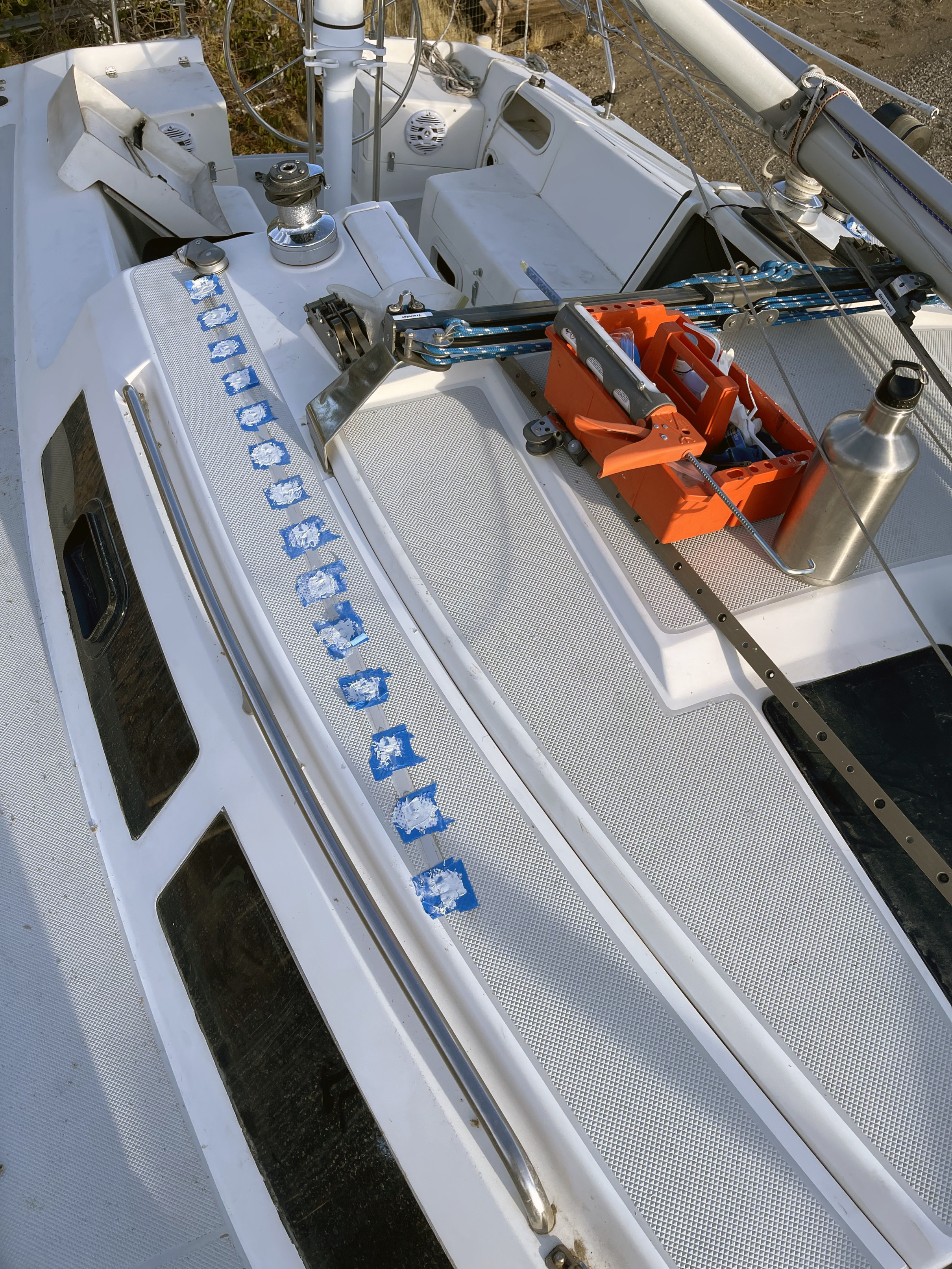
The fairlead tracks were leaking and allowing water into the balsa of the deck, so Debbie and I drilled and filled them with epoxy and installed new stainless fasteners all down the line. I’m still cleaning up the epoxy drips, but the good thing about an older boat with an oxidized fiberglass deck is that they’re a little easier to deal with — a sharp razor-blade and a bit of heat gun action seems to be doing the trick.

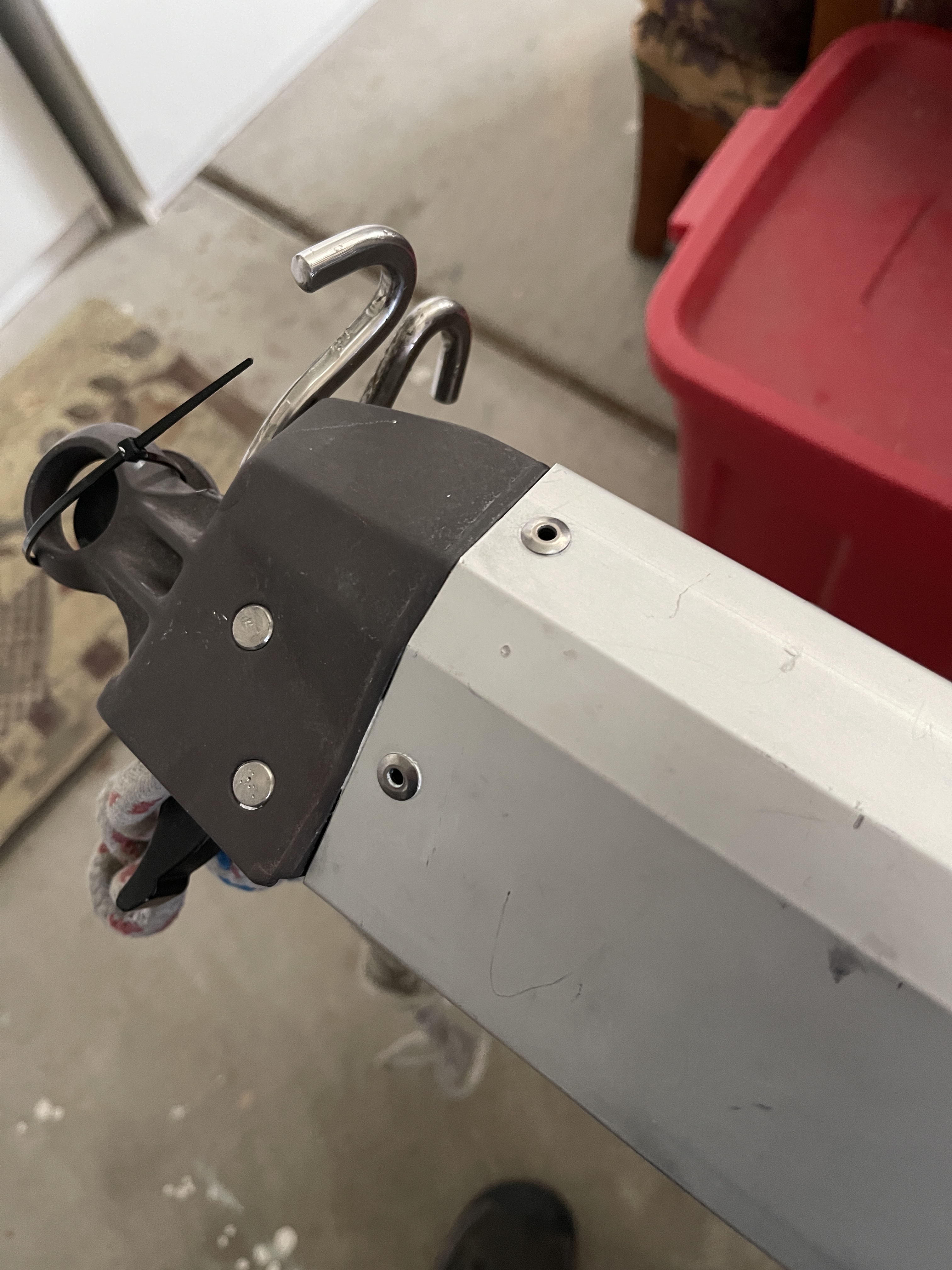
We launch next Tuesday, so I’m excited to finally get her back out on Lake Tahoe. Other honey-dos this winter included riveting on a new gooseneck to boom and mast, and doing a quick re-varnish of the cabin lockers, drink holder, and oars. Ah, the aroma of varnish stinking up the garage in the morning. It smells like … sailing season!

This morning, it’s back to the boat yard to caulk the fairlead tracks, clean up epoxy drips, Thixo some aged, cracked plastic pieces, and maybe touch up some paint on boat and trailer. I promise, my next post will be about actually sailing on Lake Tahoe — that is, if Zephyrus grants us the privilege.

Fair winds and smooth sailing. DB

High and Dry: Diving into Winter Projects

Photo of SV Splendido, a Catalina 270 sailboat, undergoing winter repairs on the deck.

We pulled Splendido out of the lake a little early this season as Debbie and I were celebrating our 30th wedding anniversary by taking a 10-day road trip down the gorgeous California coast. When we returned, I went to work on some projects that were adding up, including replacing the fasteners for the fairlead tracks, which had been letting condensation through the deck into the cabin, and staining the curtains and ceiling with a “tea” comprised of dirt and maybe rust or corrosion from the so-called stainless steel barrel nuts, some of which had just decomposed and fell out of the ceiling after all these years. Splendido is, after all, now 30 years old, so the working of the boat must’ve done its thing to the hardware.

While winterizing the boat, I noticed (not for the first time, mind you) that the boom gooseneck assembly had really worn down over the years, to the point where my sailing buddy Ancil remarked, “I’m surprised it hasn’t broken off yet.” So, the process of finding a replacement began for venerable Isomat boom parts. At length, I did find a source (and this, after contacting Catalina Yachts’ factory in Florida and another party who evidently purchased all the back stock of parts from Catalina’s factory, both non-responsive to my inquiries) and that was at Rig-Rite, Inc. I found what I was looking for on their website, but as luck would have it, their shopping cart wasn’t working today, so I’ll have to wait until Monday to call and complete the transaction.

I do want to express my thanks to Ancil, who is graciously renting me some space in his pasture once again to store Splendido this winter. I didn’t write about it before, but my experiment of keeping her up at the lake last winter was an unmitigated waste of resources. She got far more beaten up by the storms at elevation — even though she was (expensively) shrink-wrapped — than she ever has wintering on the hard down here in Reno. I was stunned at how the storms up there blew debris up and under the tight “skirt” of the shrink-wrap and so she was just filthy when I went to uncover her last spring. And, the areas that were covered by this “skirt” had a weird pink mold growing, which was a delight to clean off, let me tell you. So, I learned my lesson and she’s staying close to home this winter so I can get some work done. The list, as always, is long, but so is the dark season here, so I’ll just chip away and see that I can do. For now, it’s sealing the fairlead track holes with epoxy and re-drilling them so they’re watertight.

Additional thanks goes to Ancil, who is one of the most mechanically inclined people I’ve ever met. He’s helped me out of half a dozen mechanical fixes already, and for that, I am grateful. It’s a small community of sailors here where I live, but not a bad one in the bunch so far. I’m looking forward to getting back on the water as soon as I can. Until then …

Fair winds and following seas. DB

Friend Ships: Gary Hamilton’s Catalina 270, “Nothing Like This”

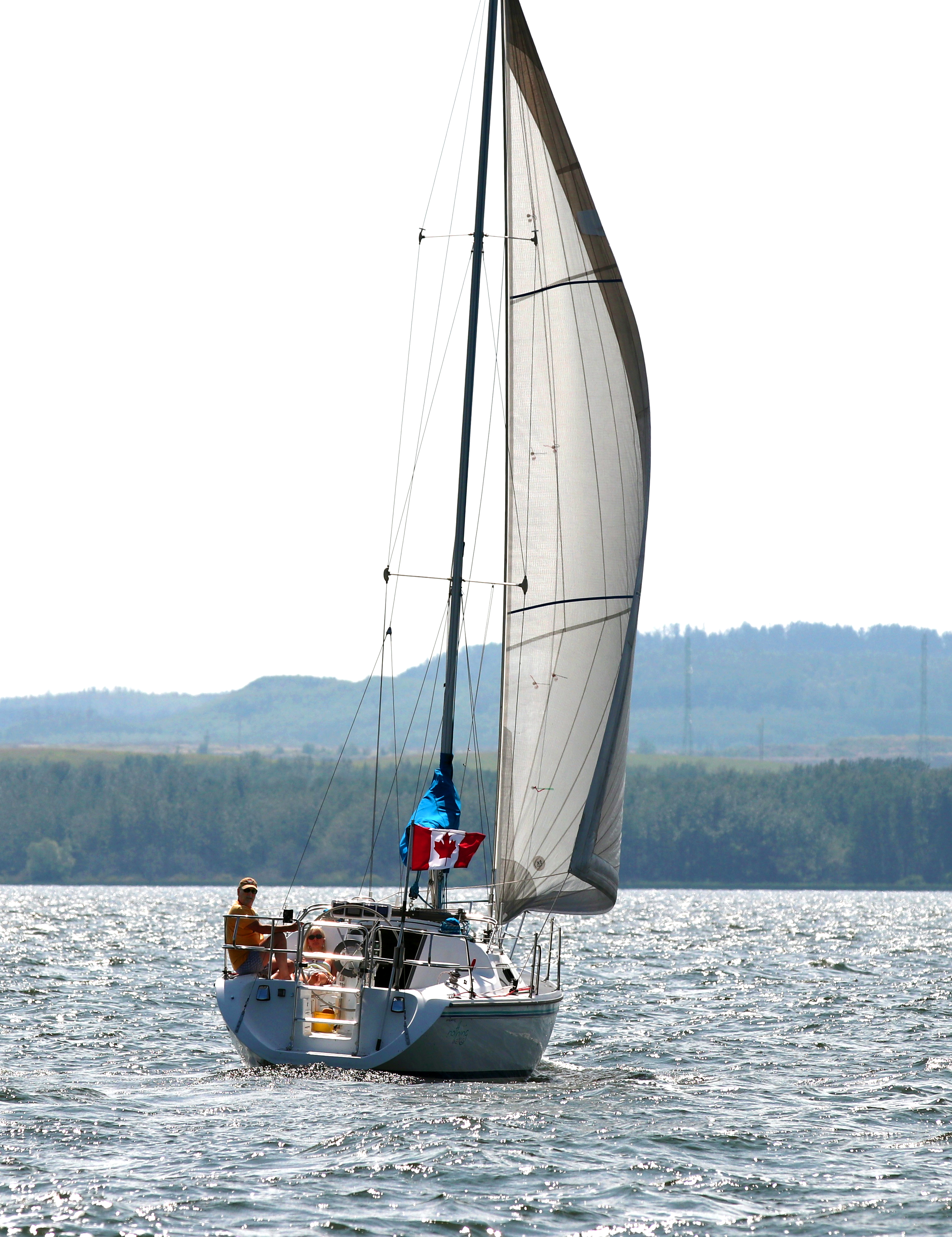
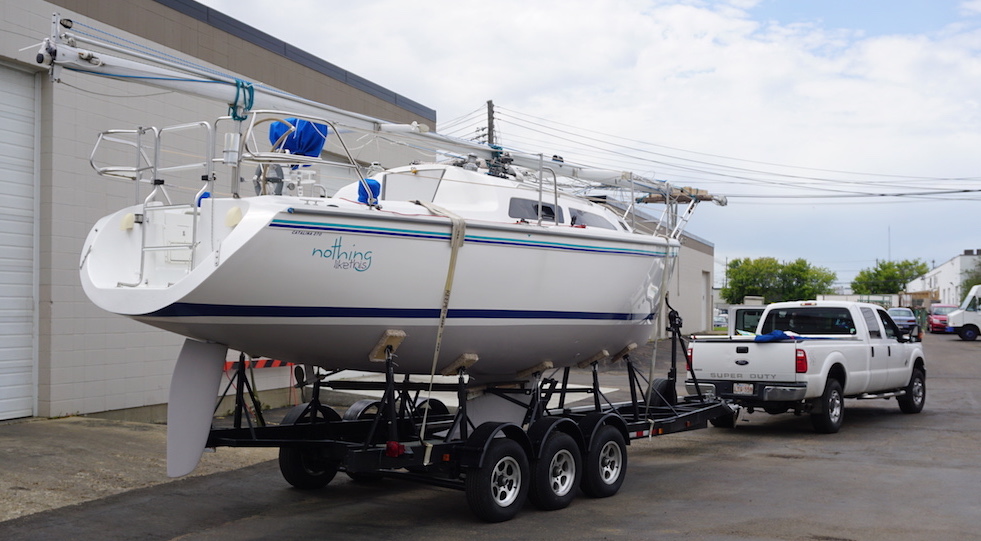
If there’s anyone I’ve encountered who embodies the phrase, “Believe me, my young friend, there is nothing – absolutely nothing – half so much worth doing as simply messing about in boats,” it would be sailor Gary Hamilton of Wabamun Lake in western Canada. I have followed Gary’s Sailing in western Canada blog for years, and each visit leaves me in bewildered awe at the way Gary has tricked out his lovely Catalina 270, Nothing Like This, with ingenious upgrades and improvements to the already wonderful Gerry Douglas design. He’s also one of the most generous folks out there on the Catalina 270 forums, keeping the conversation going about all things related to sailing the C270. I reached out to Gary for some insights on his philosophy and process, and he was kind enough to share, in words and photos, his passion for making the most of his time on the water.

Q&A with Gary Hamilton, Skipper, Nothing Like This

Q: How did you come about owning Nothing Like This

A: I was looking on Yachtworld one day, saw a 270 for sale in Denver and this adventure began. The trailer was home-made, and the border guys wouldn’t let it into Canada, so it went to Seattle, got tossed in the big lake (ed note: the Pacific Ocean), the trailer got hauled across on a flatbed, the boat got motored to Vancouver, reunited and driven home. Take that, border people!

Q: Did you own a sailboat before you bought her? How did you start sailing, and how long ago?

A: I’ve owned boats almost all my life. I had a brand-new MacGregor 26 in 1993, and discovered a tippy, smallish boat with no headroom. But it trailers easily and we went a lot of places with it.

Q: I know you’ve done a bunch of upgrades to your boat and trailer over the years … can you give us a rundown on them?

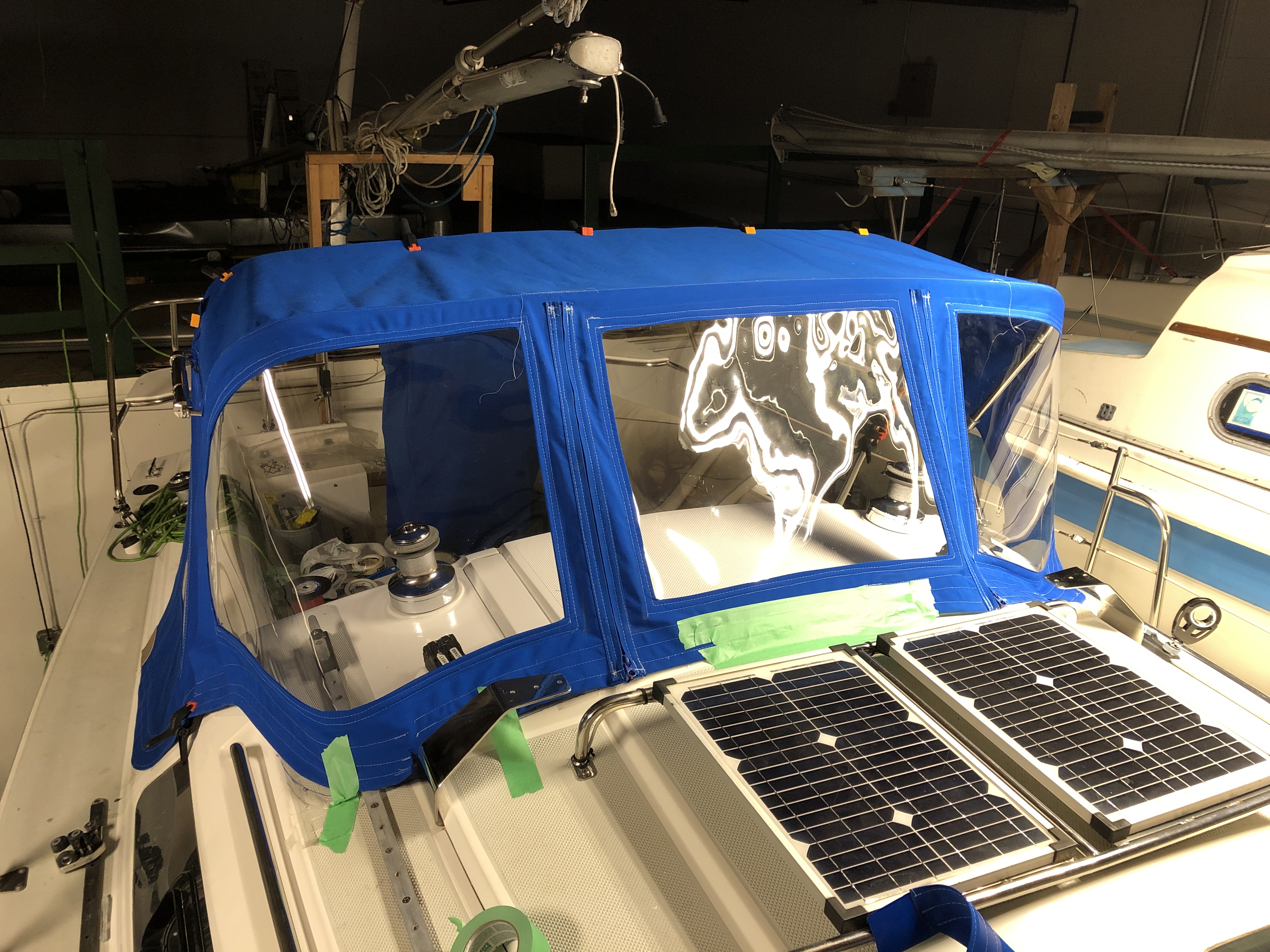
A: The list is long quite long. A full RayMarine electronics installation with autopilot and tactical. A home-made top down furler with home-made bow sprit for the asymmetrical kite, upgraded virtually every sail-handling system, and added back winches, making it a pleasure to sail. Designed and built a dodger and a Bimini while learning how to sew; bought a TechSew machine that is cheap offshore and finicky as all get out. Solar installation, and pretty much redesigned the trailer from the ground up, lowering the boat over 20” and allowing a trailer launch, with three axles for on the road peace of mind.

Q: Are you an engineer by training? A lot of your projects seem quite involved. Are they projects anyone could do?

A: I am a technical director for an electronics company by trade. I have no issue diving into almost any kind of project; the trick is to do sufficient research, understand, or go find out the issues that exist for what you want to accomplish, have a goal, and be prepared to make and correct mistakes.  The trailer project was way, way out of my league, but the basic shape was already there, and the placement of the new axles was a calculated guess. The boat was close and has had two relatively minor adjustments since.  The dodger was probably an order of magnitude harder; I had literally no idea what I was doing, had really never operated a sewing machine, and I spent a good month building stuff, watching and copying ways of doing stuff. Now I can do a French seam. Is it straight? It’s straight enough for me. 

Q: What do you love most about Nothing Like This and sailing Wabamun Lake?

I’d rather be at the coast. Wabamun Lake is an inland lake that is close to the foothills. It’s shallow, so there isn’t much fetch, there’s no current, the wind shifts can be 180 degrees, which is why there’s a top-down furler for the kite, and when weather rolls in, it sometimes does so with a vengeance. What I love the most is that I can be on the boat in 35 minutes from my house, and the sun doesn’t set till 11 in July.  

Q: What would you change about your boat/what upgrades do you have planned?

A: I’m not happy with the bilge pump arrangement, and will likely yank it all out and do something else. If I were to change anything, I’d make the berth access like that on a 28mkii and get rid of the door. This business of turning sideways and contorting yourself into a hernia to get in there is rather annoying.

Q: What was your most fun or interesting time on Wabamun Lake?

A: I’d have to say exercising the controls on the boat to the fullest and having people try to keep up.  No smugness there — ha ha!

Q: What was your worst experience sailing western Canada?

A: Breaking rudder cables on the MacGregor. There are lots of shallow spots, and you need to know where they are. We hit something in the Catalina 270 last year (that was a first!) and put a little divot in the keel. Yikes!

Q: What would you tell people about sailing western Canada they might be surprised to know?

A: It’s like sailing a mountain lake. Don’t tack on the wind shifts. We had some world class sailors on the MacGregor once, and they didn’t believe it, and we were dead last on the Wednesday night series, where we were usually top five. Go figure.

Q: Any final thoughts?A: I still think that everybody out west should plan a get-together at the coast. Get a mortgage and buy some fuel.  Let’s go!


Thanks so much for the inspiration, Gary. Fair winds and following seas! DB

At least the wind is free

Pumping out is generally free, too, although a tip of $5-$20 is much appreciated by the dock hands.

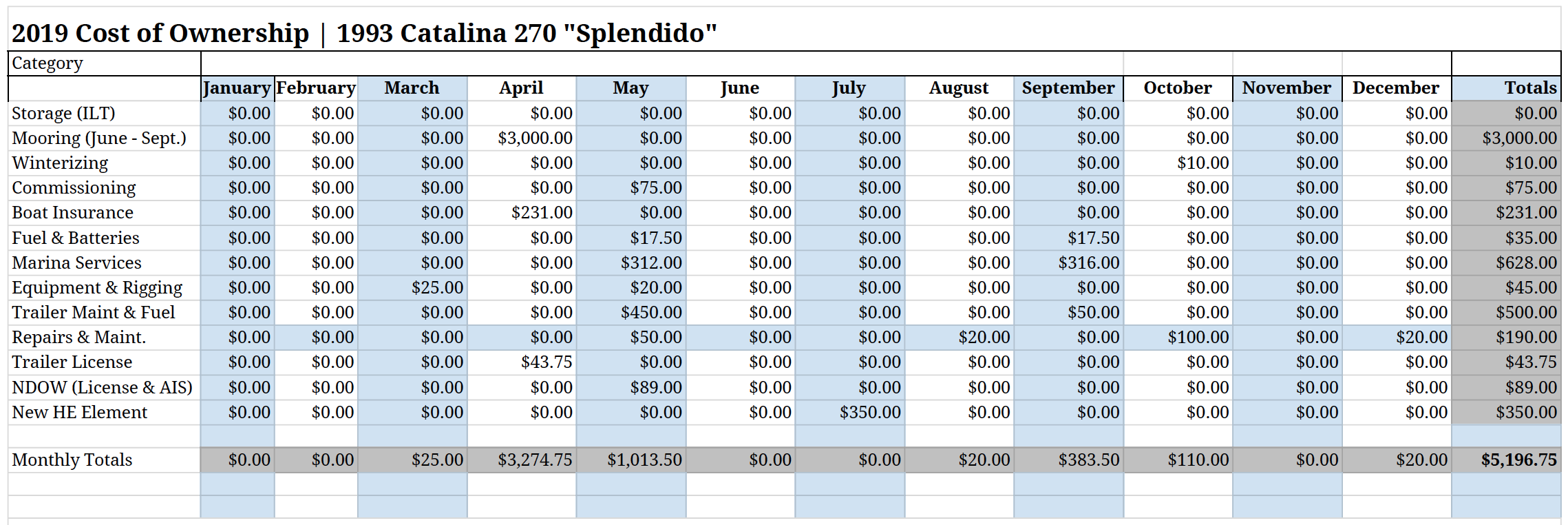
As I begin planning our spring commissioning, I am thinking a bit about the costs associated with sailing here at Lake Tahoe. Our 1993 Catalina 270 is a relatively small sailing vessel, but nevertheless, I have kept spreadsheets over our nearly 12 years of ownership to track what it costs to keep her up and sail her during our 4-5 month season here. I’m interested in learning how our experience stacks up to other small sailboat owners out there, so feel free to comment or post your own records if you’re comfortable doing so.

Every hobby comes with its price tag, and I think there is the impression out there among the general public that sailing is either a rich person’s sport, or that it’s “free” because the wind is free. This year, it’s likely to be a bit more spendy because we’re having the standing rigging replaced and we’ve kept her on the hard over the winter at Obexer’s on the west shore of Lake Tahoe while that work is being done. Oh, and I did decide to splurge and get a new furling headstay, so there’s that. But for now, I’m going to share my 2019 spreadsheet, as that’s pretty typical for what it costs us to prep, moor and sail at Tahoe each summer.

Let me know how your sailing season runs — and if there’s something wonky-looking about my expenses, let me know.

Here’s to fair winds, following seas, and (hopefully) a smoke-free sailing season! DB

Getting the old girl ready to splash

Life is what happens while you’re making other plans. 😀 I had all but despaired of not being able to sail this summer because the influx of folks at Tahoe during the pandemic meant that buoys were scarce, and competition for them was fierce. After putting out feelers for buoys since February with zero results, Debbie and I had begun making plans to do other things—road trips to rural Nevada, hiking, biking, etc.—in lieu of sailing. Last Saturday, out of the blue, our old buoy owner reached out to say his neighbor had a buoy for rent, just 40 yards from where we’ve been moored for the past few years.

Now, the push is on to get the boat ready for launching next week. Fingers crossed—she is dusty and dirty and I have a list of 36 pre-sailing checks to do. I’ll shoot a little video to try to capture the fun.

I cannot express how excited I am to get out on the water again.

Fair winds and following seas! DB

Back in the Boatyard

Splendido is nearly 28 years old and it’s time for me to get after some refitting projects this winter. I am continually inspired by SV Delos skipper Brian Trautman (a fellow UW grad) not just for the cruising lifestyle but also for the hard work he puts in maintaining his 53-ft. Amel Super Maramu.

What I like best about the SV Delos video series—apart from the beautiful locales and fun adventures—is the accurate depictions about the amount of effort it takes to keep things ship-shape. So, duly inspired, I have a list of things I’m going to attack this winter:

  • Tailoring the lazy bag to fit the sail more snugly—hopefully with less windage
  • Checking all the standing rigging for signs of wear
  • Removing all the brightwork that needs refinishing and getting that done in the garage
  • Light sanding and repainting the trailer, which got pretty scuffed up in recent years
  • Changing the oil and filters in the Perkins Perama diesel
  • Polishing the fuel so it’s ready for spring sailing
  • Replacing the incandescent bulbs with more LED lights to reduce battery drain when boat camping
  • Repacking the rudder shaft stuffing box
  • When it warms up, touching up the gel coat
  • And a bunch more stuff I haven’t thought of yet.

A special shout-out to Ancil Sigman of Le Crapaud fame for letting me work on Splendido at his place this winter. Thanks, Ancil!

I’m also stoked to discover that Brian Trautman’s brother Brady Trautman and his partner Alex Blue (and their new rescue pup, Sharky) have settled for the time being at Lake Tahoe. They’ve launched a new business called Cruisers Academy and have a small fleet of Catalinas at Tahoe offering lessons for all levels. They are both accomplished scuba divers as well, and they’re offering dive adventures next year, starting with what looks to be an epic adventure for more advanced divers in the Galapagos Islands. As an SV Delos fan and supporter, I hope to see them out on the water in 2021. Welcome to the Tahoe sailing community, Brady and Blue (and Sharky, too)!

The pandemic—and my struggles with anxiety related to it—have got me thinking about how I would like to live my life with more adventure and fun in the future. I’ve decided to get a PADI Open Water Diver certification as soon as it’s safe, so hopefully I can participate in the Clean Up The Lake diving project in 2021. I’m also learning video shooting and editing to bring more short videos to this blog, so keep an eye out. I’ll start with simple GoPro videos about my projects this winter as I dip my toes in the water.

In the meantime, mask up, stay safe, and drop a note in the comments below about how you like the blog and what kind of content you’d like to see more of. As this crazy year draws to a close, Debbie and I wish you health, happiness and peace—and optimism for better days ahead.

Fair winds and smooth sailing. DB